Donna Perry: The Spokane River Killer
Overview
In the spring of 1990, a shadow fell over Spokane, Washington, as the bodies of three women were discovered discarded along the banks of the Spokane River. The victims—Yolanda Sapp, Nickie Lowe, and Kathleen Brisbois—were all shot to death and left naked or partially clothed. Police quickly suspected a serial killer was at work, but with few leads, the investigation eventually went cold. For more than two decades, the families of the victims lived without answers, and the killer remained a ghost.
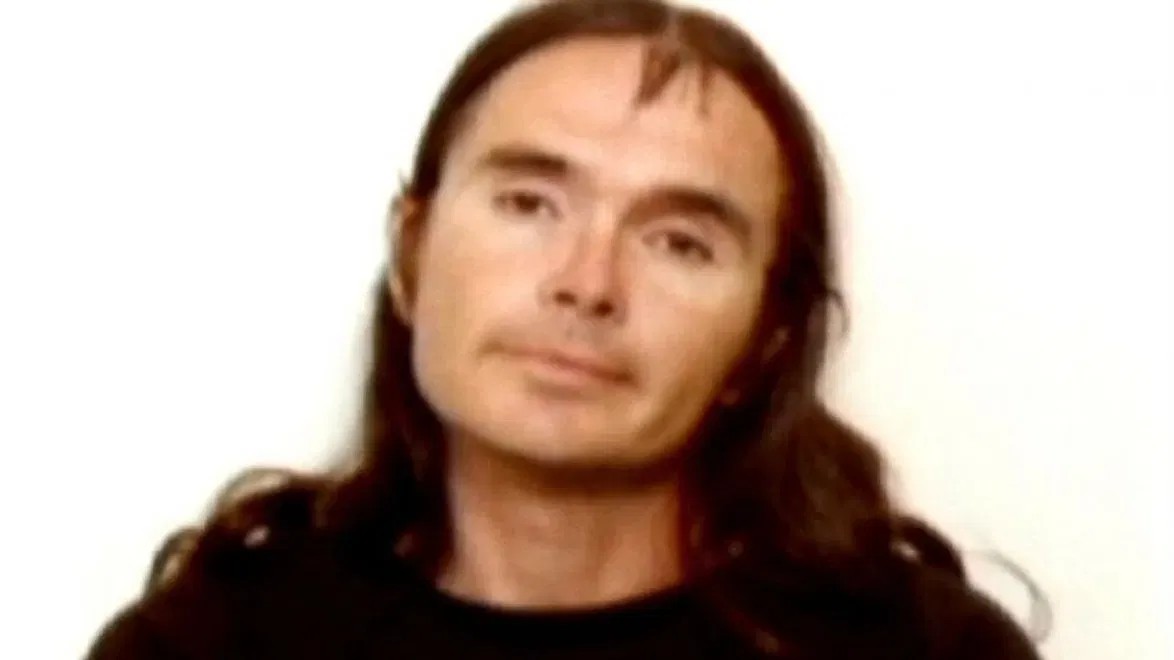
The silence was broken in 2012 by a routine DNA test. The sample, taken from a felon convicted on a federal firearms charge, produced a stunning match to evidence collected from one of the 1990 murder scenes. The DNA belonged to Donna Perry, a transgender woman. Investigators soon discovered that at the time of the killings, she had been living as a man named Douglas Perry. This revelation launched one of the most unusual murder trials in Washington state history. Prosecutors argued that Douglas Perry committed the murders and then transitioned to Donna Perry in a calculated effort to escape justice. In 2017, a jury agreed, and Perry was convicted of all three murders, finally bringing a resolution to a case that had haunted Spokane for 27 years.
Early Life as Douglas Perry
Donna Perry was born Douglas Robert Perry on September 9, 1952. Some reports indicate she was born in Thailand to a father who was a U.S. serviceman. Growing up, Perry exhibited violent tendencies and began accumulating a criminal record as a young man. This record, which started around 1974, included a variety of offenses that painted a picture of a volatile and dangerous individual.
In 1988, two years before the Spokane River murders, Douglas Perry was arrested for possessing a pipe bomb. A subsequent search of his property uncovered a massive illegal arsenal, including 49 firearms and approximately 20,000 rounds of ammunition. This incident established Perry's familiarity with and access to weapons. His criminal history also included charges of reckless endangerment and soliciting a prostitute, placing him in the same social circles as his future victims. Despite these run-ins with the law, Perry remained largely under the radar for any major violent crimes. He worked as a mechanic and lived a seemingly ordinary life, all while harboring deadly secrets.
The Spokane River Murders of 1990
The series of killings began in the cold of late winter. On February 22, 1990, the naked body of 26-year-old Yolanda A. Sapp was found by a passerby near the Spokane River at a spot known as "the beach" in the 4100 block of East Upriver Drive. She had been shot with a .22-caliber firearm.
Just over a month later, on March 25, the body of 34-year-old Nickie I. Lowe was discovered. She was found partially clothed under the Greene Street Bridge, another area along the river. Like Sapp, she had been shot to death. The pattern was becoming terrifyingly clear to law enforcement and the public: someone was targeting and killing women in Spokane.
The final victim in the series was found on May 15. The body of 38-year-old Kathleen A. Brisbois was located near the Spokane River, east of the city. She too had been shot, and her body was left nude. The discovery of a third victim in less than four months confirmed investigators' fears of a serial killer. The cases were linked by the victims' similar lifestyles, the cause of death, and the proximity of the body disposal sites to the river. For a time, investigators considered the possibility that notorious serial killer Robert Lee Yates, who was active in Spokane during the 1990s, could be responsible, but no evidence ever connected him to these three murders. The trail went cold, and the cases remained unsolved for more than two decades.
The Victims
The three women murdered in 1990 were more than just victims; they were mothers, daughters, and sisters whose lives were brutally cut short.
- Yolanda A. Sapp, 26 — Discovered on February 22, 1990, she was a mother whose daughter, Natasha, was left to grow up without her. For years, her family searched for answers, holding onto hope that justice would one day be served.
- Nickie I. Lowe, 34 — Found on March 25, 1990, she was also a mother. Her life was intertwined with the others, living and working in the same vulnerable circumstances that made her a target.
- Kathleen A. Brisbois, 38 — Her body was found on May 15, 1990. Evidence showed she had fiercely fought her attacker. It was scrapings from underneath her fingernails that preserved the killer's DNA, a crucial piece of evidence that would, 22 years later, identify her murderer.
A Killer in Hiding
After the 1990 murders, Douglas Perry continued to have encounters with law enforcement. In 1998, he was arrested in Portland, Oregon, after being found with a gun and a knife in a red-light district. He served 18 months in jail for this offense. During his incarceration, a fellow inmate, Floyd Stevens, later testified that Perry confessed to killing nine prostitutes in Washington. Stevens claimed Perry described feeling a compulsion to "clean up the streets." This information, while chilling, could not be independently verified.
The most significant event in Perry's life during this period occurred in 2000. After his release from jail, Douglas Perry traveled to Thailand to undergo gender reassignment surgery, thereafter living as Donna Perry. She settled into a new life, with her violent past seemingly buried along with her former identity. Prosecutors would later argue this was not a journey of self-discovery but a calculated act of evasion. They contended that Perry chose to transition as a way to distance herself from the man who had committed the murders and to create the ultimate disguise. In a later interview with detectives, Perry herself made a statement that seemed to support this theory, saying she underwent the surgery "as a permanent way to control violence."
The Cold Case Breakthrough
For 22 years, the murders of Sapp, Lowe, and Brisbois remained one of Spokane's most haunting cold cases. The break finally came from an unrelated crime. In March 2012, Donna Perry was convicted in federal court for being a felon in possession of a firearm. As was standard procedure for convicted felons, a sample of her DNA was collected and entered into the Combined DNA Index System (CODIS), a national database used to compare forensic evidence.
Months later, in September 2012, the Washington State Patrol Crime Lab notified Spokane detectives of a stunning hit. The DNA profile from Donna Perry was a match to the foreign DNA sample recovered from the body and blanket of Kathleen Brisbois back in 1990. Investigators finally had a name, but it led to a perplexing situation: the DNA belonged to a woman, while the profile of a serial killer targeting female sex workers almost always pointed to a male suspect. It was only when detectives delved into Perry's history that they uncovered her past as Douglas Perry. The cold case was suddenly hot again.
Investigation and Arrest
With the DNA link established, detectives in Spokane's cold case unit, led by Major Crimes Detective Mark Burbridge, reopened the investigation with renewed vigor. They re-examined all the evidence from the 1990 crime scenes. They discovered that a thumbprint found on a plastic bag near Nickie Lowe's body, which had been unidentified for decades, matched the prints of Douglas Perry. Furthermore, a partial palm print found on the body of Yolanda Sapp was also matched to him.
Detectives interviewed Donna Perry, who initially denied any involvement. However, she made several incriminating statements. She told investigators that "Douglas, not Donna" committed the killings and that she had the surgery to control her violent urges. She claimed that Douglas Perry was a "he" and that "I'm not him. I'm Donna... I threw him away." She also admitted to owning a .22-caliber pistol, the same caliber used in the murders, but claimed she had gotten rid of it.
Based on the combined strength of the DNA match, the fingerprint evidence, and her own statements, Donna Rebecca Perry was arrested and charged in May 2014 with three counts of first-degree murder.
Trial
The trial of Donna Perry commenced in June 2017 and quickly became a focal point of national media attention due to its unique and controversial elements.
The prosecution, led by Spokane County Deputy Prosecutor Sharon Hedlund, built its case on the forensic evidence. They presented the DNA link to Brisbois and the fingerprint matches to Sapp and Lowe as irrefutable proof of Perry's presence at the crime scenes. The core of their argument, however, was psychological. Hedlund portrayed Perry's gender transition as the ultimate act of a cunning killer trying to escape justice. In her closing argument, Hedlund told the jury, "She gelded herself like you would a farm animal to get rid of the violence." The prosecution suggested a motive rooted in Perry's own conflicted feelings about gender and sexuality. They argued that as Douglas, Perry was filled with rage and jealousy toward the victims, who were biological women capable of bearing children, something he could never do.
Perry's defense attorney, Pat Donahue, faced an uphill battle against the forensic evidence. He conceded that his client's DNA and prints were found on the victims but offered an alternative explanation: that Douglas Perry had been a patron of the prostitutes and the contact was consensual. The defense's primary strategy was to create a distinction between the person on trial, Donna, and the person who may have committed the crimes, Douglas. Donahue argued that it was "Douglas Perry, the man" who was the killer, not Donna Perry, the woman sitting in the courtroom. The defense did not call any witnesses, and Perry did not testify in her own defense.
After two weeks of testimony, the case went to the jury. On June 29, 2017, after two days of deliberation, the jury returned a verdict, finding Donna Perry guilty on all three counts of first-degree murder.
Conviction and Sentencing
On July 24, 2017, Donna Perry appeared before Superior Court Judge Michael Price for sentencing. The families of her victims were present, and some delivered emotional impact statements. Natasha Sapp, the daughter of Yolanda Sapp, spoke of growing up without a mother and the pain of not knowing who was responsible for 27 years.
Perry declined to speak at her sentencing. Judge Price, calling the crimes "horrific," handed down the maximum possible sentence: three consecutive life sentences without the possibility of parole, ensuring she would spend the rest of her life in prison.
Appeals and Imprisonment
Following her conviction, Perry filed an appeal. Her lawyers argued that the trial court had made an error by allowing the prosecution to repeatedly and prejudicially refer to her gender transition as a method to avoid arrest. They contended that this focus on her transgender identity was inflammatory and denied her a fair trial. In February 2020, the Washington State Court of Appeals, Division III, rejected her arguments. The court ruled that Perry herself had introduced the topic by telling detectives that "Douglas" was the killer and that she had the surgery to control his violence. Therefore, the prosecution was entitled to explore the transition as a potential motive for evading capture. The conviction was upheld.
Donna Perry is incarcerated at the Washington Corrections Center for Women in Gig Harbor, where she is serving her three life sentences.
Aftermath and Legacy
The conviction of Donna Perry brought a final, painful closure to the families of Yolanda Sapp, Nickie Lowe, and Kathleen Brisbois. After nearly three decades of uncertainty, they finally had justice for their loved ones. The case stands as a powerful testament to the advancements in forensic science and the tenacity of cold case detectives who refused to let the memories of the victims fade.
The case of Donna Perry remains a unique and disturbing chapter in the history of American true crime. It explores complex themes of identity, motive, and deception, leaving a legacy that is both a cautionary tale about the darkness a person can hide and a story of how science and persistence can ultimately bring that darkness to light.