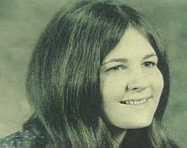
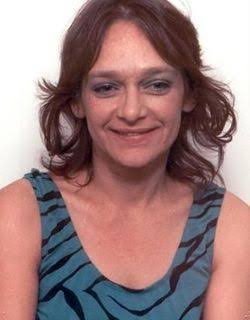
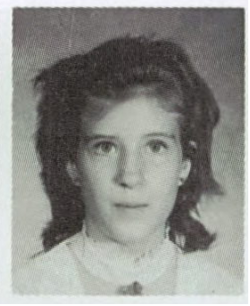
In the winter of 1990, the city of Spokane, Washington, was gripped by a series of brutal killings that would leave a community in fear and families searching for answers for more than two decades. The first of these victims was Yolanda A. Sapp, a 26-year-old Black woman and a mother. On the morning of February 22, 1990, her body was discovered on the north bank of the Spokane River, in the area of 4100 E. Upriver Drive. She had been shot three times with a small-caliber handgun and left miles from the East Sprague Avenue area she frequented. Yolanda was a part of a close-knit circle of women who worked the streets and looked out for one another, a group that understood the dangers they faced daily. Her death left behind a young daughter, Natasha, who would grow up with only fragments of memories of her mother, and a family, including her sister Marika, haunted by the fear that the killer remained at large.
The initial investigation into Yolanda’s murder yielded few leads.
Detectives interviewed her boyfriend and chased down rumors of drug debts, but every path eventually went cold. The case remained unsolved, a lingering wound for her loved ones. Within months, the community was shaken again. On March 25, the body of 34-year-old Nickie Lowe was found under the Greene Street Bridge. Then, on May 15, 38-year-old Kathleen Brisbois was found near the river in Spokane Valley. All three women had been shot, their bodies discarded near the Spokane River, leading police to believe a single killer was responsible. For years, the slayings were suspected to be the work of convicted serial killer Robert Yates, but the methods didn't quite match, and no direct evidence linked him to these three women.
For twenty-two years, the cases of Yolanda Sapp, Nickie Lowe, and Kathleen Brisbois remained cold. The families held onto a fading hope for justice, while detectives kept the files open, waiting for a break. That break finally came in 2012 from an unrelated federal firearms case. A person named Donna Rebecca Perry was arrested, and as required by law, her DNA was collected and entered into the national database. The sample produced a stunning match: it linked directly to biological material that had been preserved from underneath the fingernails of Kathleen Brisbois, who had fought for her life.
This forensic breakthrough reignited the investigation. Detectives from the Spokane Police Department and Spokane County Sheriff's Office joined forces, meticulously re-examining every piece of evidence. Perry’s DNA was also matched to a floral blanket found near Yolanda Sapp's body. Furthermore, a fingerprint lifted from an item recovered from a dumpster where Nickie Lowe's wallet was found also matched Perry. Investigators learned that at the time of the murders in 1990, Donna Perry was legally known as Douglas Robert Perry. In 2000, Perry had undergone gender reassignment surgery. Prosecutors would later argue this was an attempt to elude capture and alter her identity to escape suspicion for the murders she committed as a man.
In 2014, Donna Perry was charged with three counts of first-degree murder for the deaths of Yolanda Sapp, Nickie Lowe, and Kathleen Brisbois. During her trial in 2017, the prosecution presented the powerful forensic evidence that tied her to all three victims. Jurors also heard testimony that while in custody, Perry had made incriminating statements, at one point claiming to a fellow inmate that she had killed nine women, though only three were ever proven. Perry's defense attempted to argue that the violent acts were committed by Douglas, her previous male identity, and that Donna had "stopped it."
On June 29, 2017, a jury found Donna Rebecca Perry guilty on all three counts of first-degree murder. She was subsequently sentenced to three consecutive life sentences in prison without the possibility of parole, ensuring she would never again be free. At the sentencing, the families of the victims were finally able to confront the person who had inflicted decades of pain. They spoke of their enduring grief and anger, and their long-awaited sense of justice. For Yolanda Sapp's family, the verdict brought a profound, if somber, sense of closure. After 27 years of uncertainty, the man who had taken a mother from her child and a sister from her family was finally held accountable, the resolution a testament to the persistence of investigators and the power of evidence to speak for those who no longer can.