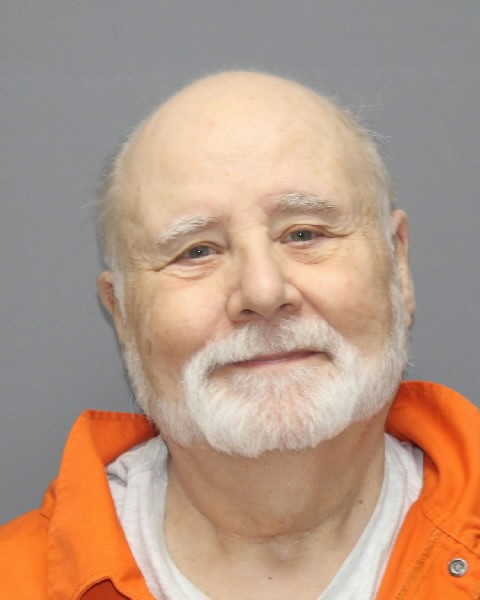
Richard Anthony Grissom: The Kansas Serial Killer
Richard Anthony Grissom Jr. is an American convicted serial killer whose crimes became one of the most disturbing criminal cases in Kansas history. His record of violence began when he was a teenager and culminated in the 1989 disappearances and murders of three young women in Johnson County, Kansas. The later case was especially unusual because prosecutors obtained three first-degree murder convictions even though the bodies of Joan Marie Butler, Theresa J. Brown, and Christine A. Rusch were never recovered. Because their remains have never been found, their exact dates of death cannot be verified; their known disappearance and last-contact dates are given instead.
The 1977 Murder of Hazel Meeker
Grissom's first known killing occurred when he was only 16 years old. On January 27, 1977, after an argument at home, Grissom entered the residence of 72-year-old neighbor Hazel Meeker near Lansing, Kansas. He was armed with a railroad spike and attacked Meeker inside her home. She suffered fatal injuries. Grissom then fled and broke into another residence, where he stole a handgun.
Investigators found footprints in the snow near the crime scene and followed their path toward railroad tracks and a nearby trailer park. Grissom was located and taken into custody. He admitted responsibility for Meeker's killing and was handled through the juvenile justice system. He was ultimately sent to a juvenile institution rather than an adult prison. The killing demonstrated a capacity for extreme violence years before the crimes for which he later became nationally known.
The Suspected Murder of Terri Renee Maness
On June 7, 1989, 25-year-old Terri Renee Maness was found dead in Wichita, Kansas. She was living in Wichita and working as a legal secretary. Contemporary reporting stated that her body was discovered in a basement apartment and that she had suffered stab wounds. Grissom had reportedly dated or socialized with Maness shortly before her death and later became a suspect in the investigation.
Wichita investigators worked with detectives investigating Grissom's later crimes, and prosecutors publicly discussed the possibility that Maness was another of his victims. However, Grissom was never charged with or convicted of killing her. Her death therefore remains separate from the three 1989 murders for which his guilt was established in court.
The Disappearance and Murder of Joan Marie Butler
Joan Marie Butler, 24, lived alone at the Comanche Place Apartments in Overland Park, Kansas. During the early morning of June 18, 1989, Butler left a friend's apartment at approximately 4:00 a.m. and said she was going home to sleep. Evidence later showed that she apparently reached her apartment because the clothing she had been wearing was found in her bedroom. A downstairs neighbor reported being awakened by a loud thump sometime between approximately 4:00 and 5:00 that morning.
At 5:59 a.m., only about two hours after Butler had left her friends, $300 was withdrawn from her bank account. Additional withdrawals followed on June 19 and June 20 until roughly $900 had been removed. Butler failed to contact her father for Father's Day on June 18 and failed to appear for work the following morning, behavior that friends, relatives, and coworkers considered extremely unusual.
Butler's maroon Chevrolet Corsica rental car was also missing. On June 25, police located it at an apartment complex in Lawrence, Kansas. An officer watching the car saw Grissom approach it and open the trunk. When questioned, Grissom fled through an apartment building and escaped through a window. A subsequent examination of the Corsica produced evidence linking him to the vehicle, including his fingerprint and personal belongings. Investigators also discovered small amounts of dried blood in the trunk. Genetic testing indicated that the blood was highly consistent with having come from a biological child of Butler's parents.
Christine Rusch and Theresa Brown
Christine A. Rusch and Theresa J. Brown, both 22, shared an apartment at Trafalgar Square Apartments in Lenexa, Kansas. Grissom operated a painting and apartment-maintenance business and had worked at their complex. Evidence at his trial showed that he knew the women and possessed access keys. A coworker also testified that before the disappearances he had accompanied Grissom into their apartment, where Grissom went through closets, drawers, and personal belongings without a legitimate work reason.
On June 25, 1989, Rusch spent much of the day with friends and went to a club that evening. She left shortly after midnight because she needed to work the following morning. Brown had been staying with her boyfriend and left his home at approximately 6:00 a.m. on June 26 to return to her apartment and prepare for work. Clothing she had been wearing was later found in her bedroom, showing that she apparently arrived home.
During the morning of June 26, four checks were cashed from Rusch's account, removing approximately $2,400. A handwriting examiner determined that Rusch had signed the checks but noted that the quality of the handwriting became progressively less natural. One witness at a bank described seeing a white woman driving with a dark-skinned male passenger. At about 8:45 a.m., Rusch telephoned her workplace and said she was ill, adding that she expected to come in later.
Later that day, a storage unit in Raytown, Missouri, was rented in Rusch's name. The employee who handled the rental testified that the woman involved appeared distressed and was accompanied by a man who resembled Grissom. The address supplied for the rental was connected to an alias previously used by Grissom.
That evening, Rusch appeared in ATM photographs while using Brown's bank account. At approximately 9:25 p.m. an account inquiry was made at an ATM in Raytown, Missouri. At approximately 9:57 p.m., a $300 withdrawal was made at a bank in Belton, Missouri. These transactions are among the last documented evidence that either woman was alive. Neither Rusch nor Brown was reliably seen or heard from afterward.
Evidence Connecting Grissom to the Women
Police found extensive physical and circumstantial evidence after the disappearances. Credit cards belonging to Rusch and Brown were recovered from the Toyota Grissom had been using. Keys found in the vehicle opened the women's apartment, and investigators established that Grissom had previously possessed master keys for the complex. Jewelry belonging to Rusch was also recovered.
Rusch's Dodge Colt was found on June 28 near the Trafalgar Square complex. Damage on the car contained paint that investigators connected to a post at the Raytown storage facility. Police also recovered knives, gloves, false identification documents, and other property from Grissom's vehicle. Hair and trace evidence from locations associated with the investigation added to the circumstantial case presented by prosecutors.
Grissom left the Kansas City area while police were searching for him. On July 7, 1989, authorities arrested him at Dallas-Fort Worth International Airport in Texas. He denied murdering the three women and never provided investigators with the locations of their bodies.
Victims and Important Dates
- Hazel Meeker, 72 - Died January 27, 1977. She was killed inside her home near Lansing, Kansas. Grissom was 16 years old and admitted responsibility for the killing.
- Terri Renee Maness, 25 - Died June 7, 1989, in Wichita, Kansas. She was found dead with stab wounds in a basement apartment. Grissom was investigated as a suspect but was never charged with her murder.
- Joan Marie Butler, 24 - Disappeared from Overland Park, Kansas, on June 18, 1989. Her exact date of death is unknown because her remains have never been recovered. Grissom was convicted of her murder.
- Theresa J. Brown, 22 - Disappeared from the Trafalgar Square Apartments in Lenexa, Kansas, on June 26, 1989. Her exact date of death is unknown because her remains have never been recovered. Grissom was convicted of her murder.
- Christine A. Rusch, 22 - Disappeared from Lenexa, Kansas, on June 26, 1989. She was documented conducting financial transactions that day, including activity in the Kansas City metropolitan area. Her exact date of death is unknown because her remains have never been recovered. Grissom was convicted of her murder.
Trial, Conviction, and Aftermath
Prosecutors brought Grissom to trial without having recovered Butler, Brown, or Rusch. The case depended heavily on circumstantial evidence: Grissom's access to the women's apartments, possession of their property and keys, his connection to Butler's rental car, the blood found inside that vehicle, the victims' financial transactions, evidence from the storage facilities, and his flight from police.
In 1990, a Johnson County jury convicted Grissom of three counts of first-degree murder as well as aggravated kidnapping, robbery, burglary, and related offenses. He received multiple life sentences. In 1992, the Kansas Supreme Court upheld the murder convictions, concluding that the extensive circumstantial evidence was sufficient for a rational jury to find him guilty beyond a reasonable doubt, although portions of the sentencing on certain non-murder offenses required further proceedings.
Grissom has continued to deny responsibility for the three Johnson County murders and has never disclosed where Butler, Brown, or Rusch were taken after their disappearances. Their unrecovered remains remain the central unresolved element of the case. The successful prosecution of three murders without the recovery of any of the victims' bodies made the Grissom case a particularly notable example of a homicide prosecution built largely from interconnected physical and circumstantial evidence.