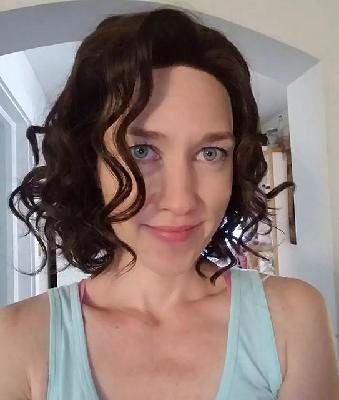
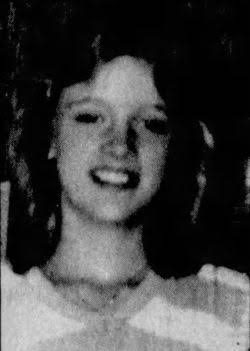
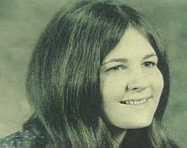
In the cold spring of 1990, a shadow fell over Spokane, Washington, as a serial killer began to prey on some of the city’s most vulnerable women. The second of three victims in this terrifying spree was Nickie I. Lowe, a 34-year-old mother. Her life had been marked by struggle; according to her mother, Diane, Nickie dealt with dyslexia and low self-esteem, which eventually led to a drug addiction that pulled her into the world of prostitution.
She was a friend of Yolanda Sapp, the killer’s first victim, and after Sapp’s murder in February, a deep fear took root in Nickie. She reportedly told friends she was afraid she would be next.
Her fear became a tragic reality a month later. On the morning of March 25, 1990, Nickie’s body was discovered in a place of stark public utility, underneath the Greene Street Bridge near South Riverton. The scene was one of profound degradation. Her body had been posed over a guardrail, partially undressed, with marks on her back suggesting she had been dragged into position. She had been shot to death with a small-caliber handgun. The discovery sent a fresh wave of terror through the community and the women who, like Nickie, lived and worked along Sprague Avenue.
For more than two decades, Nickie’s murder, along with those of Yolanda Sapp and the third victim, Kathleen Brisbois, who was found in May, remained a painful cold case. Investigators from the Spokane Police Department and the Spokane County Sheriff's Office believed the killings were connected due to the similarities in the victims' lives, the consistent use of a small-caliber firearm, and the choice to discard the bodies near the Spokane River. For a time, the murders were even thought to be the work of another notorious Spokane serial killer, Robert Yates, but the evidence never aligned. The trail went cold, and the families were left to wait in a long silence, hoping for a breakthrough that seemed increasingly unlikely.
The break finally came in 2012, through a combination of modern technology and a separate federal crime. A person named Donna Rebecca Perry, formerly known as Douglas Robert Perry before undergoing gender reassignment surgery in 2000, was convicted on a federal firearms charge. As required by law, Perry’s DNA was collected and entered into the national database. The sample produced a match—to DNA evidence that had been painstakingly collected from the fingernails of Kathleen Brisbois, who had fought back against her attacker. This crucial link allowed detectives to re-examine all three murders, now with a primary suspect.
The renewed investigation quickly solidified the case against Perry. In addition to the DNA from the Brisbois scene, detectives found more. Perry’s fingerprint was a match to one found on a bottle of lubricant inside Nickie Lowe’s purse, which had been left at the scene. This piece of physical evidence directly tied Perry to Nickie, bridging a gap of 22 years with a single, undeniable mark. Prosecutors would later argue that Perry, born male, had been jealous of the women's ability to have children and that the gender reassignment surgery was an attempt to elude suspicion for the murders committed as Douglas Perry.
In 2017, Donna Perry was convicted of three counts of first-degree murder for the deaths of Nickie Lowe, Yolanda Sapp, and Kathleen Brisbois. She was sentenced to three consecutive life sentences without the possibility of parole, ensuring she would never again be free. For the families of the victims, the verdict brought a sense of finality to a nightmare that had stretched across a generation.
The conviction provided a long-awaited, if somber, sense of closure. Nickie’s niece, Chalisa Patzer, who was the last living relative from her aunt's immediate family, spoke for them all after the verdict. "I am so excited that we got guilty on all three counts for all three of these women," she said. "It's been my whole entire life for this whole entire case." Her words captured the profound relief that came with knowing that, after 27 years, justice had finally been served for her aunt, Nickie Lowe.