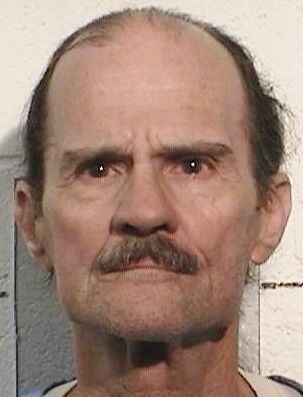
Herbert William Mullin: The Santa Cruz Serial Killer
Early Life and Declining Mental Health
Herbert William Mullin was born on April 18, 1947, in Salinas, California, and spent much of his youth in the Santa Cruz Mountains. During high school, he was remembered as sociable and promising, and his classmates reportedly voted him “Most Likely to Succeed.” His behavior began to change significantly during his late teenage years, particularly after the death of a close friend in an automobile accident. Mullin became preoccupied with death, reincarnation and unusual spiritual ideas.
As he entered adulthood, Mullin experienced increasingly serious psychiatric problems. He spent time in several mental-health institutions and was diagnosed with paranoid schizophrenia. He also used marijuana, LSD and other drugs, although his delusions continued even during periods when he claimed to be sober. He reported hearing voices and became convinced that ordinary events carried hidden supernatural meanings.
By 1972, Mullin believed that California was in danger of suffering a catastrophic earthquake. He developed the delusion that human deaths acted as sacrifices that could prevent earthquakes. Mullin later claimed that the number of American soldiers dying in the Vietnam War had previously protected California, but that the reduction of combat deaths meant he had to provide additional sacrifices himself. These beliefs were entirely the product of his delusional thinking, but they became the justification he used for killing 13 people between October 1972 and February 1973.
The Beginning of the Murders
Mullin committed his first known murder on October 13, 1972. He encountered Lawrence “Whitey” White, a 55-year-old homeless man, near a roadway in Santa Cruz County. Mullin stopped his station wagon and pretended that he was having mechanical trouble. When White approached and offered assistance, Mullin attacked him with a baseball bat. He then dragged White’s body away from the road and left it in a wooded area.
Eleven days later, Mullin picked up 24-year-old Mary Margaret Guilfoyle, a college student who was hitchhiking because she was late for an appointment. While she was inside his vehicle, Mullin stabbed her. He transported her body to a remote location and attempted to examine it, later claiming that he was searching for evidence of environmental contamination. Her remains were not discovered until February 1973, after Mullin had already been arrested.
On November 2, 1972, Mullin entered St. Mary’s Catholic Church in Los Gatos. He approached Father Henri Tomei, a 64-year-old priest, inside the confessional. Mullin later claimed that Tomei had somehow volunteered to become a sacrifice, but there was no basis for that assertion. Mullin attacked the priest, beating and stabbing him before fleeing the church. The sudden killing of a priest in a place of worship appeared unrelated to the earlier roadside murders, preventing investigators from immediately recognizing that the crimes were connected.
The January 1973 Cabin Murders
After a pause of nearly three months, Mullin’s violence escalated dramatically. He became fixated on Jim Ralph Gianera, a former high-school acquaintance whom he blamed for introducing him to marijuana. Mullin convinced himself that Gianera was responsible for the drug use and personal problems that had followed him into adulthood.
On January 25, 1973, Mullin traveled to a rural area near Santa Cruz in search of Gianera. He first stopped at the home of Kathleen “Kathy” Francis, who directed him to the cabin where Gianera lived with his wife, Joan. Mullin went to the cabin, confronted Gianera and shot him. When the wounded man attempted to reach his wife, Mullin continued the attack and fatally shot Joan Gianera as well.
Mullin then returned to the Francis residence. He killed Kathy Francis and two children who were inside the home: four-year-old Daemon Francis and nine-year-old David Hughes. The victims were shot, and Mullin also used a knife during the attack. Five people were killed that day in two neighboring homes.
Investigators initially suspected that the cabin murders might have been connected to drugs because of the rural setting and Jim Gianera’s history. The killings were not immediately associated with the murders of Lawrence White, Mary Guilfoyle or Father Tomei. Mullin’s changing methods, locations and selection of victims made the series particularly difficult to identify.
The Henry Cowell Redwoods Murders
On February 10, 1973, Mullin encountered four young campers in Henry Cowell Redwoods State Park near Felton. The group consisted of David Oliker, Robert Spector, Brian Scott Card and Mark Dreibelbis. Mullin approached the campsite and falsely presented himself as someone with authority over the park. He accused the campers of violating park rules and polluting the forest, ordering them to leave.
When the young men did not follow his instructions, Mullin left the area and returned armed with a .22-caliber pistol. He shot all four campers, killing them at or near their campsite. He then stole a rifle and a small amount of money before leaving. Their bodies remained undiscovered for several days, meaning that police did not connect the campsite killings to Mullin before he committed his final murder.
The Final Murder and Arrest
On February 13, 1973, Mullin was driving through a residential neighborhood in Santa Cruz when he saw 72-year-old Fred Abbie Perez working outside his home. Perez was a retired boxer and fish-market employee who had no known connection to Mullin. Mullin turned his vehicle around, stopped nearby and placed the stolen rifle across the hood of his station wagon. He fired at Perez, striking him in the chest and killing him.
Unlike Mullin’s earlier crimes, the shooting took place in daylight and was witnessed by a neighbor. The witness recorded Mullin’s license-plate number and immediately contacted the police. Officers located the station wagon within minutes and ordered Mullin to pull over. He complied without resisting. A firearm connected to the killings was found inside his vehicle.
Once in custody, Mullin confessed to 13 murders. His statements led investigators to connect crimes that had previously appeared unrelated. He described the killings as sacrifices and insisted that he had prevented earthquakes by taking human lives. He also claimed that some victims had communicated their consent telepathically, an assertion that reflected the severity of his delusions rather than reality.
Known Victims
- Lawrence “Whitey” White, 55 — Killed on October 13, 1972, near a roadway in the Santa Cruz area of California. Mullin lured White toward his station wagon by pretending to have engine trouble and then beat him with a baseball bat.
- Mary Margaret Guilfoyle, 24 — Killed on October 24, 1972, after Mullin picked her up while she was hitchhiking near Santa Cruz, California. He stabbed her inside his vehicle and concealed her remains in a remote area.
- Father Henri Tomei, 64 — Killed on November 2, 1972, inside St. Mary’s Catholic Church in Los Gatos, California. Mullin attacked the priest in or near the confessional, beating and stabbing him.
- Jim Ralph Gianera, 25 — Killed on January 25, 1973, at his rural cabin near Santa Cruz, California. Mullin blamed Gianera for introducing him to marijuana and shot him during a confrontation.
- Joan Gianera, 21 — Killed on January 25, 1973, inside the cabin she shared with her husband near Santa Cruz, California. Mullin shot her after attacking Jim Gianera.
- Kathleen Louise “Kathy” Francis, 29 — Killed on January 25, 1973, at her home near the Gianera cabin in Santa Cruz County, California. Mullin returned to her residence after she had given him directions to the Gianeras’ home.
- Daemon Francis, 4 — Killed on January 25, 1973, inside the Francis home in Santa Cruz County, California. He was Kathy Francis’s young son.
- David Hughes, 9 — Killed on January 25, 1973, inside the Francis home in Santa Cruz County, California. He was present with Kathy and Daemon Francis when Mullin entered the residence.
- David Allan Oliker, 18 — Killed on February 10, 1973, at a campsite in Henry Cowell Redwoods State Park near Felton, California. Mullin shot him after ordering the campers to leave the area.
- Robert Michael Spector, 18 — Killed on February 10, 1973, at the campsite in Henry Cowell Redwoods State Park near Felton, California.
- Brian Scott Card, 19 — Killed on February 10, 1973, at the campsite in Henry Cowell Redwoods State Park near Felton, California.
- Mark John Dreibelbis, 15 — Killed on February 10, 1973, at the campsite in Henry Cowell Redwoods State Park near Felton, California. He was the youngest member of the camping group.
- Fred Abbie Perez, 72 — Killed on February 13, 1973, while working outside his home in Santa Cruz, California. Mullin shot him with a rifle in view of a neighbor, whose report led directly to Mullin’s arrest.
Trial and Insanity Defense
Because Mullin confessed, the central issue at his trial was not whether he had committed the killings but whether he was legally responsible for them. His attorneys argued that his schizophrenia and elaborate delusions prevented him from understanding the nature or wrongfulness of his actions. The prosecution acknowledged that Mullin was seriously mentally ill but argued that he still knew killing was illegal and understood the difference between right and wrong.
Prosecutors pointed to Mullin’s efforts to conceal bodies, avoid witnesses, change locations and flee crime scenes. They argued that his decision to target Jim Gianera, obtain weapons and return to the campsite demonstrated planning. The jury concluded that some murders were premeditated while others were impulsive.
In August 1973, Mullin was convicted in Santa Cruz County of two counts of first-degree murder and eight counts of second-degree murder. He later pleaded guilty to second-degree murder for the killing of Father Henri Tomei in Santa Clara County. Although Mullin admitted killing Mary Guilfoyle and Lawrence White, jurisdictional and evidentiary considerations meant that the final convictions covered 11 of the 13 deaths.
Imprisonment and Death
Mullin received life sentences and spent the remainder of his life in the California prison system. He appeared before the parole board repeatedly but was consistently denied release. Officials continued to regard him as dangerous, and his statements during incarceration showed that he remained strongly attached to the beliefs surrounding his crimes.
During part of his imprisonment, Mullin was housed near Edmund Kemper, another serial killer who had been active in the Santa Cruz region during the same period. The simultaneous presence of the two killers had complicated local investigations because their victims, motives and methods were different. The overlap contributed to Santa Cruz County’s grim reputation during the early 1970s.
Herbert William Mullin died of natural causes on August 18, 2022, at the California Health Care Facility in Stockton. He was 75 years old. His four-month series of murders remains one of California’s most disturbing criminal cases, both because of the wide range of victims and because apparently unconnected attacks were driven by a single offender’s violent delusional system.
Legacy of the Case
Mullin’s crimes demonstrated the difficulty investigators face when an offender changes weapons, locations and victim types. His victims included men, women and children ranging from four to 72 years old. Some were strangers encountered by chance, while others were selected because Mullin had incorporated them into his personal grievances or delusions.
The case also became an important example in discussions of mental illness and criminal responsibility. Mullin was profoundly mentally ill, but the courts determined that illness alone did not satisfy California’s legal definition of insanity. His planning, concealment of evidence and attempts to avoid capture persuaded jurors that he understood his actions were prohibited, even though his stated motive was irrational.
Behind the unusual motive and the legal debate were 13 individual victims whose lives were ended within a few months. Their deaths devastated families and communities throughout Santa Cruz and the surrounding region. Mullin’s arrest brought the killing spree to an end, but the case remains remembered for the randomness of the attacks, the vulnerability of the victims and the tragic consequences of violence driven by severe delusion.