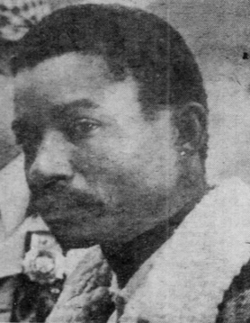
Anthony J. Jackson: The Massachusetts “Hitch-Hike Murderer”
Overview
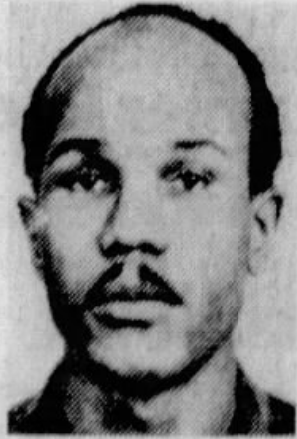
Anthony J. Jackson was an American murderer associated with a frightening series of attacks on young women in Massachusetts during 1972. Newspapers and investigators referred to him as the “Hitch-Hike Murderer” because several victims regularly hitchhiked or were believed to have accepted rides shortly before disappearing. Jackson was born in 1939 and was approximately thirty-three years old when police arrested him on December 26, 1972.
The crimes occurred during a period when hitchhiking was common among students in the Boston area. Several young women disappeared while traveling between apartments, colleges, jobs and appointments. Their bodies were later found in apartments, abandoned buildings, parks and wooded areas. Most had been strangled, and some had also been sexually assaulted or otherwise injured.
Jackson was convicted of murdering Ellen Reich, Damaris Synge Gillispie and Ruth Abigail Hamilton. He was tried for Sandra Ehramjian’s murder but was found not guilty. Kathleen Randall and Deborah Rae Stevens were publicly connected to the wider group of 1972 hitchhiking murders, but Jackson was not convicted of killing them. Randall’s homicide remains officially unsolved. Because historical accounts sometimes combine convicted, suspected and possibly related cases, those categories should not be treated as identical.
Victims and Cases Associated with Jackson
- Kathleen Ann Randall, 18 — disappeared September 13, 1972; found October 1, 1972, in Nashua, New Hampshire. Randall was a freshman at Boston University. She was last known to have left her dormitory on September 13 and was reported missing on September 19. Her body was discovered at Yudicki Farm beside Route 111-A in Nashua. Decomposition prevented authorities from establishing a precise date of death, although investigators believed she had been dead for an extended period. Her murder was compared with the Boston-area cases because of her age, student status and travel habits. Jackson reportedly denied responsibility for the New Hampshire killing, and he was never charged or convicted in Randall’s death. The case remains unsolved.
- Deborah Rae Stevens, 19 — died September 15, 1972, in Lynn, Massachusetts. Stevens was a physical-therapy student who attended classes in Boston. She was last seen on the evening of September 14. Her body was found at approximately 6:00 the following morning in lilac bushes about seventy-five yards from her home in Lynn. The medical examiner estimated that she died between approximately 2:00 and 3:00 a.m. on September 15. She had been strangled and reportedly sexually assaulted. Her death became one of the earliest cases discussed as part of the 1972 hitchhiking-murder investigation, although Jackson was not convicted of killing her.
- Ellen Ann Reich, 19 — died on or about November 9, 1972; found November 14, 1972, in Roxbury, Boston. Reich was a sophomore at Emerson College who lived in Boston’s Back Bay. She frequently hitchhiked the short distance between her apartment and the college. On the morning of November 9, she left home for class and disappeared. Five days later, her body was found concealed inside a closet in an abandoned building at 132 Seaver Street in Roxbury. The closet had been closed with nails. Reich had been strangled, stabbed and shot. Investigators later connected a handgun associated with Jackson to the bullet recovered from her body. Witnesses also linked him to the Seaver Street property. Jackson was convicted of first-degree murder in Reich’s death and received a life sentence.
- Sandra Jean Ehramjian, 21 — died November 27, 1972; found November 28, 1972, in Brockton, Massachusetts. Ehramjian lived near Harvard Square in Cambridge and worked as a taxi driver. On November 27, she left her apartment intending to travel to her family’s home in East Meadow, New York, where she also had a dental appointment scheduled. She was known to hitchhike. Her partially clothed body was discovered the following day in a park near Brockton. Investigators determined that she had been sexually assaulted and strangled elsewhere before her body was left in the park. Jackson was prosecuted for her rape and murder, but a Plymouth County jury found him not guilty.
- Damaris Synge Gillispie, 22 — died on or about November 29, 1972; found February 3, 1973, in Billerica, Massachusetts. Gillispie was a Boston University honors student who lived in Cambridge and worked at the Jazz Workshop in Boston. At approximately 6:45 p.m. on November 29, she left her apartment to travel to work and was never seen alive again. Her boyfriend reported her missing the following morning. Her family publicized the disappearance and installed recorded telephone lines to receive information. An unidentified caller later demonstrated detailed knowledge of Gillispie’s clothing, jewelry, friends and relatives. Witnesses identified the caller’s voice as Jackson’s. Gillispie’s body was found more than two months later in a heavily wooded area of Billerica. An autopsy concluded that she had been strangled and had probably died on the night she disappeared. A witness who lived with Jackson testified that he returned home that night and said he had killed someone. The witness also described blood in his Cadillac and items matching Gillispie’s shoes, rings and fur coat. Jackson was convicted of first-degree murder and kidnapping.
- Ruth Abigail Hamilton, 23 — died no earlier than December 22, 1972; found December 24, 1972, in Cambridge, Massachusetts. Hamilton was an art teacher who lived at One Langdon Street in Cambridge. She was last seen alive at approximately 8:00 p.m. on December 21. Medical evidence placed her death no earlier than about 11:30 a.m. on December 22. Her body was discovered under a bed in her apartment on the morning of December 24. She had been raped and strangled. Her car was moved, property was taken from her apartment and a check for $593 was later presented with a false endorsement. Jackson’s fingerprints were found on the check. People living with Jackson testified that he brought home furniture, money and possessions later identified as Hamilton’s property. Hair found inside the apartment was also described as microscopically similar to hair taken from Jackson’s hat. In December 1976, he was convicted of first-degree murder, kidnapping, rape and unarmed robbery in Hamilton’s death.
Pattern of the Crimes
The women associated with the investigation were between eighteen and twenty-three years old. Most were students or young workers living in or traveling through the greater Boston area. Hitchhiking was an important feature in several cases, but it was not proven to have played a role in every murder. The victims were usually alone, and several disappeared while making ordinary trips to school, work, an appointment or a family home.
Strangulation was the most consistent method of killing. The bodies were concealed or abandoned in different ways, including in shrubbery near a residence, inside an abandoned house, beneath a bed, in a park and in remote woodland. The changing disposal locations complicated the investigation because the crimes crossed city, county and state boundaries.
Evidence Against Jackson
Much of the case against Jackson was built from physical evidence, stolen property, witness testimony and statements he allegedly made after his arrest. In the Reich case, a firearm associated with Jackson was connected through ballistics evidence to the fatal bullet. Police also recovered nails from his residence that were compared with those used to close the closet in which Reich was found.
In Gillispie’s case, witnesses described Jackson possessing her distinctive jewelry, cork-soled shoes and a fur coat embroidered with her initials. Recorded calls to Gillispie’s family contained private details about her life and belongings. Several people familiar with Jackson identified the caller’s voice as his.
Evidence in Hamilton’s case included property removed from her apartment, Jackson’s fingerprint on a stolen and falsely endorsed check, weapons that associates said he ordered them to discard, and hair evidence from the crime scene. Witnesses also reported that Jackson made disturbing statements suggesting that investigators would discover additional victims.
Arrest
Jackson was arrested in Cambridge on December 26, 1972, two days after Hamilton’s body was discovered. Police officers noticed him driving a dark Cadillac and apparently attempting to attract the attention of a young woman on the street. When officers followed him, Jackson fled. The encounter developed into a high-speed chase and an exchange of gunfire. Jackson and a police officer were wounded.
A silver-colored handgun with a pearl-style grip was recovered after the chase. Investigators later connected the weapon to evidence in the Reich murder. Jackson was separately convicted of armed assault with intent to murder and unlawfully carrying a firearm because of the shootout.
Trials and Sentences
Jackson faced several separate trials because the crimes occurred in different jurisdictions and involved different evidence. He was convicted of killing Ruth Hamilton in 1976, Ellen Reich in a later trial and Damaris Synge Gillispie in 1978. Each murder conviction resulted in a life sentence, with additional sentences imposed for kidnapping, rape, robbery and related offenses.
He was acquitted in Sandra Ehramjian’s case. Authorities never obtained a conviction against him for the deaths of Kathleen Randall or Deborah Stevens. Contemporary investigators nevertheless examined the murders together because of similarities in the victims’ ages, their connections to Boston-area colleges and the timing of their deaths.
Legacy of the Case
The investigation changed public attitudes toward hitchhiking in Boston’s student communities. Practices that had once appeared ordinary suddenly seemed dangerous as reports described young women disappearing during short, familiar journeys. The murders produced widespread fear, intensive press coverage and cooperation among police departments that did not always share the same jurisdiction.
Anthony J. Jackson is remembered as a serial murderer because he received convictions for three separate killings and because evidence presented at his trials suggested involvement in additional crimes. However, the full number of his victims has never been established with certainty. The cases must be described carefully: Hamilton, Reich and Gillispie were proven in court, Ehramjian resulted in an acquittal, and the Randall and Stevens homicides were associated with the broader investigation without producing convictions against Jackson.