Charles “Carl” Panzram: Serial Killer, Rapist and Career Criminal
Early Life and Criminal Development
Charles Panzram, commonly known as Carl Panzram, was born on June 28, 1891, near East Grand Forks, Minnesota. He became one of the most violent and openly unrepentant criminals in American history. During a criminal career extending across several decades and multiple countries, Panzram committed countless burglaries, robberies, assaults, acts of arson and sexual attacks. He eventually claimed responsibility for 21 murders, although only a small number of those killings were conclusively verified.
Panzram grew up in a large farming family. His father abandoned the household when Panzram was still a child, and several of his older brothers also left home. By the age of eight, Panzram had already appeared in juvenile court for drunken and disorderly conduct. In 1903, after stealing food and a revolver from a neighbor, he was sent to the Minnesota State Training School in Red Wing.
Panzram later claimed that employees at the institution repeatedly beat, tortured and sexually assaulted him. According to his autobiographical writings, the abuse intensified his anger toward authority and society. Although his later crimes cannot be excused by his childhood experiences, the violence he described at the institution became central to the explanation he gave for his lifelong hatred of other people.
Escapes, Burglaries and Attacks
After leaving the training school, Panzram traveled throughout the United States under numerous aliases, including Jefferson Baldwin, John O’Leary, Jeff Davis, John King and Jack Allen. He was repeatedly arrested for burglary, theft, assault and other crimes. He escaped from several correctional institutions and often resumed offending almost immediately.
In 1907, Panzram enlisted in the United States Army while intoxicated. He was assigned to the 6th Infantry at Fort William Henry Harrison in Montana. After being convicted of larceny, he served time at the United States Disciplinary Barracks at Fort Leavenworth, Kansas. He later wrote that the harsh treatment he experienced there further strengthened his desire for revenge.
During the following years, Panzram moved through Montana, Idaho, Oregon, California, Texas, New York, Connecticut and other states. His crimes included safecracking, robbery, arson and sexual violence. He was imprisoned in the Oregon State Penitentiary under the name Jefferson Baldwin, escaped in September 1917, was recaptured and escaped again in May 1918.
The Theft from William Howard Taft
In August 1920, Panzram burglarized the Connecticut residence of former United States President William Howard Taft. He stole jewelry, money and a handgun. Panzram later claimed that he sold some of the stolen property and used the proceeds to purchase a yacht named the Akista.
According to his confession, Panzram used the yacht to lure young sailors away from New York City waterfront areas. He claimed that he promised the men work or passage, sexually assaulted them and killed them before throwing their bodies into the water. Panzram said that he murdered approximately ten sailors in this manner. The victims were never conclusively identified, and investigators could not independently verify every part of the account.
The Akista was eventually wrecked near Atlantic City, New Jersey. Panzram then traveled overseas, passing through Europe before reaching Portuguese Angola in western Africa.
Claimed Murders in Africa
While in Angola during 1921, Panzram worked as a foreman at an oil installation. He later claimed that he deliberately burned the installation after becoming angry with his employer. His writings also described several sexual assaults against children and young men in the area.
Panzram asserted that he hired six local men to accompany him on a crocodile-hunting expedition near Lobito Bay. Once the group reached an isolated location, he claimed that he shot all six men and left their bodies where crocodiles could consume them. No names, precise dates or official death records for these alleged victims have been established. Consequently, the account remains based primarily on Panzram’s own confession.
The Murder of Henry McMahon
On July 18, 1922, Panzram encountered 12-year-old Henry P. McMahon in Salem, Massachusetts. Panzram later admitted that he lured the child to an isolated area, sexually assaulted him and killed him by striking him with a rock. Henry’s body was recovered, and the circumstances of the crime corresponded closely with Panzram’s later statement.
Henry McMahon was one of the few named victims whose death could be directly connected to Panzram’s confession. At the time of the murder, authorities had no identified suspect, and Panzram continued traveling without being arrested for the killing.
Additional Child Murders
Panzram claimed that he murdered another boy near New Haven, Connecticut, later in 1922. He said that he sexually assaulted and strangled the child before concealing or abandoning the body. The boy’s identity and precise date of death have not been conclusively established.
On August 9, 1923, Panzram reportedly murdered an unidentified teenage boy near New Rochelle, New York. He described the victim as a runaway who may have been the son of a New York City police officer. Investigators reportedly located remains in the area Panzram identified, providing support for his confession, but the victim was never conclusively identified.
Panzram was arrested in New York in June 1923 after sexually assaulting a teenage boy who survived. The survivor’s testimony helped authorities convict Panzram under the alias John O’Leary. He was sentenced to prison and spent time at Sing Sing and Clinton Prison. Although incarcerated for the assault, he was not yet linked to the murders he later described.
The Murder of Alexander Uszacke
During the summer of 1928, Panzram encountered 14-year-old Philadelphia newsboy Alexander Uszacke. Panzram persuaded or forced Alexander to assist him in stealing equipment from a yacht near the Delaware River.
On July 26, 1928, Panzram took Alexander to an isolated area near Point House Road and League Island in Philadelphia. He sexually assaulted and strangled the boy. Panzram later stated that he wrapped Alexander’s body in a blanket with pieces of radio equipment and disposed of it near the waterfront.
Philadelphia authorities obtained a murder indictment charging Panzram with killing Alexander by strangulation. The case was one of the child murders that investigators considered substantially corroborated, although Panzram was ultimately prosecuted and executed for a different killing.
Final Arrest and Confessions
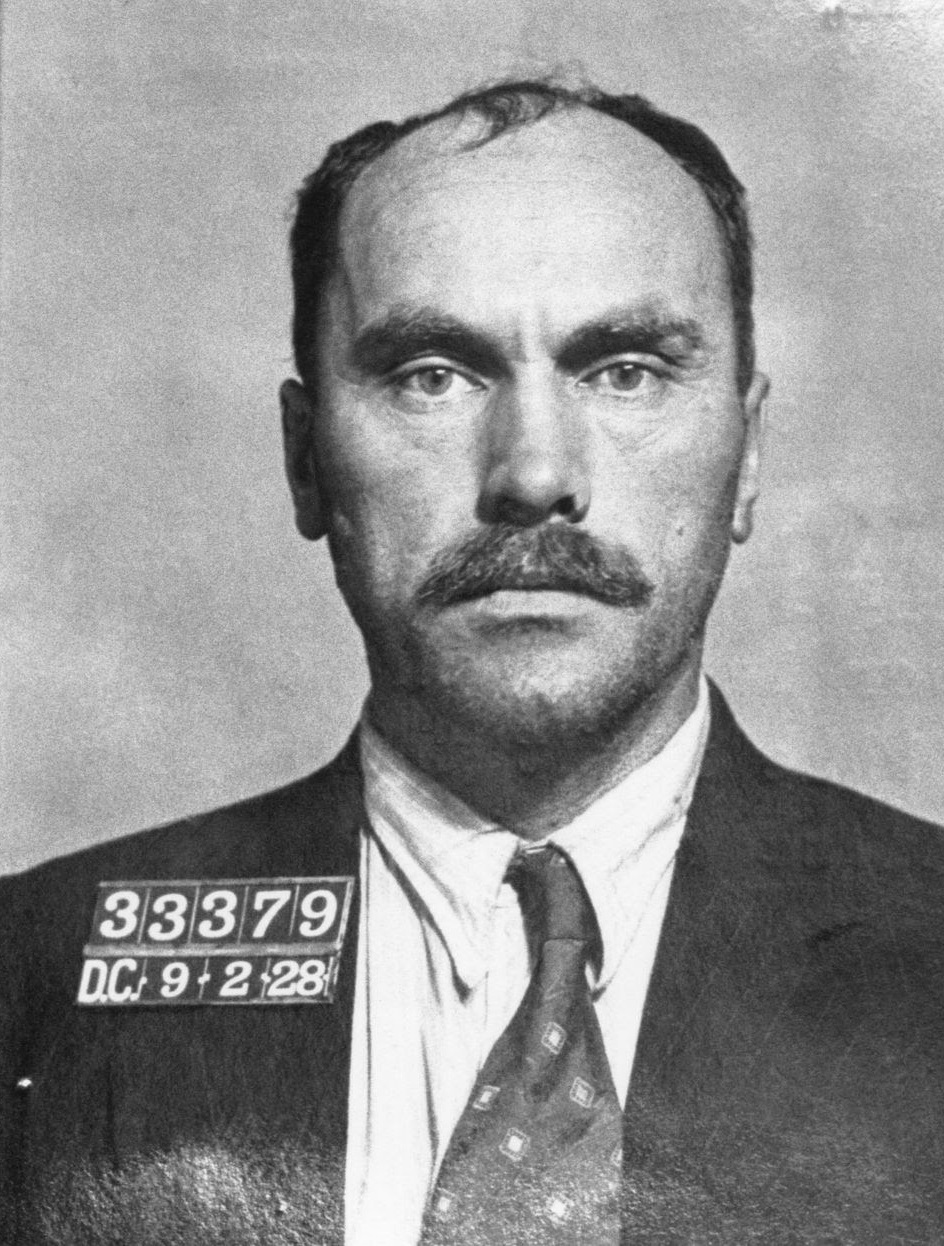
On August 20, 1928, Panzram burglarized the Washington, D.C., home of a dentist and stole jewelry and a radio. He was arrested in Baltimore on August 30. Investigators recovered much of the stolen property and returned Panzram to Washington.
While imprisoned in the District of Columbia, Panzram began speaking with correctional officer Henry Lesser. Lesser treated him with a degree of dignity that Panzram rarely claimed to have experienced in custody. Lesser supplied him with paper and encouraged him to record his life story.
Panzram produced an extensive autobiographical manuscript describing his crimes, travels, imprisonment and hatred of humanity. He confessed to 21 murders and claimed to have committed approximately 1,000 sexual assaults against males. Many of his descriptions contained identifiable locations and circumstances, but the age of the cases, the absence of records and his frequent use of aliases made complete verification impossible.
Murder of Robert G. Warnke
Panzram was transferred to the United States Penitentiary at Leavenworth, Kansas, in February 1929. He repeatedly threatened prison employees and openly stated that he intended to kill the first person who mistreated him.
On the morning of June 20, 1929, Panzram attacked 47-year-old prison laundry foreman Robert George Warnke. Panzram struck Warnke in the head with a heavy iron bar or flat iron inside the prison laundry. Warnke died from his injuries that day.
There was no established personal dispute between the two men. Warnke was reportedly respected by both employees and prisoners. Panzram later indicated that the murder was an act of generalized revenge against prison authority rather than retaliation for anything Warnke had personally done.
Known and Reported Victims
- Approximately ten unidentified sailors — Dates uncertain, approximately 1920 to 1921 — New York Harbor and surrounding Atlantic waters. Panzram claimed that he lured young sailors aboard the yacht Akista, sexually assaulted them, killed them and threw their bodies overboard. Their names and individual dates of death were never established.
- Six unidentified Angolan men — Date uncertain, approximately 1921 — Near Lobito Bay, Portuguese Angola. Panzram claimed that he hired the men for a crocodile-hunting expedition, shot them and left their bodies to be consumed by crocodiles. The account was never fully independently verified.
- Henry P. McMahon, age 12 — July 18, 1922 — Salem, Massachusetts. Panzram sexually assaulted the child and killed him by striking him with a rock in an isolated area.
- Unidentified boy — Exact date unknown, later in 1922 — Near New Haven, Connecticut. Panzram claimed that he sexually assaulted and strangled the child. The victim’s identity and precise date of death remain unknown.
- Unidentified teenage boy — August 9, 1923 — Near New Rochelle, New York. Panzram described the victim as a teenage runaway. Remains were reportedly found in the location he identified, but the boy was never conclusively named.
- Alexander Uszacke, age 14 — July 26, 1928 — Point House Road near League Island, Philadelphia, Pennsylvania. Panzram sexually assaulted and strangled Alexander after using him to assist in stealing property from a yacht.
- Unidentified boy — August 1928 — Charlestown or the greater Boston area, Massachusetts. Panzram confessed to killing a boy there, but Boston investigators were unable to conclusively corroborate the account.
- Unidentified victim — Date uncertain, approximately 1928 — Between Baltimore, Maryland, and Washington, D.C. Panzram claimed that he killed a person while committing burglaries in the region. Few reliable details survive.
- Robert George Warnke, age 47 — June 20, 1929 — United States Penitentiary, Leavenworth, Kansas. Panzram fatally struck the prison laundry foreman in the head with a heavy iron.
Trial, Death Sentence and Execution
Panzram was tried in federal court for the murder of Robert Warnke. He represented himself as openly hostile toward the proceedings and made no meaningful effort to avoid conviction. He pleaded guilty and was sentenced to death.
When attorneys and opponents of capital punishment attempted to intervene, Panzram rejected their assistance. He opposed appeals and reportedly threatened people who tried to delay his execution. His conduct was consistent with the defiant and self-destructive attitude expressed throughout his writings.
Charles “Carl” Panzram was executed by hanging at the United States Penitentiary in Leavenworth on September 5, 1930. He was 39 years old. His execution ended a criminal career marked by repeated imprisonment, escapes, sexual violence, arson, robbery and murder.
Assessment of His Confessions
Panzram’s reputation rests partly on his detailed autobiography and confessions. Some of his statements were supported by prison files, burglary reports, travel records and the discovery of victims or remains in locations he described. The murders of Henry McMahon, Alexander Uszacke and Robert Warnke are among the cases most strongly associated with him.
Other claims, particularly the killings aboard the Akista and the alleged mass murder in Angola, could not be conclusively verified. Panzram may have exaggerated portions of his criminal history to strengthen the terrifying image he deliberately created. However, his documented violence, extensive criminal record and several corroborated murders demonstrate that his confessions were not merely invented fantasies.
Panzram expressed no remorse for his victims. Instead, he portrayed his crimes as revenge against a society he believed had brutalized him from childhood. His writings provide an unusually direct account of a violent offender’s thinking, but they also reflect his desire to shock, intimidate and control how others remembered him. He remains one of the most disturbing examples of a career criminal whose repeated exposure to punishment failed to stop an escalating pattern of predatory violence.