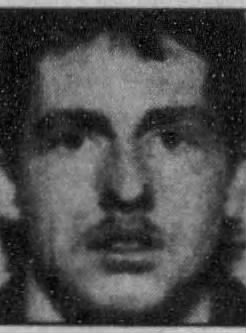
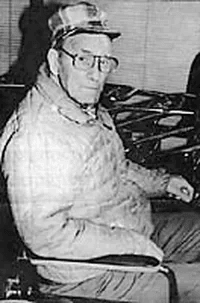
William Paul Thompson: Career Criminal and Serial Killer
Early Life and Criminal History
William Paul “Bud” Thompson was born on May 2, 1938, in Wichita Falls, Texas. His family moved to New York while he was young, and his childhood was reportedly marked by poverty, instability, and violence. Thompson described his father as an abusive alcoholic who frequently beat members of the family. By approximately age twelve, Thompson was drinking, stealing, and repeatedly getting into trouble. His behavior eventually resulted in his placement in a reform school.
Thompson spent much of his adult life moving between prisons, temporary jobs, and transient camps. His extensive criminal record included burglary, forgery, safecracking, counterfeiting, robbery, and weapons offenses. He claimed to have accumulated criminal records in several states, including New York, Florida, Texas, Pennsylvania, Georgia, and Kansas. During his comparatively brief periods outside prison, he traveled throughout the country and reportedly worked at assorted jobs, including boxing and employment connected with the Salvation Army.
Thompson married during the 1970s, but his wife died of cancer in 1982. He later portrayed her death as a turning point that left him bitter, isolated, and increasingly violent. He claimed that he began killing around this period, although only three murders were conclusively attributed to him. Shortly before his execution, Thompson also claimed that he had committed three additional contract killings in other states. Those confessions were never substantiated, and he refused to identify the alleged victims.
The Murders of Robert and John Pariset
On March 25, 1984, Thompson was camping with another transient, Robert Herman Boyle, in the Auburn area of Placer County, California. The two men were drinking at a business known as Murderer’s Bar, located near the Middle Fork of the American River, when they met brothers Robert and John Pariset. The Pariset brothers had traveled to the area to fish and search for gold.
The four men drank together and later returned to the campsite occupied by Thompson and Boyle. The gathering continued with tequila and marijuana. According to Boyle’s later testimony, Thompson became irritated by the brothers, particularly by Robert’s intoxicated behavior and the noise associated with their motorcycles. Boyle did not initially believe that Thompson’s complaints represented a serious threat.
At the campsite, Boyle and John Pariset walked to a camper to retrieve sleeping bags, leaving Robert Pariset alone with Thompson. When the two men returned, Robert was lying motionless on the ground. They initially believed he had passed out. In reality, Thompson had fatally shot him.
Boyle later left again to obtain additional blankets. While he was away, he heard a gunshot. When he returned, he found that Thompson had also shot John Pariset in the head with a .22-caliber revolver. Thompson was searching the brothers’ clothing and possessions, indicating that robbery was at least part of his motive. Both brothers died at the campsite.
Thompson and Boyle left California and traveled east into Nevada. A teenage witness reportedly provided authorities with information linking the two men to the campsite and their departure from the area. An arrest warrant was issued as investigators began pursuing them. Boyle eventually traveled toward Salt Lake City, Utah, while Thompson continued toward Reno, Nevada.
The Murder of Randy Waldron
By April 21, 1984, Thompson knew that California authorities were searching for him in connection with the Pariset murders. In Reno, he encountered 28-year-old transient Randy Waldron and another man, Arnold Lehto, who were camping near railroad tracks in the vicinity of the Sands Hotel. Thompson had reportedly spent much of the day drinking and gambling.
Waldron and Lehto were wary of strangers because they had previously been assaulted. At some point during the encounter, Thompson decided that he wanted Waldron’s money, identification, watch, and other property. Thompson later claimed that Waldron became aggressive while inhaling paint fumes, but prosecutors maintained that Thompson deliberately attacked him for robbery and personal gain.
Thompson pulled a handgun and shot Waldron four times in the head. He then searched the victim’s pockets and stole his property. Thompson obtained relatively little from the killing, reportedly taking a wallet, identification, a watch, money, and wine. The extreme violence of the attack contrasted sharply with the limited value of the items he acquired.
Approximately half an hour later, Thompson attempted to rob two women, Barbara Johnson and Susan Black, at gunpoint in the same general area. The women resisted. Johnson reportedly threw a tire iron at Thompson, while Black struck or fought him with her handbag. Their resistance forced him to flee before he could complete the robbery.
Police soon located Thompson, aided by descriptions of his appearance and distinctive tattoos across his knuckles. Investigators recovered Waldron’s personal possessions from Thompson. Ballistic evidence also connected Thompson’s firearm to the bullets used in the murder. He was arrested on April 21, 1984, bringing his confirmed killing period to an end less than one month after the Pariset murders.
Confirmed Victims
- Robert Pariset, 35 — March 25, 1984 — near Auburn, Placer County, California: Robert and his younger brother were fishing and gold-panning in the area when they met Thompson and Robert Herman Boyle at Murderer’s Bar. Robert was shot at Thompson’s campsite while the other two men were temporarily away. His body was initially mistaken for that of someone who had passed out from drinking.
- John Pariset, 28 — March 25, 1984 — near Auburn, Placer County, California: John was shot in the head with a .22-caliber revolver after returning to the campsite where his brother had already been killed. Boyle later testified that he heard the gunshot and returned to find Thompson searching the brothers’ pockets and possessions.
- Randy Waldron, 28 — April 21, 1984 — Reno, Nevada: Waldron was camping near railroad tracks close to the Sands Hotel when Thompson approached him. Thompson shot him four times in the head and stole his wallet, identification, watch, money, wine, and other property. Evidence recovered after Thompson’s arrest directly connected him to the killing.
Unverified Claims of Additional Victims
- Unidentified victim — date unknown — New York: Thompson claimed shortly before his execution that he had carried out a contract killing in New York. He did not disclose the victim’s name, the precise date, the location, or the identity of the person who allegedly hired him.
- Unidentified victim — date unknown — Kansas: Thompson claimed responsibility for another paid killing in Kansas. As with his New York confession, he withheld all information that could have allowed investigators to verify the story or locate the alleged victim’s remains.
- Unidentified federal prosecutor — date unknown — Oklahoma: Thompson claimed that his third unverified contract victim was a federal prosecutor who had convicted some of his prison acquaintances. Oklahoma officials expressed serious doubt about the confession because they were unaware of any federal prosecutor who had disappeared under circumstances matching Thompson’s account.
Trial for the Nevada Murder
Thompson was formally charged in Nevada with first-degree murder, robbery, attempted murder, attempted robbery, and weapons offenses. His trial began in September 1984. Prosecutors portrayed the Waldron killing as an intentional robbery-murder committed by a fugitive who needed money and false identification while fleeing the California homicide investigation.
The defense attempted to argue that Waldron had attacked Thompson during a sudden episode of violence associated with paint inhalation and that Thompson had acted in self-defense. The prosecution countered that the number and placement of the gunshot wounds, the theft of Waldron’s belongings, and Thompson’s subsequent attempted robberies demonstrated planning and criminal intent rather than self-defense.
The jury convicted Thompson of first-degree murder and the related offenses. During the penalty phase, jurors found aggravating circumstances and no sufficient mitigating circumstances. On September 27, 1984, Thompson was sentenced to death for Waldron’s murder. The Nevada Supreme Court later upheld his convictions and sentence.
California Prosecution
After his Nevada conviction, Thompson was transferred to California to face charges for the murders of Robert and John Pariset. Robert Herman Boyle had initially been treated as a suspect because he had been present at the campsite and had fled with Thompson. Investigators ultimately determined that Boyle had not personally participated in the shootings.
In exchange for immunity or the dismissal of the murder charges against him, Boyle agreed to testify against Thompson. His testimony provided a direct account of the events at the campsite, including Thompson’s anger toward the brothers, the period when Robert Pariset was left alone with Thompson, the gunshot that killed John, and Thompson’s effort to search the victims for valuables.
Thompson eventually pleaded guilty in April 1986 to charges arising from the two California murders. Before sentencing, his attorneys requested neurological examinations to determine whether brain damage or lesions could have affected his behavior. Medical testing reportedly found no such condition. Thompson received a prison sentence of 25 years to life in California, although the Nevada death sentence remained controlling.
Life on Death Row
Thompson initially received the automatic appellate review required in a death-penalty case. Over time, however, he abandoned further efforts to stop his execution. He said that he preferred to die rather than remain imprisoned for life and repeatedly stated that he wanted to face death with dignity.
While on Nevada’s death row, Thompson became religious and studied legal subjects. Courts examined whether he was mentally competent to waive his remaining appeals. A judge ultimately determined that Thompson understood the consequences of his decision and was legally competent to allow the execution to proceed.
During his final interview, Thompson acknowledged responsibility for the three established murders and claimed that the actual total was six. He described the three additional deaths as contract killings in New York, Kansas, and Oklahoma. He refused to provide names or locations and claimed that the victims’ bodies would never be found. Because no corroborating evidence emerged, the additional confessions remained allegations rather than confirmed murders.
Execution
William Paul Thompson was executed by lethal injection at Nevada State Prison in Carson City on June 19, 1989. Before his death, he requested forgiveness from his own family and from the families of the three confirmed victims, as well as the families of the three people he claimed to have killed in unverified contract murders.
Thompson spent his final hours speaking with a prison chaplain and another condemned inmate. He declined to continue legal efforts that might have delayed the execution. His reported final words thanked prison officials for allowing him to die with dignity.
Legacy and Victim Count
Thompson is generally classified as a serial killer because he murdered three people in separate incidents and jurisdictions, with the Pariset double murder followed nearly four weeks later by Waldron’s murder. His established crimes crossed state lines and combined sudden interpersonal violence with robbery and the practical needs of a fugitive.
The confirmed victim count is three: Robert Pariset, John Pariset, and Randy Waldron. Thompson’s claim of six total murders has never been verified. His refusal to identify the alleged contract victims made meaningful investigation nearly impossible and raised questions about whether the confessions represented genuine undiscovered crimes, exaggerations intended to enhance his notoriety, or a final attempt to control the story of his life.
Whatever the truth of his unverified statements, the evidence surrounding the three known murders demonstrated a willingness to kill for minimal financial benefit and to turn casual encounters into fatal attacks. The Pariset brothers had simply joined Thompson for an evening of drinking, while Waldron was a vulnerable transient whose property offered little material value. Their deaths remain the central and conclusively documented crimes of William Paul Thompson’s violent career.