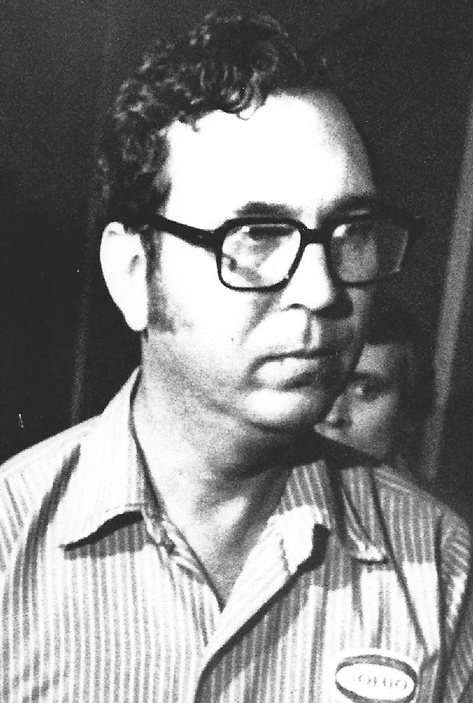
Waneta Ethel Nixon Hoyt was an American serial killer who was convicted of murdering her five biological children. She was born on May 13, 1946, in Richford, New York, and later lived with her husband, Tim Hoyt, in the Newark Valley area of Tioga County. Although Waneta Hoyt was a woman, reports about the case sometimes incorrectly refer to her as male.
Waneta left high school during the tenth grade and married Tim Hoyt on January 11, 1964. Over the following seven years, the couple had five biological children. Every one of them died before reaching three years of age. At the time, the deaths were treated as unexplained childhood tragedies, and several were attributed to sudden infant death syndrome, commonly called SIDS.
The Victims
Eric Hoyt: Born October 17, 1964, and died January 26, 1965, at approximately three months old. Eric died while the family was living in the Newark Valley area of Tioga County, New York. His death was initially regarded as a natural or unexplained infant death.
James Avery “Jimmy” Hoyt: Born May 31, 1966, and died September 26, 1968, at approximately two years and four months old. He died in Tioga County, New York. James was the oldest of the five children at the time of death.
Julia Marie “Julie” Hoyt: Born July 19, 1968, and died September 5, 1968, at approximately seven weeks old. She died in the Newark Valley area of New York while James was still alive.
Molly Hoyt: Born March 18, 1970, and died June 5, 1970, at approximately two and a half months old. Molly experienced reported breathing emergencies and received medical attention in Syracuse, New York, before dying after she had returned to the family’s care.
Noah Timothy Hoyt: Born May 9, 1971, and died July 28, 1971, at approximately two and a half months old. Noah was treated and studied at Upstate Medical Center in Syracuse, New York, because of reported breathing problems. He later died at the Hoyt home in the Newark Valley area despite being connected to a breathing monitor.
The Pattern of Deaths
The deaths occurred between January 1965 and July 1971. Each time a child stopped breathing, Waneta presented herself as a grieving mother who had suffered another terrible and unexplained loss. Doctors had little physical evidence pointing to violence. Suffocation can leave few obvious injuries, particularly in very young children, and medical knowledge concerning unexplained infant deaths was still developing.
The pattern was unusual. Five biological children from the same family had died at very young ages, yet there was no accepted medical explanation connecting all of the deaths. Nevertheless, the possibility of murder was not seriously pursued at the time. The deaths instead became associated with research into SIDS and childhood breathing disorders.
Molly and Noah’s Medical Treatment
The cases of Molly and Noah attracted the attention of pediatrician Dr. Alfred Steinschneider. Waneta reported that both children suffered episodes in which they stopped breathing. The children were hospitalized and observed, but medical workers did not witness the same serious attacks that Waneta described as occurring when she was alone with them.
After Noah was released from medical care, equipment was placed in the Hoyt home to monitor his breathing. On July 28, 1971, Waneta reported that the monitor had failed and that Noah had stopped breathing. Attempts to revive him were unsuccessful. His death, like those of his siblings, was accepted as an apparent medical tragedy.
In 1972, Dr. Steinschneider published a medical article based partly on the cases of Molly and Noah. He proposed that prolonged periods of stopped breathing could be connected to SIDS. The article influenced medical thinking for years. However, the conclusion depended heavily on Waneta’s descriptions of events that had supposedly occurred when no medical professional was present. Once she was charged with murder, the children’s cases could no longer be treated as reliable evidence of a hereditary breathing disorder.
Renewed Investigation
Suspicion developed years later when forensic pathologist Dr. Linda Norton reviewed the anonymous family history described in Steinschneider’s research. She believed that five deaths in one family strongly suggested homicide rather than an inherited tendency toward SIDS. Her concerns eventually reached prosecutor William Fitzpatrick, who later became the district attorney of Onondaga County.
Investigators identified the unnamed family as the Hoyts. The records were examined by forensic experts, including Dr. Michael Baden, who concluded that the pattern was consistent with deliberate suffocation. Because the Hoyts had lived in Tioga County, the criminal investigation was transferred to authorities there.
Confession and Arrest
On March 23, 1994, New York State Police questioned Waneta Hoyt in Owego, New York. Investigators initially approached her by saying that they wanted information for research concerning SIDS. During the lengthy interview, she confessed to causing the deaths of all five children.
According to her recorded statements, the children had been crying and she wanted to silence them. She described pressing material against their faces or otherwise preventing them from breathing. She admitted that she had smothered Eric, James, Julie, Molly and Noah. The confession transformed five deaths that had been regarded as medical mysteries into a multiple-murder investigation.
Hoyt was arrested that day and charged with five counts of second-degree murder. She later withdrew her confession and claimed that the police had pressured and manipulated her into admitting crimes she had not committed. The voluntariness and accuracy of the confession became central issues at her trial.
The 1995 Trial
Waneta Hoyt’s trial began on March 30, 1995, in Owego, New York. Prosecutors argued that the deaths could not reasonably be explained as five unrelated cases of SIDS. They presented her confession, the extraordinary number of deaths and medical testimony concerning the lack of a natural explanation.
The defense argued that Hoyt was psychologically dependent, easily influenced and vulnerable to interrogation tactics. A defense psychologist concluded that she had not confessed knowingly or voluntarily. A psychiatrist called by the prosecution also acknowledged that investigators had used manipulative techniques, but prosecutors maintained that important details in the confession showed that it was truthful.
On April 21, 1995, the jury found Waneta Hoyt guilty of five counts of second-degree murder. The verdict formally identified Eric, James, Julie, Molly and Noah not as victims of an inherited disease, but as victims of homicide.
Sentence and Death
On September 11, 1995, Judge Vincent Sgueglia sentenced Hoyt to five consecutive terms of fifteen years to life. The combined sentence was seventy-five years to life in prison. She was imprisoned at Bedford Hills Correctional Facility for Women in Westchester County, New York.
Hoyt developed pancreatic cancer and died at Bedford Hills on August 9, 1998, while her appeal was still pending. Some later references give August 13 as the date on which her death was reported or legally recorded, but contemporary reports state that she died on Sunday, August 9, 1998. Because her direct appeal had not been completed, her convictions were later vacated under the legal procedure then applied in New York. This action did not represent a factual finding that she was innocent; it occurred because she died before the appellate court could rule on her case.
Importance of the Case
The Hoyt case became important in both criminal law and medicine. It demonstrated how deliberate suffocation could be mistaken for SIDS when an infant showed few external injuries. It also showed the danger of relying on a parent’s unconfirmed account when developing a medical theory.
The case did not prove that SIDS was invented or that parents of children who die unexpectedly should automatically be suspected of murder. SIDS is a genuine medical classification involving sudden and unexplained infant death. The lesson of the Hoyt case was that repeated deaths in one household require careful, independent investigation rather than an automatic assumption that every death has the same natural cause.
Waneta Hoyt maintained after her confession that she had not killed her children. Nevertheless, a jury found the confession, medical evidence and pattern of deaths sufficient to establish her guilt beyond a reasonable doubt. Her five children—Eric, James, Julie, Molly and Noah—are now remembered as individual victims whose deaths were hidden for more than two decades behind an incorrect medical explanation.