Larry Davis: Murder, Multiple-Murder Allegations, and the Bronx Police Shootout
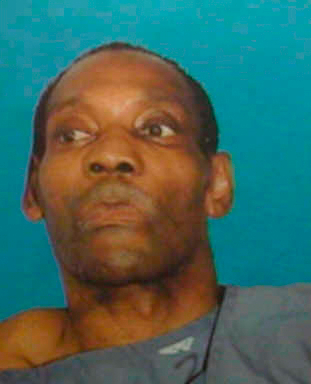
Larry Davis, later known as Adam Abdul-Hakeem, became one of New York City's most controversial criminal figures of the 1980s. Born on May 28, 1966, Davis was only 20 years old when police accused him of participating in a series of robberies and killings connected to the city's violent crack-cocaine trade. He is sometimes described as a suspected serial killer because authorities ultimately linked him to six separate homicide victims during 1986. That description requires an important qualification: Davis was convicted of murdering only one person, Raymond Vizcaino. Juries acquitted him of charges involving the other five homicide victims.
Davis became nationally known after a November 19, 1986 gun battle in the Bronx in which six New York City police officers were wounded. He escaped from an apartment surrounded by police, remained a fugitive for more than two weeks, and eventually surrendered following an armed hostage standoff. His later trials included several remarkable acquittals before prosecutors finally obtained a murder conviction in 1991.
Criminal Activity in New York City
During 1986, prosecutors portrayed Davis as part of a small and extremely violent group that targeted people involved in the drug trade. The prosecution theory was that Davis and his associates robbed drug dealers because their victims frequently possessed large amounts of cash and narcotics and might be reluctant to report robberies to police.
Several shootings were eventually connected to weapons associated with Davis. Authorities claimed that he and various accomplices robbed or attempted to rob drug dealers in the Bronx and Manhattan, sometimes resulting in fatal shootings. Davis consistently disputed many of the accusations and later maintained that corrupt police officers had framed him.
Murder of Raymond Vizcaino
The killing that ultimately resulted in Davis's only murder conviction occurred on August 5, 1986. Raymond Vizcaino was inside an apartment on Webster Avenue in the Bronx when Davis, his older brother Eddie Davis, and other men allegedly arrived intending to commit a robbery.
According to prosecutors, the men rang the apartment's bell or otherwise attempted to obtain entry. Vizcaino refused to open the door. Gunshots were then fired through the closed apartment door, striking and killing him. The killing became one of several homicides that investigators attempted to connect to Larry Davis during the following months.
Eddie Davis was convicted in connection with Vizcaino's murder in June 1989. Larry Davis was subsequently tried separately. On March 14, 1991, a Bronx jury found Larry Davis guilty of murder and attempted robbery. It was the first time prosecutors had succeeded in obtaining a murder conviction against him despite years of homicide prosecutions.
Murder of Victor LaGromba
Victor LaGromba, a 36-year-old man described by prosecutors as being involved in the Harlem crack trade, was shot to death on September 16, 1986. The killing occurred in the area of West 156th Street in Harlem, Manhattan.
Prosecutors alleged that Davis and two other men were robbing people inside an apartment when LaGromba unexpectedly entered. According to the prosecution, LaGromba was then shot. Investigators said ballistics evidence connected a .32-caliber revolver associated with Davis to the homicide.
Davis went on trial for LaGromba's murder in 1989. The defense produced witnesses who testified that Davis had been in Florida working on music at the time of the killing. After a five-week trial and several days of jury deliberations, Davis was acquitted in December 1989. LaGromba therefore remains an alleged victim in relation to Davis rather than a murder for which Davis was convicted.
The October 30, 1986 Quadruple Homicide
One of the most serious accusations against Davis involved the deaths of four men during the early morning hours of October 30, 1986. At approximately 4:00 a.m., four armed men entered a Bronx apartment building in what prosecutors described as an attempt to steal drugs and money.
The four victims were Angel Castro, Hector Hernandez, Juan Rodriquez, and Jesus Perez. Authorities said the attackers had entered the building searching for a particular person connected to drugs. Prosecutors later alleged that one victim was killed after refusing to cooperate with the robbers and that the remaining men were killed because they had witnessed what happened.
The four men were shot in what investigators characterized as execution-style killings. Police subsequently focused on Davis and teenager Ricardo Burgos, along with two additional alleged accomplices. Davis and Burgos were indicted in December 1986 on numerous counts of intentional murder, felony murder, robbery, and weapons possession.
At Davis's trial, prosecutors presented dozens of witnesses along with physical and ballistic evidence. His attorneys, William Kunstler and Lynne Stewart, attacked the prosecution's case and argued that evidence had been manipulated or fabricated as part of an effort to justify police actions against Davis.
After an unusually lengthy period of deliberation, the Bronx jury acquitted Davis of the four murders on March 3, 1988. The acquittal was one of several courtroom victories that made his case extraordinarily controversial.
Victims Connected to the Murder Cases
- Raymond Vizcaino - Killed August 5, 1986, at an apartment on Webster Avenue in the Bronx, New York City. Vizcaino was shot through a closed apartment door during an attempted robbery. Larry Davis was convicted of his murder on March 14, 1991.
- Victor LaGromba, 36 - Killed September 16, 1986, in the West 156th Street area of Harlem, Manhattan, New York City. Prosecutors accused Davis of shooting LaGromba during a robbery, but Davis was acquitted of the murder in December 1989.
- Angel Castro, 35 - Killed October 30, 1986, during an early-morning robbery and quadruple homicide in a Bronx apartment building in New York City. Davis was charged but acquitted of Castro's murder in March 1988.
- Hector Hernandez, 34 - Killed October 30, 1986, during the same Bronx quadruple homicide. Prosecutors alleged that Davis and accomplices participated in the robbery and killings. Davis was acquitted.
- Juan Rodriquez, 37 - Killed October 30, 1986, during the Bronx apartment robbery. He was one of four men shot to death. Davis was prosecuted for the killing but found not guilty.
- Jesus Perez, 38 - Killed October 30, 1986, in the same Bronx quadruple homicide. Davis was charged with his murder but was acquitted in March 1988.
The November 19, 1986 Police Shootout
The event that transformed Davis from a local murder suspect into a nationally known fugitive occurred on November 19, 1986. Acting on information that Davis was staying with his sister Regina Lewis, a large contingent of New York City police officers converged on an apartment at 1231 Fulton Avenue in the Morrisania section of the Bronx.
Approximately 27 officers were involved in surrounding or entering the building. Officers entered the apartment while Davis and several family members, including children, were inside. What followed was an intense exchange of gunfire in the confined apartment.
Six police officers were wounded. Among the seriously injured officers was Thomas McCarren, who was struck around his mouth and neck and later had to retire because of his injuries. Despite the number of police officers surrounding the building, Davis managed to escape through the rear of the apartment complex without being captured.
The circumstances of the shooting became the central issue at Davis's eventual trial. Police maintained that they were conducting a legitimate operation against a violent murder suspect and that Davis opened fire on officers. Davis and his lawyers presented a radically different version. They alleged that corrupt police officers had previously involved Davis in narcotics activity and had entered the apartment intending to kill him because he knew too much about police corruption.
The 17-Day Manhunt
Davis's escape triggered one of New York City's largest manhunts of the period. His photograph appeared throughout the news, and authorities issued alerts far beyond New York. Police searched locations associated with Davis's relatives and acquaintances while warning that he should be considered armed and dangerous.
The search continued for 17 days. Davis received assistance from acquaintances while moving through New York City and repeatedly avoided capture. His ability to escape a building surrounded by police and then remain hidden contributed to the extraordinary publicity surrounding the case.
The Twin Parks Hostage Standoff
On December 5, 1986, police received information that Davis had entered a Bronx housing project where another of his sisters lived. Officers surrounded the building and began searching its apartments.
Davis entered another family's apartment and held several people at gunpoint. Six people were initially caught up in the situation. Some were later released, while a woman and her two young daughters remained inside as police negotiators communicated with Davis through the night.
Davis was deeply concerned that police would kill him if he emerged. Negotiators and the presence of news reporters eventually helped persuade him that he could surrender without being shot. At approximately 7:45 a.m. on December 6, Davis came out and allowed police to arrest him. The surviving hostages were unharmed.
The Quadruple-Murder Trial
Davis's first major homicide trial concerned the four men killed on October 30, 1986. Prosecutors argued that Davis participated in a planned robbery of cocaine dealers and that the robbery ended with four men being shot to death.
The prosecution presented physical evidence, ballistics evidence, and testimony intended to connect Davis with the crime scene. His lawyers challenged the reliability of witnesses and accused authorities of building a false case against him.
On March 3, 1988, after nine days of deliberations, the jury acquitted Davis of the four killings. The verdict was a serious defeat for prosecutors because those murders had been among the principal crimes police cited when explaining why Davis was being pursued in November 1986.
Trial for Shooting the Police Officers
Davis was subsequently prosecuted for the November 19 shootout. He faced nine counts of attempted murder along with assault and weapons charges. Several wounded officers testified and identified Davis as the man who fired upon them.
The defense argued that Davis acted in self-defense. Kunstler and Stewart claimed that Davis believed the officers entering the apartment intended to kill him and portrayed the confrontation as connected to police corruption. The prosecution strongly denied those allegations and maintained that officers were legitimately attempting to apprehend a dangerous criminal suspect.
On November 20, 1988, the jury acquitted Davis of attempted murder and aggravated assault charges connected to the wounded officers. He was nevertheless convicted on weapons charges. He subsequently received a prison sentence of five to fifteen years.
Acquittal in the LaGromba Murder
The murder prosecution involving Victor LaGromba followed in 1989. Prosecutors relied in part on ballistics evidence they said showed that a gun connected to Davis had been used in LaGromba's killing. The defense countered with alibi testimony placing Davis in Florida.
In December 1989, another jury found Davis not guilty. By this point, Davis had survived homicide prosecutions involving five different victims as well as attempted-murder charges involving numerous police officers.
Conviction for Killing Raymond Vizcaino
The prosecution finally obtained a murder conviction in the Raymond Vizcaino case. Prosecutors alleged that Larry and Eddie Davis went to Vizcaino's Bronx apartment with accomplices intending to rob him. When Vizcaino would not allow them inside, shots were fired through his door.
On March 14, 1991, Larry Davis was convicted of murder and attempted robbery. The verdict established Vizcaino as the only homicide victim whose killing was legally proven against Davis.
On April 25, 1991, Davis was sentenced to 25 years to life in prison. The sentence was imposed in addition to the prison term he was already serving for weapons possession. The sentencing hearing became contentious as Davis continued to insist that law-enforcement officials and the criminal justice system had conducted a vendetta against him.
Was Larry Davis a Serial Killer?
Although Davis has sometimes appeared in lists or databases of serial killers, calling him a convicted serial killer is misleading. Authorities suspected or accused him of participating in six killings during 1986, and investigators asserted that weapons and other evidence connected him to several homicide scenes. However, juries acquitted him of the murders of Angel Castro, Hector Hernandez, Juan Rodriquez, Jesus Perez, and Victor LaGromba.
His only murder conviction was for the August 5, 1986 killing of Raymond Vizcaino. For that reason, the most accurate description is that Davis was a convicted murderer and suspected multiple or serial murderer rather than a legally established serial killer with six proven victims.
Death in Prison
Davis later converted to Islam and adopted the name Adam Abdul-Hakeem. He remained incarcerated for the Vizcaino murder and his weapons convictions and eventually served time at Shawangunk Correctional Facility in Ulster County, New York.
On February 20, 2008, Davis became involved in a confrontation in the prison recreation yard. Another prisoner, Luis Rosado, attacked him with a homemade metal weapon. Davis suffered numerous stab wounds and was transported for emergency medical treatment. He was pronounced dead at St. Luke's Hospital in Newburgh, New York. He was 41 years old.
Rosado was prosecuted for Davis's death and ultimately pleaded guilty to first-degree manslaughter. In February 2009, he received an additional ten-year prison sentence to be served consecutively to the sentence he was already serving.
Legacy
Larry Davis remains an unusually polarizing figure in New York criminal history. To police officers and prosecutors, he was a heavily armed violent criminal who robbed drug dealers, killed Raymond Vizcaino, and wounded six officers during an attempt to apprehend him. The acquittals in his major trials produced anger among many members of law enforcement.
Other New Yorkers viewed Davis very differently. His escape from the November 1986 shootout, allegations of police corruption, lengthy manhunt, and repeated courtroom victories made him a folk hero in some communities that deeply distrusted the police during the crack era. The later exposure of genuine corruption within portions of the NYPD added another layer to public debate surrounding his claims, although it did not establish that the specific officers involved in Davis's case were part of the conspiracy he alleged.
What is certain is that Davis's criminal history was violent and extraordinary. Six homicide victims became associated with investigations against him, six police officers were wounded in his most famous confrontation, and New York authorities spent years attempting to secure murder convictions. Yet the legal record is much narrower than the allegations: five homicide acquittals and one proven murder, the August 5, 1986 killing of Raymond Vizcaino.