Albuquerque Serial Killer – The West Mesa Bone Collector
Overview
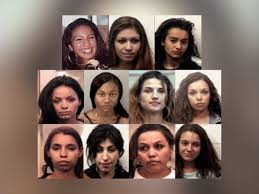
The unidentified killer commonly known as the Albuquerque Serial Killer, West Mesa Serial Killer, or West Mesa Bone Collector is believed to be responsible for the murders of 11 women and girls whose skeletal remains were discovered on Albuquerque's West Mesa in 2009. The remains of an unborn child were also recovered with one of the victims. The killings became one of the largest and most disturbing unsolved homicide investigations in Albuquerque, New Mexico history.
The victims had disappeared over a relatively short period during the early and mid-2000s. Most were young women from the Albuquerque area, and many had histories involving drug use or sex work. This similarity led investigators to believe that the killer deliberately sought out women whose lifestyles made them particularly vulnerable to predators. One victim, 15-year-old Jamie Barela, had no known connection to drugs or prostitution and disappeared while accompanied by her cousin, Evelyn Salazar.
Despite years of investigation, searches, interviews, forensic examinations, and more than a thousand tips, no person has been convicted of the West Mesa murders. Investigators have examined several potential suspects, with Lorenzo Montoya and convicted rapist Joseph Blea receiving particular attention. Neither man, however, has ever been charged with killing the West Mesa victims, and authorities continue to officially describe the person or persons responsible as unknown.
The Discovery on West Mesa
On February 2, 2009, Albuquerque resident Christine Ross was walking with her dog, Ruca, on the city's west side when the dog discovered a large bone protruding from an earthen trail. Ross photographed the bone and contacted her sister, a registered nurse, who believed it resembled a human femur. Ross notified the Albuquerque Police Department, and officers soon confirmed that the bone was human.
The discovery transformed what initially appeared to be an isolated set of human remains into a massive excavation. Police and forensic investigators searched the undeveloped land near 118th Street SW and Dennis Chavez Boulevard. Over the following weeks, multiple makeshift graves were uncovered. Ultimately, investigators recovered the skeletal remains of 11 women and girls along with the remains of the unborn child of one victim.
The burial area became an enormous crime scene. Investigators carefully excavated the desert soil, attempting to recover anything that might identify the dead or reveal who had transported and buried them there. The advanced decomposition of the remains severely limited what forensic specialists could determine. The deaths were officially classified as resulting from homicidal violence, but authorities have not established or publicly disclosed an exact method of death for each woman.
The Confirmed Victims
Because the women had been dead for years before their remains were discovered, precise calendar dates of death could not be established. Where investigators have provided a period in which a victim was killed, that verified range is given below rather than incorrectly treating a disappearance date as a confirmed date of death.
- Monica Candelaria, 22 – Exact date of death unknown. Albuquerque police place her killing sometime between 2003 and 2005. Her remains were recovered from the burial area beside 118th Street SW in Albuquerque.
- Victoria Chavez, 26 – Exact date of death unknown. Investigators state that she was killed during 2005. She was subsequently buried in the West Mesa site near 118th Street SW.
- Virginia Cloven, 24 – Reported missing during 2004. Investigators believe she was killed sometime between 2004 and 2005. Her remains were identified through DNA testing in November 2009.
- Syllannia Edwards, 15 – Exact date of death unknown. Edwards had been reported missing as an endangered runaway in 2003 and was later seen in Aurora, Colorado, during May 2004. Investigators place her death sometime between 2004 and 2005. Her remains were identified through dental records and forensic comparison in November 2009.
- Cinnamon Elks, 32 – Exact date of death unknown. Albuquerque police believe she was killed sometime between 2004 and 2005 and buried at the West Mesa site.
- Doreen Marquez, 24 – Exact date of death unknown. Investigators place her killing sometime between 2003 and 2005. Her remains were recovered from the 118th Street SW burial area.
- Julie Nieto, 24 – Exact date of death unknown. Police believe Nieto was killed sometime between 2004 and 2005 before being buried on the West Mesa.
- Veronica Romero, 28 – Exact date of death unknown. Investigators place her killing sometime between 2004 and 2005. Her remains were among those recovered from the West Mesa graves.
- Evelyn Salazar, 27 – Exact date of death has not been established. Salazar was last seen in the spring of 2004 after leaving a family gathering with her 15-year-old cousin, Jamie Barela. The two were reportedly headed toward a park near San Mateo Boulevard and Gibson Boulevard in southeast Albuquerque. Neither returned. Salazar's remains were later identified through DNA testing.
- Jamie Barela, 15 – Exact date of death has not been established. Barela disappeared in 2004 while with her cousin Evelyn Salazar. Unlike most of the other confirmed victims, authorities have stated that Jamie had no known involvement with prostitution or drugs. Her remains were identified in January 2010.
- Michelle Valdez, 22 – Exact date of death unknown. Investigators believe she was killed sometime between 2004 and 2005. Valdez was pregnant when she died, and the skeletal remains of her unborn child were recovered with her at the West Mesa burial site.
A Pattern of Disappearances
Years before the graves were discovered, Albuquerque Police Department investigator Ida Lopez had begun noticing similarities among reports involving women disappearing from Albuquerque. Many were young, had histories involving drugs or sex work, and frequented some of the same areas of the city. Families sometimes struggled to obtain attention for the disappearances because the missing women were adults and their lifestyles made it possible for authorities to initially believe they had voluntarily left.
The West Mesa discovery demonstrated that many of those disappearances had been connected in the worst possible way. Ten of the 11 identified victims had known associations with drugs and prostitution. The pattern suggested that their killer could approach women in those environments without immediately attracting attention and may have understood that their disappearances could take time to generate significant police scrutiny.
The presence of Jamie Barela complicates any simple description of the killer's victim selection. Barela was apparently not involved in the lifestyles associated with most of the other victims. Her connection was Evelyn Salazar, her cousin, with whom she disappeared. This has raised the possibility that Jamie was killed because she happened to accompany Salazar rather than because the killer had specifically selected her beforehand.
The Burial Ground
The location of the graves suggested that whoever was responsible knew the West Mesa area well enough to repeatedly enter it and conceal bodies without being noticed. At the time of the murders, portions of the area were relatively isolated desert terrain. Investigators came to believe the killer had returned to the same general location on multiple occasions rather than disposing of all of the victims at once.
Development eventually altered the landscape around the burial ground. What had once been remote desert became increasingly surrounded by roads and residential construction. By the time Christine Ross made her discovery in February 2009, the killer had apparently stopped using the location for several years.
Cause of Death
Determining precisely how the victims died has been one of the major forensic difficulties in the investigation. Their remains had been underground for years, leaving investigators primarily with skeletal evidence. The official classification for the deaths is homicidal violence. Investigators have publicly discussed the possibility that strangulation was involved in at least some of the murders, but the physical evidence has not allowed authorities to establish a specific method of killing for every victim.
This uncertainty is important when describing the case. Although each woman was determined to be a homicide victim, claims that all 11 were strangled, shot, stabbed, or killed by some other particular method have not been conclusively established publicly. The killer's exact method remains one of the details investigators have been unable to reconstruct with certainty.
Lorenzo Montoya
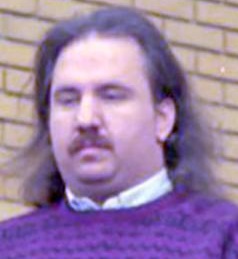
Lorenzo Montoya became one of the most frequently discussed potential suspects because he lived close to the West Mesa burial area and had a documented history of violence involving women and sex workers. His behavior appeared sufficiently similar to what investigators believed they were looking for that his background received extensive scrutiny after the graves were discovered.
In December 2006, several years after most of the confirmed West Mesa victims disappeared, Montoya killed 19-year-old Shericka Hill after she went to his residence. Montoya was himself shot and killed when Hill's boyfriend arrived and discovered what had happened. Because Montoya died in 2006, he could never be questioned after the West Mesa graves were discovered in 2009.
The timing attracted investigators' attention. The known cluster of West Mesa disappearances had ended before Montoya's death, and his residence was only a relatively short distance from the burial area. Investigators also examined routes and tire tracks around the West Mesa in an attempt to determine how the killer reached the graves.
Despite the circumstances surrounding Montoya, authorities have never established through publicly disclosed forensic evidence that he killed any of the 11 West Mesa victims. He therefore remains a possible suspect rather than the identified Albuquerque Serial Killer.
Joseph Blea
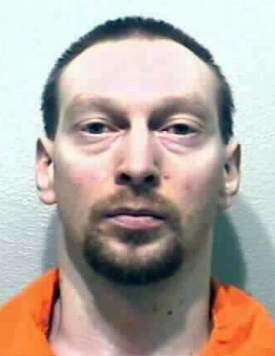
Joseph Blea also received substantial investigative attention. Blea was a convicted sexual predator with a history of offenses against women in Albuquerque. Investigators knew that he had traveled through areas where sex workers were commonly found, making his movements and history relevant to the West Mesa investigation.
One item examined by investigators was a plant identification tag recovered near the remains. Blea had connections to landscaping and nurseries, and police investigated whether the tag might provide a link to him. Investigators reviewed large numbers of nursery records but were unable to establish that Blea was responsible for placing the item at the burial site.
Blea was ultimately convicted and imprisoned for unrelated sexual crimes, but he has not been charged with any of the West Mesa murders. No publicly announced DNA evidence has conclusively connected him with the 11 victims, and he has denied involvement.
Other Missing Women and Possible Additional Victims
The discovery of 11 victims did not resolve every disappearance that investigators considered potentially connected. Albuquerque police have continued to seek information concerning eight additional women whose circumstances have similarities to those of the confirmed West Mesa victims. These women are missing persons and should not be described as confirmed murder victims because their whereabouts and fates have never been established.
- Martha Jo Lucher, 32 – Last known to have disappeared in 2003. She remains missing and is considered potentially connected to the wider West Mesa investigation.
- Anna Vigil, 20 – Disappeared in 2005 and remains missing.
- Felipa Gonzales, approximately 22 to 23 – Disappeared in 2005 and remains missing.
- Nina Herron, 21 – Disappeared in 2005 and remains missing.
- Jillian Ortiz, 19 – Disappeared in 2006 and remains missing.
- Shawntell Waites, 29 – Last seen in Albuquerque on March 15, 2006. She remains missing.
- Leah Peebles, 23 – Disappeared in 2006 and remains missing.
- Vanessa Reed, 24 – Disappeared in 2006 and remains missing.
The Continuing Investigation
The Albuquerque Police Department formed a task force to investigate the West Mesa homicides. Investigators have interviewed witnesses, examined potential suspects, reviewed missing-person cases, conducted additional searches of surrounding land, analyzed forensic evidence, and worked with the Federal Bureau of Investigation. The FBI has provided crime-analysis assistance and investigative recommendations during the lengthy inquiry.
Additional searches have been conducted in the years following the original excavation, including examinations of other areas where investigators believed more remains might have been concealed. Those efforts have not produced another confirmed group of victims connected to the same killer.
By the fifteenth anniversary of the discovery, Albuquerque police reported that seven additional land searches had been conducted and more than 1,400 tips had been submitted. Authorities have continued to review those leads and compare the circumstances of other missing and murdered women with the known West Mesa cases.
An Unidentified Killer
The name "West Mesa Bone Collector" can create the impression that investigators know the identity of a single killer. They do not. The graves strongly suggest a connected series of murders, but authorities continue to seek the individual or individuals responsible. Neither Lorenzo Montoya, Joseph Blea, nor anyone else has been convicted of the murders.
The strongest conclusions are therefore based on the victims and the burial site rather than on the identity of the offender. Eleven women and girls were murdered, their bodies were deliberately transported to Albuquerque's West Mesa, and they were concealed in makeshift graves over a period of years. Whoever committed the crimes repeatedly had the opportunity and ability to reach vulnerable women and apparently felt comfortable returning to the same isolated desert area.
Legacy of the West Mesa Murders
The West Mesa case remains important not only because of the number of victims but because it exposed how easily violence against vulnerable women could remain hidden. Many of the victims were daughters, mothers, sisters, cousins, and friends whose families had spent years wondering what had happened to them. Their histories involving addiction or sex work did not make their disappearances less serious, yet those circumstances may have helped the killer operate without attracting immediate attention.
The February 2009 discovery finally gave the families answers about where 11 missing women had gone, but it did not provide justice. The exact dates and methods of their deaths remain uncertain, several other women remain missing, and the identity of the person responsible has never been proven. Authorities continue to offer a reward of up to $100,000 for information leading to the arrest and conviction of the person or persons responsible for the West Mesa murders.
Case Status
The Albuquerque Serial Killer investigation remains unsolved. The 11 identified women are confirmed homicide victims, while the additional missing women remain possible but unconfirmed victims. No suspect has been convicted or formally established as the West Mesa Bone Collector. The case continues to be investigated, leaving one of Albuquerque's most notorious series of murders without a definitive answer as to who committed them.