Douglas Turner: The Glendive Killer
Overview
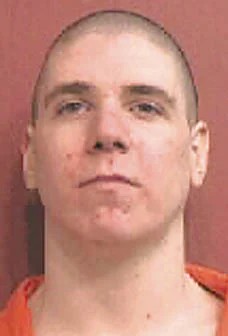
Douglas Duane Turner’s life was a cascade of escalating violence that began with a shocking triple homicide when he was just 16 and ended with his suicide on death row at age 31. In a span of four years, from 1987 to 1991, Turner was responsible for the deaths of nine people, establishing him as one of Montana's most prolific murderers. His first victims were his neighbors, a family he had never met, whom he shot and killed in their home. This initial act of brutality led to a life sentence, but for Turner, prison was not an end to his murderous path. Instead, it became a new hunting ground. Inside the walls of Montana State Prison, he partnered with fellow inmate William Gollehon, and together they murdered one inmate in 1990 and were key figures in a deadly 1991 prison riot that resulted in the deaths of five more. His crimes, both on the streets of Glendive and within the supposed security of the state's prison system, left a trail of devastation and raised profound questions about juvenile justice and prison security.
Early Life and Background
Douglas Turner was born in 1971 in Glendive, a small town in eastern Montana. His childhood was reportedly unstable, marked by physical and sexual abuse, and a poor relationship with his adoptive father. By his own admission, he began drinking heavily at a young age, stating that by the time he was 12, he knew he had a significant problem with alcohol. His mother managed a local bar and worked long hours, leaving him largely unsupervised. This lack of guidance contributed to a growing record of juvenile delinquency that began around May 1985. Before his first murders, Turner had approximately 12 encounters with law enforcement for offenses ranging from misdemeanors to felonies. He was in and out of treatment centers for his alcohol dependency but resisted efforts to help him. Just before the triple homicide in 1987, he had been released from an alcohol treatment program. A psychiatric evaluation conducted after his arrest diagnosed him with conduct disorder and alcohol dependence but found him to be of average or slightly above-average intelligence and not psychotic.
The Brooks Family Murders
On the night of November 19, 1987, just a month after his 16th birthday, Douglas Turner's life took a violent and irreversible turn. After a night of drinking Southern Comfort, vodka, and beer at a party, he was dropped off at his home in Glendive around midnight. Instead of going to bed, he retrieved his .30-30 rifle and walked next door to the home of the Brooks family, whom he had never met.
Inside the house were James Brooks Jr., his wife Sharon, and James's mother, Ora. The family had left the door unlocked as they awaited the return of their daughter. A neighbor later reported hearing someone yell, "God damn it, let me in," followed by James Brooks saying, "Put the gun away." A struggle ensued at the door, and Turner shot and killed James in the living room. He then moved through the house, shooting both Ora and Sharon. Ora was shot as she tried to flee the house screaming.
In the basement, the Brooks' 8-year-old son, Sean, and his friend, Scott Miller, were getting ready for bed when they heard the gunshots. Running upstairs to investigate, they came face to face with Turner in the kitchen. The boys dropped to the floor and covered their heads. Turner aimed his rifle at them, but it misfired. He then brutally beat both children on their heads with the butt of the rifle before leaving them and heading downstairs. The two boys managed to escape the house. Sean ran outside and found his mother dying in the street before a neighbor pulled him to safety and called the police. Turner was arrested at the scene.
Incarceration and the Murder of Gerald Pileggi
In April 1988, to avoid a potential death penalty, Douglas Turner pleaded guilty to three counts of deliberate homicide, two counts of felony assault, and one count of aggravated burglary for the attack on the Brooks family. He was sentenced to a total of 390 years in prison without the possibility of parole and sent to the Montana State Prison in Deer Lodge.
Life in prison did little to curb Turner's violent tendencies. He soon formed a close association with another inmate, William Jay Gollehon, who was serving a 130-year sentence for a 1985 murder. The two shared a disdain for sex offenders, a sentiment that festered within the prison kitchen where they both worked alongside inmate Gerald Pileggi, a convicted sex offender.
Tensions escalated, and in August 1990, Pileggi was beaten in the kitchen's dish room by Turner, Gollehon, and another inmate. Pileggi refused to name his attackers, but the three were dismissed from their kitchen duties. On September 2, 1990, the feud reached its fatal conclusion. In the prison's exercise yard, during a softball game, Gollehon and Turner confronted Pileggi. Eyewitnesses testified that Gollehon struck the first blow. Turner then joined in, and together they bludgeoned Pileggi with baseball bats, striking him multiple times in the head even after he had fallen to the ground. Pileggi's injuries were catastrophic; he died from massive head trauma while being airlifted to a hospital.
The 1991 Montana State Prison Riot
Less than a year after Pileggi's murder, on September 22, 1991, Montana State Prison erupted in the bloodiest riot in its history. Turner and Gollehon were central figures in the planned uprising. The riot began when inmates in the maximum-security unit cut through an exercise yard fence and gained access to the cellblock through a door that had been left open.
The primary targets of the rioters were inmates housed in protective custody, many of whom were informants. Over the next four hours, the rioters unleashed a wave of brutal violence. Five inmates were killed with shocking savagery. Three of the victims were hanged from a second-floor balcony with electrical cords. Others were stabbed with sharpened broomsticks, beaten with fire extinguishers, and had their throats slashed.
The five inmates killed during the riot were Vern Baker, 24; Edmund Davidson, 33; Gary Evans, 26; Ernest Holliday, 38; and Ernest Mazurkiewicz, 32. The riot finally ended when a tactical unit stormed the cellblock, freeing five guards who had been taken hostage. The maximum-security unit was left in ruins, with extensive fire and water damage. A subsequent investigation revealed that prison officials had ignored warnings from inmates about a pending riot, and a judge later ruled the state was negligent in its operation of the unit.
The Victims
Douglas Turner's crimes left a devastating impact on numerous families. His victims were individuals from different walks of life, senselessly murdered in two separate sprees of violence.
- James Brooks Jr., age unknown — Killed on November 19, 1987, in his Glendive home, he was a husband and father who was murdered while trying to protect his family.
- Ora Brooks, age unknown — Murdered on November 19, 1987, she was James's mother and was shot while attempting to flee the attack on her family's home.
- Sharon Brooks, age unknown — The wife of James Jr. and mother of Sean, she was killed in her home on November 19, 1987, during Turner's rampage.
- Gerald Pileggi, age unknown — An inmate at Montana State Prison, he was beaten to death with baseball bats by Turner and Gollehon on September 2, 1990, reportedly because he was a sex offender.
- Vern Baker, 24 — One of five inmates murdered during the September 22, 1991, prison riot, he was targeted by the rioters while in protective custody.
- Edmund Davidson, 33 — He was killed on September 22, 1991, during the violent uprising at Montana State Prison.
- Gary Evans, 26 — Another victim of the 1991 prison riot, he was brutally murdered by fellow inmates.
- Ernest Holliday, 38 — He was among the five inmates in protective custody who were killed during the riot on September 22, 1991.
- Ernest Mazurkiewicz, 32 — The final victim of the prison riot on September 22, 1991, he was killed in the targeted attack on protective custody inmates.
Trial and Sentence
For the murder of Gerald Pileggi, Douglas Turner and William Gollehon were tried jointly. In 1992, a jury found them both guilty of deliberate homicide by accountability, a charge that allowed for their conviction without determining who struck the fatal blow. Both men were sentenced to death for the crime.
Following the 1991 prison riot, Turner faced additional charges. He was convicted of kidnapping and five counts of deliberate homicide under the felony-murder rule. For these crimes, he received five concurrent life sentences to be served in addition to his previous sentences.
Turner's legal battles continued for years as his death sentence for the Pileggi murder went through the appeals process. His conviction and sentence were repeatedly upheld by the Montana Supreme Court. At the time of his death, his latest appeal was still pending, and no execution date had been set.
Death and Aftermath
On the morning of July 8, 2003, Douglas Turner was found dead in his maximum-security cell on death row. Prison guards discovered him hanging at approximately 4:15 a.m. during a routine check. His death was ruled a suicide. At 31 years old, Turner had spent nearly half of his life behind bars. In the years leading up to his death, he had reportedly not been an unruly inmate and had not received any disciplinary write-ups for seven years. He lived an isolated existence, confined to his cell for most of the day.
The legacy of Douglas Turner's crimes is one of profound loss and enduring trauma. The Brooks family was shattered by the 1987 attack. Sean Brooks, who was only eight when he was assaulted and witnessed the murder of his family, suffered from severe psychological trauma and a brain injury for the rest of his life. He passed away in 2019 at the age of 41. The 1991 prison riot led to significant changes in the operations and funding of the Montana State Prison and resulted in numerous lawsuits against the state by the families of the slain inmates and those who were injured. Turner's accomplice, William Gollehon, remained on death row until he died of natural causes in 2016. Dawson County Attorney Scott Herring described Turner as "the most prolific murderer I've heard of in the state," a grim testament to the trail of violence that defined his short life.