Raymond Eugene Brown: The Alabama Parolee Killer
Overview
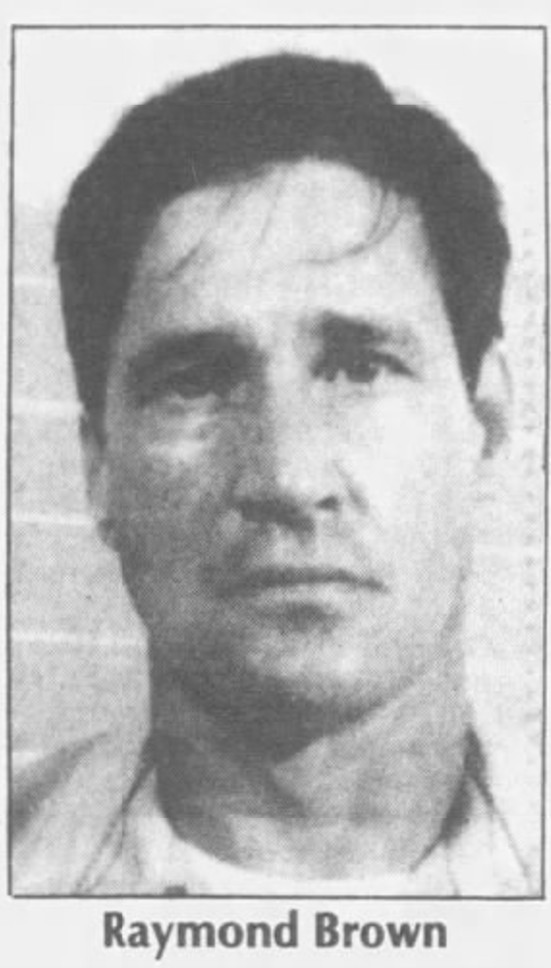
Raymond Eugene Brown was an American serial killer whose violent criminal life spanned nearly three decades, marked by two distinct and horrific episodes of murder. In 1960, at the age of 14, he brutally murdered three of his female relatives in their Alabama home. Despite the savagery of the crime, he was paroled after serving just over a dozen years. He returned to society, but his freedom was short-lived. In 1987, while on parole, he murdered his girlfriend and her young daughter, committing acts of extreme violence and mutilation. Brown was subsequently sentenced to death and died in prison in 2008, leaving behind a legacy of questions about the justice and penal systems that allowed a known killer to be released and kill again.
Early Life and Background
Raymond Eugene Brown was born on January 11, 1946, in Ashland, Alabama, to Marvin and Emma Lou Brown. He was one of four boys, and by all accounts, his childhood was unremarkable. Relatives and friends described his upbringing as normal and happy. He was a regular churchgoer and did not display any overt behavioral problems. Brown attended Clay County High School, where he was a popular student and played on the junior varsity football team. There was nothing in his public demeanor to suggest the capacity for the extreme violence he was about to unleash.
The 1960 Triple Murder
On the night of October 1, 1960, 14-year-old Raymond Brown broke into the nearby home shared by his great-grandmother, grandmother, and aunt. His initial motive was reportedly to steal money to buy a pair of football cleats. He entered the house through an unlocked back door, but his aunt, 31-year-old Berta Mae Martin, was awakened by the noise. When she confronted him, Brown attacked her with a kitchen knife, stabbing her a reported 123 times.
To eliminate witnesses, Brown then went to the bedrooms of his 63-year-old grandmother, Ethel Ogle, and his disabled 82-year-old great-grandmother, Everlena Ogle. He stabbed both women to death, ensuring they were dead before mutilating their bodies by slashing their throats. The next morning, Brown's own mother discovered the horrific scene and called the police.
Investigators found bloody footprints at the scene, which, along with witness statements, quickly led them to the young Raymond Brown. He was arrested at his school five days later. During questioning, he confessed to the murders, and his fingerprints matched those found in the house.
First Trial, Imprisonment, and Parole
Despite the brutality of the crimes, there was a debate over whether Brown should be tried as a juvenile. Ultimately, the court decided he would be tried as an adult. He was convicted on three counts of first-degree murder. The jury recommended mercy, and instead of the death penalty, Brown was given three life sentences.
In prison, Brown was described as a model inmate. He studied to become an auto mechanic and participated in various rehabilitation programs. His behavior earned him a parole in 1973, after serving about 12 years of his sentence. He returned to Ashland to live with his mother before moving to Montgomery, where he found work and rented an apartment. However, his rehabilitation was a facade. In 1980, he was arrested for the sexual assault and attempted strangulation of his apartment manager. His parole was revoked, and he was sent back to prison. Inexplicably, he was paroled again in June 1986.
The 1987 Murders
After his second release, Brown began a relationship with Linda LeMonte, a 31-year-old single mother of two. In the summer of 1987, he moved into her Montgomery home. On the evening of August 9, 1987, Brown's violent nature resurfaced with catastrophic consequences. He attacked Linda LeMonte, stabbing her multiple times in the chest, vagina, and rectum before slashing her throat with a nine-inch incision. He then sliced her abdomen open from her neck to her pubis.
After killing Linda, Brown went into the bedroom of her 10-year-old daughter, Sheila Smoke. He raped the child before stabbing her repeatedly in the chest, throat, and abdomen. He left the murder weapon, a large kitchen knife, embedded in her body. Linda's six-year-old son, who was also in the house, was physically unharmed. Before leaving, Brown engaged in bizarre ritualistic behavior, taking a Polaroid picture of Linda's body and taping it to the television, and scattering playing cards around the victims.
Investigation and Capture
The bodies of Linda LeMonte and Sheila Smoke were discovered on August 10, 1987. Brown immediately became the prime suspect due to his criminal history. A crucial piece of evidence emerged when it was discovered that Brown had been in a single-car accident on the morning of August 10, before the bodies were found. A state trooper had noted his disheveled appearance but let him go.
A manhunt ensued, and on August 12, 1987, a gas station clerk recognized Brown and called the police. He was arrested without a struggle. Bloodstains found in his car were later matched to Linda LeMonte, cementing his connection to the crime.
The Victims
- Everlena Ogle, 82 — October 1, 1960, Ashland, Alabama. A disabled great-grandmother murdered in her bed by her own great-grandson.
- Ethel Ogle, 63 — October 1, 1960, Ashland, Alabama. A loving grandmother who was killed in her home by her grandson during his violent rampage.
- Berta Mae Martin, 31 — October 1, 1960, Ashland, Alabama. An aunt who was the first victim in her nephew's initial killing spree, suffering a frenzied and brutal attack.
- Linda LeMonte, 31 — August 9, 1987, Montgomery, Alabama. A single mother who had offered Brown a second chance, only to be murdered with extreme brutality in her own home.
- Sheila Smoke, 10 — August 9, 1987, Montgomery, Alabama. Linda LeMonte's young daughter, who was sexually assaulted and murdered by the man her mother had trusted.
Trial and Sentence
At his trial in 1988, Raymond Eugene Brown pleaded not guilty, claiming he had amnesia and could not remember the events of the murders. A psychiatric evaluation determined that he had an "organic personality disorder" but was legally sane at the time of the killings.
The jury was not swayed by his defense. On May 13, 1988, Brown was found guilty on four counts of capital murder, including murder committed during a sexual assault and murder by a defendant under a life sentence. The jury recommended the death penalty, and the judge concurred. Brown was transferred to the Holman Correctional Facility's death row to await execution.
Appeals and Death on Death Row
Over the next two decades, Brown's lawyers filed numerous appeals. They argued issues such as biased jury selection due to extensive pre-trial publicity and other procedural errors. At one point, an appellate court overturned his sentence, but the Alabama Supreme Court later reinstated it. Despite the lengthy legal battles, his conviction and death sentence were ultimately upheld.
Before the state of Alabama could carry out his execution, Raymond Eugene Brown died of natural causes on death row in 2008. He was 62 years old. His death brought a quiet end to a life defined by shocking violence and a justice system's catastrophic failure to protect the public from a man it had twice deemed fit for release.