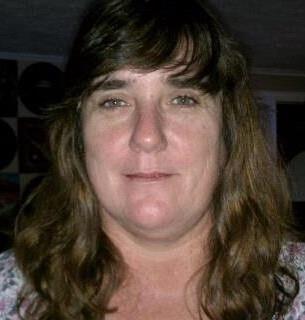
In the late summer of 1987, Linda LeMonte, a 31-year-old single mother, was building a life for herself and her two children in a quiet Montgomery, Alabama, cul-de-sac. Friends and family knew her as a kind woman, one who believed in second chances. In late 1986, she met Raymond Eugene Brown and, believing he had moved past a troubled history, she opened her home to him. By the summer of 1987, Brown had moved in with Linda and her children, 10-year-old Sheila Smoke and 6-year-old Aaron.
To neighbors and relatives, he appeared to be an upstanding citizen, and the couple seemed to be settling into a normal family life.
The semblance of peace was shattered on August 9, 1987. Inside their home, Brown unleashed an act of extreme brutality on the woman who had trusted him. He attacked Linda LeMonte with a knife, stabbing her repeatedly before cutting her throat. He then turned his violence on her daughter. In her own bedroom, young Sheila was sexually assaulted and stabbed multiple times in the chest, throat, and abdomen. The murder weapon was left inside her body. Miraculously, Linda's six-year-old son, Aaron, who was also in the house, was physically unharmed.
The horrific discovery was made the next day, August 10th. When Linda failed to show up for her job, her concerned boss contacted her parents. After learning the children had also missed school, Linda’s mother and father went to the house. When no one answered their knocks, they went to Aaron’s window. The little boy crawled out from under his bed and opened the front door for his grandparents, who walked into an unimaginable scene of carnage. They found their daughter, Linda, dead in the living room and their granddaughter, Sheila, dead in her bedroom.
The investigation quickly focused on Raymond Eugene Brown. Linda's ex-husband told police that Brown had been at the house when he dropped off their son. A neighbor also reported seeing Brown's car outside the home the night of the murders. Investigators found bizarre and chilling evidence at the scene: playing cards were scattered around the bodies, and Brown had taken a Polaroid photograph of Linda’s corpse, leaving it on top of the television set. His thumbprint was found on the photo. A piece of paper with the victims' names and the word "me" was also left behind, leading to speculation that the rampage may have been triggered by a card game. A massive manhunt for Brown began, with police warning the public that he was a "psychopathic killer" who was extremely dangerous. He was captured on August 12 after he emerged from the woods to buy a soda.
What Linda LeMonte likely did not know was the true depth of Brown’s violent past. Nicknamed "Blade" in prison, he was a serial killer with a history of murder that began when he was just 14 years old. On October 1, 1960, he had brutally stabbed to death three of his own relatives: his 31-year-old aunt, Berta Mae Martin; his 63-year-old grandmother, Ethel Ogle; and his 82-year-old great-grandmother, Everlena Ogle. He was convicted of those murders and sentenced to three life terms but was paroled in 1973. His freedom was short-lived; in 1980, he was sent back to prison for a parole violation after raping and attempting to strangle his apartment manager. In a decision that would have catastrophic consequences, the state of Alabama paroled him again in June 1986, less than a year before he met Linda.
At his trial for the murders of Linda and Sheila, Brown pleaded not guilty, claiming he had amnesia and could not remember the events of that night. A psychiatric evaluation found he had an "organic personality disorder" but was legally sane. In 1988, he was convicted on four counts of capital murder. The jury unanimously recommended the death penalty, and the judge agreed, citing aggravating circumstances that included the heinous nature of the crimes and Brown's prior convictions. After a long and complex series of appeals, his sentence was upheld. Raymond Eugene Brown, the man Linda LeMonte had offered a second chance, died on death row in 2008.