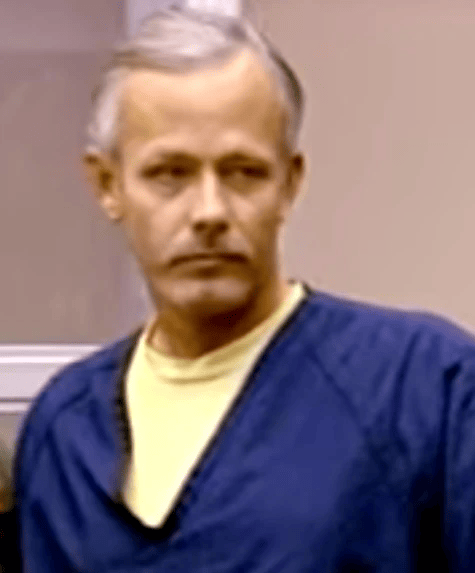
Richard Westall Rogers: The Last Call Killer
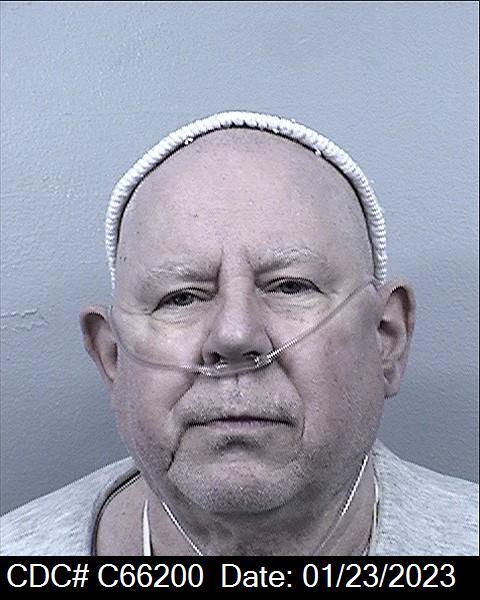
Richard Westall Rogers Jr., known as the “Last Call Killer,” was a surgical nurse whose outwardly quiet and professional life concealed his connection to a series of exceptionally violent murders. During the early 1990s, gay and bisexual men disappeared after spending evenings in Manhattan bars. Their remains were later discovered beside highways and at roadside rest areas in New York, New Jersey and Pennsylvania. The victims had been killed, methodically dismembered or mutilated, carefully cleaned and placed inside layers of tightly knotted plastic bags.
Rogers was ultimately convicted of murdering Thomas Mulcahy and Anthony Marrero. Investigators also connected him through fingerprints, eyewitness testimony and striking similarities to the murders of Peter Stickney Anderson and Michael Sakara. Decades earlier, Rogers had admitted killing his University of Maine housemate, Frederic Alan Spencer, although a jury acquitted him after he claimed self-defense.
The Killing of Frederic Alan Spencer
Rogers’ first known deadly encounter occurred while he was a graduate student at the University of Maine in Orono. On April 28, 1973, he killed 22-year-old Frederic Alan Spencer inside the house they shared with other students. Rogers struck Spencer repeatedly in the back of the head with a roofing hammer. According to Rogers’ own account, Spencer remained alive after the blows, so Rogers placed a plastic bag over his head and suffocated him.
Rogers wrapped Spencer’s body in a nylon tent, carried it to his car and abandoned it in a wooded area near Bird Stream outside Orono. Two cyclists discovered the body on May 1, 1973. A key found in Spencer’s clothing helped investigators identify him and led police back to the house. Inside Rogers’ room, officers found blood evidence, a bloody footprint and the hammer used in the killing.
Rogers confessed but claimed that Spencer had attacked him first and that he had acted in self-defense. He also maintained that he panicked afterward and disposed of the body because he feared the circumstances would appear suspicious. The original murder charge was reduced to manslaughter, and on November 2, 1973, a jury found Rogers not guilty. Although he was acquitted, the killing later became an important part of the investigation because the arrest placed his fingerprints in Maine’s records.
The Last Call Murders
After leaving Maine, Rogers moved to New York, trained as a nurse and eventually worked at Mount Sinai Hospital in Manhattan. His medical background later attracted investigators’ attention because several victims had been dismembered with unusual precision. Arms and legs had been separated or cut at carefully selected locations, and the remains had been washed before disposal.
The murders became known as the “Last Call” killings because several victims had visited Manhattan bars catering to gay men shortly before disappearing. The killer appeared to approach men late in the evening, sometimes near closing time, and persuade them to leave with him. Authorities never established with certainty where the four early-1990s victims were killed. Their bodies were transported across state lines and left in locations where road workers, motorists or vendors would eventually find them.
Victims Connected to Richard Rogers
- Frederic Alan Spencer — April 28, 1973 — Orono, Maine: Spencer, 22, was Rogers’ housemate and a graduate student at the University of Maine. Rogers struck him approximately eight times with a roofing hammer and then suffocated him with a plastic bag. Spencer’s body was abandoned in woods near Bird Stream. Rogers admitted the killing but was acquitted after claiming self-defense.
- Peter Stickney Anderson — approximately May 3–5, 1991 — last seen in Manhattan; remains found in Rapho Township, Lancaster County, Pennsylvania: Anderson was a 54-year-old former banker and father of two from Philadelphia. He traveled to Manhattan on May 3 for a political fundraiser and later drank at the Townhouse Bar. He was last seen outside the Waldorf Astoria Hotel while waiting for transportation. His body was discovered on May 5 in a trash barrel at a Pennsylvania Turnpike rest area. Anderson had suffered multiple stab wounds, and his body had been mutilated after death. Rogers’ fingerprints and a palm print were later identified on plastic bags associated with the remains, but Rogers was never tried for Anderson’s murder.
- Thomas Richard Mulcahy — July 9, 1992 — last seen in Manhattan; remains found in Woodland and Stafford townships, New Jersey: Mulcahy was a 55-year-old Massachusetts businessman, husband and father of four who had traveled to New York for work. On July 8, he spent the evening at the Townhouse Bar and was seen showing interest in a man whose appearance resembled Rogers. Mulcahy withdrew money from a nearby cash machine shortly before disappearing. His dismembered remains were discovered on July 10 in bags collected from a Route 72 rest area and a Garden State Parkway rest area. The medical examiner estimated that he died on July 9 from stab wounds that penetrated his heart, lung, stomach and other internal organs. Marks on his wrists suggested that he had been bound. Rogers’ fingerprints were eventually recovered from bags containing Mulcahy’s property.
- Anthony Edward Marrero — approximately May 6–7, 1993 — last seen near the Port Authority Bus Terminal in Manhattan; remains found in Manchester Township, New Jersey: Marrero was a 44-year-old man who worked as a sex worker in Manhattan. He was last seen alive near the Port Authority area on May 6. On May 10, a motorist traveling along a dirt road in Manchester Township saw a human arm near the roadway. Police found Marrero’s body divided into seven sections and placed in multiple plastic bags. He had been stabbed repeatedly in the back and at least once from the front. His remains had been cleaned before being discarded. Two fingerprints and a palm print recovered from the bags were later matched to Rogers.
- Michael J. Sakara — approximately July 30, 1993 — last seen in Greenwich Village, Manhattan; remains found in Haverstraw and Stony Point, New York: Sakara was a 55-year-old typesetter who worked for the New York Law Journal. On July 30, he visited the Five Oaks bar in Greenwich Village and was seen talking with a man who claimed to be a nurse. A bartender later identified Rogers as the man with Sakara. On July 31, Sakara’s head and arms were found in bags inside a trash barrel at a Route 9W overlook in Haverstraw. His legs and torso were discovered on August 8 near another roadside area in Stony Point. Sakara had suffered severe blunt-force injuries to the head as well as stab wounds. His body had been divided into seven sections, washed and packaged in a manner closely resembling the treatment of Mulcahy and Marrero. Rogers was not charged with Sakara’s murder.
A Repeated and Distinctive Method
The physical similarities among the murders were central to the case against Rogers. The victims were older gay or bisexual men who had been in Manhattan shortly before their deaths. Their unclothed remains were cleaned and wrapped in numerous plastic bags, often double- or triple-bagged and secured with multiple knots. Personal belongings were sometimes left nearby, allowing the victims to be identified relatively quickly.
Mulcahy, Marrero and Sakara were each divided into seven major sections. The cuts showed that the killer was comfortable using knives and saws and understood how the human body could be separated. Mulcahy’s limbs were disarticulated at the joints, while Marrero’s and Sakara’s bones were cut. Investigators believed the controlled dismemberment indicated medical training or extensive anatomical knowledge. Rogers had worked for more than two decades as a nurse and had experience assisting in operating rooms.
Anderson’s body was not fully divided in the same manner, but investigators found other powerful similarities. His body was cleaned, wrapped in multiple plastic bags and discarded in a roadside trash container. His clothing and possessions were placed in another trash barrel farther along the turnpike. Most importantly, fingerprints recovered from the plastic packaging were eventually identified as Rogers’.
The Long Investigation
The murders involved numerous police departments and crossed three state lines. Detectives from New York, New Jersey and Pennsylvania formed a joint task force after recognizing the similarities. Witnesses described men seen with the victims, but the descriptions did not immediately identify Rogers. One witness said the man with Sakara claimed to be a nurse at St. Vincent’s Hospital, although Rogers actually worked at Mount Sinai.
Fingerprints were found on plastic bags connected to Anderson and Marrero, but the available computer systems produced no match. The Mulcahy evidence initially appeared to contain no usable prints. Investigators traced surgical gloves, shopping bags and other items to stores on Staten Island, where Rogers lived, but those clues were not enough to identify a suspect.
The cases eventually went cold. In 1999 and 2000, investigators reopened the evidence and used vacuum metal deposition, an advanced process capable of revealing fingerprints on plastic. Specialists recovered numerous previously invisible prints from the bags. When the prints were distributed to state identification systems, Maine analysts matched them to the records created after Rogers’ 1973 arrest for killing Frederic Spencer.
Arrest and Evidence
Investigators approached Rogers at Mount Sinai Hospital in May 2001. They initially told him that they wanted to discuss possible credit-card fraud, but during questioning they revealed that he was a suspect in the four murders. Rogers acknowledged recognizing Michael Sakara from Manhattan bars. When detectives explained that his fingerprints had been recovered from the Anderson, Mulcahy and Marrero evidence, his demeanor changed and he eventually requested an attorney.
Employment records showed that Rogers was off duty during the periods when each of the four men disappeared and was killed. Investigators also established that he frequented the Townhouse and Five Oaks bars. Witness testimony placed a man resembling Rogers with Mulcahy and identified Rogers as the person seen speaking with Sakara on the final night of Sakara’s life.
Police searched Rogers’ Staten Island residence and recovered a New Jersey road map, shopping materials similar to items associated with the crime scenes and other circumstantial evidence. Investigators also learned that Rogers had been accused in 1988 of drugging and restraining a man he met at a Manhattan bar. The man reported waking naked and bound to Rogers’ bed before being injected with a substance that caused him to lose consciousness again. Rogers was tried but acquitted in that case.
Trial, Conviction and Sentence
Rogers was formally prosecuted in New Jersey for the murders of Thomas Mulcahy and Anthony Marrero. The court permitted prosecutors to introduce evidence concerning Peter Anderson and Michael Sakara because the four crimes shared highly distinctive features. The similar selection of victims, dismemberment, cleaning, packaging and roadside disposal supported the prosecution’s argument that the killings reflected one offender’s plan and methods.
In November 2005, a jury convicted Rogers of two counts of first-degree murder and two counts of hindering apprehension. He received a life sentence for each murder, with each sentence carrying a 30-year period of parole ineligibility. The court ordered the sentences to run consecutively. Additional consecutive sentences were imposed for hindering apprehension.
Rogers continued to deny responsibility for the murders despite the fingerprint evidence and the similarities among the cases. He was never convicted of killing Anderson or Sakara, although authorities presented evidence connecting him to both men. His exact number of victims remains unknown, and investigators have considered whether he may have been responsible for other unsolved murders committed during the years between Spencer’s death in 1973 and the Last Call killings of the early 1990s.
Legacy of the Case
The case demonstrated how advances in forensic science can revive investigations that appear permanently stalled. Rogers’ fingerprints had remained hidden on plastic evidence for years, and even the visible prints could not initially be matched because Maine’s arrest records were not yet fully integrated into a searchable automated system. Once the older evidence was processed with improved technology, the trail led directly back to Rogers’ 1973 arrest.
The murders also exposed the fear and vulnerability experienced by gay men in New York during the height of the AIDS crisis and a period of widespread anti-gay violence. Some potential witnesses were reluctant to speak openly with police because they feared being publicly identified as gay or associated with gay bars. The victims were more than names in a criminal investigation: they were students, fathers, professionals, partners and members of communities that struggled for years to obtain answers.
Richard Westall Rogers became one of the most notorious serial killers associated with New York’s gay nightlife. His crimes were marked by calculated violence, anatomical precision and an elaborate effort to conceal evidence while leaving the victims where they would eventually be discovered. Although his convictions provided justice for Thomas Mulcahy and Anthony Marrero, unanswered questions remain about Peter Anderson, Michael Sakara and any other victims who may never have been connected to the man called the Last Call Killer.