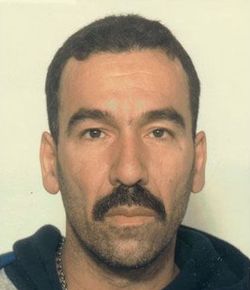
Peter Stickney Anderson, 54, was a white man who arrived in Manhattan from Philadelphia on May 3, 1991, for a political fundraiser, then slipped into the late-night glow of Midtown, where the Townhouse Bar on East 58th Street offered music, conversation, and the fragile anonymity so many men relied on in that era. After the fundraiser, he went to the Townhouse with an acquaintance named Tony Hoyt, had drinks, and by late evening Hoyt put him in a cab headed toward the Waldorf Astoria.
When Anderson reached the hotel area, he wavered, changed his mind about getting a room, and said he wanted to go to Penn Station instead. Staff escorted him out to Lexington Avenue to wait for a cab, but no one could say for sure that he ever got into one.
Two days later, on Sunday afternoon, May 5, a maintenance worker emptying trash barrels at a westbound Pennsylvania Turnpike rest area in Lancaster County pulled at a bag that wouldn’t budge. He poked into it and found bag after bag—eight layers in all—until the terrible shape of what was inside became clear: a nude body concealed in heavy trash bags. Police were called, and the discovery quickly turned into a grim, painstaking effort to identify a victim left without the usual markers of a life.
As investigators worked the scene, a second stop along the Turnpike became part of the trail. On May 10, a truck driver at another westbound rest area in Chester County noticed men’s clothing and personal items in a trash barrel—clues that appeared connected to the earlier find and that helped confirm who the victim was. The picture that emerged was not of a chance roadside death, but of someone transported, staged, and discarded with care meant to delay recognition and derail the hunt.
The autopsy findings underscored the violence and the intent to degrade. Medical examiners documented lethal stab wounds to the abdomen, additional injury consistent with blunt force trauma, and postmortem mutilation; toxicology indicated alcohol in his system. The medical examiner estimated he died days before the examination on May 6, a window that fit the moment he vanished from Lexington Avenue after a night of drinking in Midtown.
In the first rush of the investigation, the evidence that seemed most promising still couldn’t name a killer. Fingerprints and palm prints were recovered from the bags used to contain and transport the body, but early database checks produced no match, and the case went cold as years passed and leads dried up. Behind the scenes, though, the similarities to other disappearances—men last seen alive in New York City nightlife and later found in trash bags along highways—began to draw law enforcement agencies into a broader, multi-jurisdictional view of what they might be facing.
The break came only after investigators regrouped around 1999–2000, aided by advances in fingerprint technology and renewed coordination between New York, New Jersey, Pennsylvania, and other agencies. Reprocessed prints tied multiple cases together, and by May 2001 authorities had identified the prints as belonging to Richard W. Rogers, a nurse who worked at Mount Sinai Hospital in Manhattan and lived on Staten Island. Detectives approached him at his workplace on May 27, 2001, under the pretense that he was a victim of credit card fraud, then questioned him into the early hours of May 28. In that interview, he acknowledged recognizing one of the other victims from a Manhattan bar, then asked whether he needed a lawyer and invoked counsel, ending the questioning. Searches of his residences turned up assorted items investigators considered relevant, but the location where the murders occurred remained unknown.
Rogers was ultimately prosecuted in New Jersey for two later, closely linked killings and, after a 2005 trial, was convicted of two counts of first-degree murder and related charges, receiving consecutive life sentences. Anderson’s killing, however, traveled a different legal road: his death was presented in court as part of the pattern evidence surrounding the New Jersey prosecutions, and judicial findings described the fingerprint link on the trash bags as powerful evidence connecting Rogers to the Pennsylvania disposal. Still, public records describe Rogers as convicted for two murders while remaining a suspect in Anderson’s case rather than someone formally convicted for it, leaving Anderson’s homicide hanging in that unresolved space where investigators may feel certain, but the law has not delivered a final verdict for the victim found on the Turnpike.