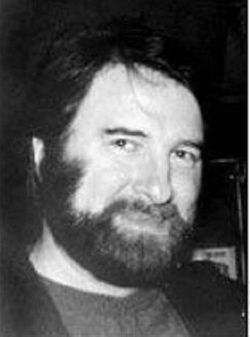
Bruno Latini, a 55-year-old White man, was killed in New York City on December 24, 1971, in a slaying that later turned up not as a neatly closed police file but as a line in the long, grim ledger of organized-crime lore. In accounts that catalog mob-era violence, Latini’s end is described with stark simplicity: he was shot to death while in his car, on Christmas Eve, in the city that never really pauses—even for the holidays.
Those same summaries don’t unfold the kind of step-by-step investigation that usually follows a publicized murder—no published trail of early arrests, no named witness brought forward, no courtroom reckoning tied directly to his death. Instead, the story hardens around a single suspect: Richard Kuklinski, the New Jersey criminal later nicknamed “The Iceman.” In the brief way such chronicles often speak, Latini’s killing is attributed to Kuklinski as the shooter, placing the case in the shadowy space between street rumor, underworld reputation, and later retellings that treat certain names as settled facts even when the paperwork stays out of view.
Kuklinski, however, was not publicly brought down because of Latini. Law-enforcement accounts of his capture describe a much later collapse: he was apprehended in December 1986 after an investigation into murders and weapons offenses, and he was convicted in 1988 for a series of killings tied to profit and criminal dealings, with additional convictions and sentencing developments following in later years. Major reference works emphasize that he was convicted of five murders overall, while also noting that he later claimed far more victims in interviews—claims that have often been treated cautiously because they are difficult to verify. In those widely cited summaries of what prosecutors proved, Latini’s name does not appear among the murders that resulted in Kuklinski’s convictions.
So the case sits with a peculiar kind of resolution: a victim whose death is repeatedly attributed to a notorious killer, yet without a clearly documented arrest or prosecution specifically for that Christmas Eve shooting. The suspect most often linked to the crime went on to become infamous for the murders authorities did charge and prove, and for the expanding mythology that grew from what he later said about himself. Latini’s death remains a hard, cold moment in that mythology—one more life ended in a car in New York, one more story carried forward more by reputation and retelling than by any publicly visible verdict bearing his name.