Christopher Scarver: The Inmate Who Killed a Monster
Overview
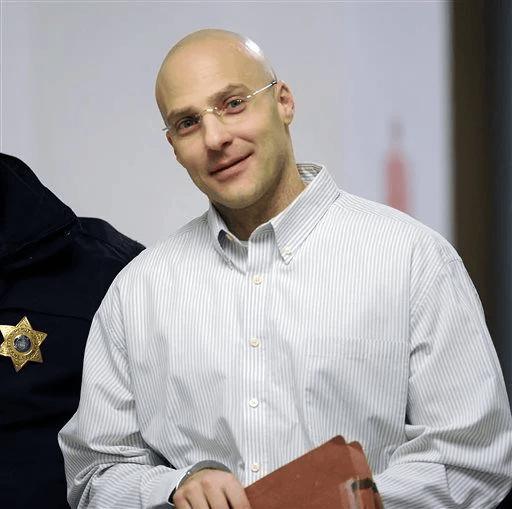
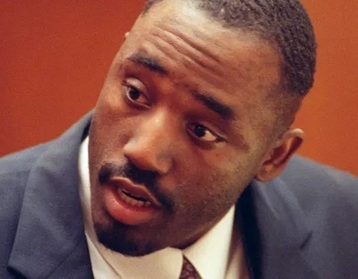
Christopher J. Scarver is a convicted murderer whose name is irrevocably linked to one of the 20th century's most infamous criminals, Jeffrey Dahmer. Already serving a life sentence for a 1990 murder committed during a robbery, Scarver gained international notoriety on November 28, 1994, when he bludgeoned Dahmer and another inmate, Jesse Anderson, at the Columbia Correctional Institution in Wisconsin. Dahmer died within hours; Anderson succumbed to his injuries two days later. The act transformed Scarver from an obscure killer into a figure of intense public debate. To some, he was a vigilante who delivered a final, brutal form of justice to a man whose crimes horrified the nation. To others, he was simply a violent man who added two more murders to his own grim tally. Over the decades, Scarver has offered shifting explanations for his actions, citing divine instruction, disgust with his victims' crimes, and direct provocation.
Early Life and Background
Christopher J. Scarver was born in Milwaukee, Wisconsin, on July 6, 1969, the second of five children. His upbringing was reportedly unstable, and he did not complete his education, dropping out of James Madison High School in the eleventh grade. After leaving school, he struggled to find his footing and battled addictions to alcohol and marijuana. His substance abuse became a point of contention with his mother, who eventually told him to leave her home.
Seeking structure and employment, Scarver joined a one-year program with the Wisconsin Conservation Corps, where he was trained as a carpenter. He worked at the program's Milwaukee office, clearing land and building retaining walls. Scarver later claimed that his supervisor, Edward Patts, had promised him a full-time job upon completion of his training. However, this opportunity vanished when Patts was dismissed from his position. Scarver, feeling betrayed and with no job prospects, spiraled further into alcoholism.
During this period, his mental health deteriorated significantly. He began to experience auditory hallucinations, hearing voices that he interpreted as divine. He developed messianic delusions, believing he was a "chosen one." Years later, he would be diagnosed with schizophrenia, a condition that likely contributed to his increasingly erratic and violent behavior. Unemployed and resentful, Scarver's anger festered, focusing on his former employer as the source of his problems.
The Murder of Steve Lohman
On the morning of June 1, 1990, Scarver’s simmering rage boiled over. He walked to the Wisconsin Conservation Corps training center office on West Vliet Street in Milwaukee, carrying a .25-caliber semiautomatic pistol. Inside, he found the site manager, John Feyen, and a crew chief, 27-year-old Steve Lohman, who was there to pick up a paycheck.
Scarver pointed the gun at the men and demanded money. Feyen, believing it was a joke, was slow to react. Scarver then allegedly forced Lohman to the floor at gunpoint and demanded money from Feyen. When Feyen produced only $15 from his wallet, Scarver became enraged. He aimed the pistol at Lohman’s head and fired a single shot, killing him instantly.
As Feyen stared in horror, Scarver reportedly said, "Now do you think I'm kidding? I need more money." He then fired two more shots into Lohman’s body. Feyen, terrified, wrote Scarver a personal check for $3,000. While Scarver was distracted, Feyen managed to flee the office and run to a nearby business to call the police. Scarver took the check and fled. The manhunt was brief; police found and arrested him a few hours later at his girlfriend's apartment building. After his capture, Scarver told officers he knew what he had done was wrong and had intended to turn himself in.
Prison and the Murders of Dahmer and Anderson
In 1992, Christopher Scarver was convicted of the first-degree intentional homicide of Steve Lohman, as well as armed robbery and being a felon in possession of a firearm. He was sentenced to life in prison and sent to the Columbia Correctional Institution in Portage, Wisconsin, a maximum-security facility that opened in 1986.
At Columbia, Scarver was housed in the same prison as two of Wisconsin's most infamous killers. Jeffrey Dahmer, the "Milwaukee Cannibal," was serving 16 consecutive life sentences for the murder, dismemberment, and cannibalism of 17 men and boys between 1978 and 1991. Jesse Anderson was serving a life sentence for the 1992 murder of his wife, Barbara. In a crime that stoked racial tensions in Milwaukee, Anderson had stabbed his wife to death and then stabbed himself superficially, claiming they had been attacked by two Black men.
On the morning of November 28, 1994, Scarver, Dahmer, and Anderson were assigned to a work detail cleaning the toilets and showers in the prison's gymnasium. According to prison protocol, such a detail would normally be supervised, but on this day, the three men were left completely alone for approximately 20 minutes.
Scarver, who later claimed to have been profoundly disturbed by Dahmer's crimes, saw his opportunity. He had been carrying a newspaper article in his pocket detailing Dahmer's atrocities. He took a 20-inch metal weight bar from the prison's exercise room and followed Dahmer into a locker room. He confronted Dahmer with the newspaper clipping, asking if he had really done the things described. After a tense exchange, Scarver struck Dahmer twice in the head with the bar, crushing his skull.
He then proceeded to a separate locker room where Jesse Anderson was working. He bludgeoned Anderson with the same metal bar. After the attacks, Scarver calmly walked back to his cell. He encountered a corrections officer and reportedly said, "God told me to do it. Jesse Anderson and Jeffrey Dahmer are dead."
Prison staff found the two men bleeding and unconscious at approximately 8:10 a.m. Dahmer was rushed to a nearby hospital but was pronounced dead about an hour later. Anderson remained on life support for two days before doctors declared him brain-dead. His family made the decision to remove him from life support, and he died on November 30, 1994.
The Victims
- Steve Lohman, 27 — A crew chief for the Wisconsin Conservation Corps, Lohman was a hardworking man simply in the wrong place at the wrong time on June 1, 1990. He was murdered by Christopher Scarver during a robbery born of resentment and delusion.
- Jeffrey L. Dahmer, 34 — One of history's most notorious serial killers, Dahmer was responsible for a reign of terror in Milwaukee. His crimes involved necrophilia and cannibalism. He was serving 16 life sentences when he was killed by Scarver on November 28, 1994.
- Jesse M. Anderson, 37 — Anderson was convicted of the brutal murder of his wife, Barbara, in a parking lot in 1992. His attempt to blame the crime on non-existent Black assailants made him a figure of public revulsion. He died on November 30, 1994, two days after Scarver's attack.
Investigation and Motives
The investigation into the prison killings was straightforward. Scarver was the only person present with the victims and had confessed immediately. The primary question was not who, but why.
Initially, Scarver's motive seemed rooted in his psychosis. His statement that "God told me to do it" mirrored the messianic delusions he had experienced before the Lohman murder. At his arraignment, he declared himself the "son of God." This explanation was consistent with his diagnosed schizophrenia.
However, in the years that followed, Scarver provided more earthly and calculated reasons. In a 2015 interview with the New York Post, he gave a detailed account of his provocations. He claimed Dahmer had a morbid sense of humor and would taunt other inmates and guards. Scarver alleged Dahmer would fashion his prison food into the shape of severed limbs and use ketchup to simulate blood. He described an incident where Dahmer poked him in the back, and Scarver shoved him in return, convinced it was the beginning of a fatal conflict. "I was surprised, but I chose to be," Scarver said of the final confrontation. "I turned around, and he and I were face-to-face. I asked him if he really did do all those things. He was shocked. Yes, he was."
His motive for killing Anderson was more direct. Scarver was deeply angered by Anderson's racist attempt to frame two Black men for his wife's murder. He told one psychiatrist, "Nothing white people do to blacks is just." The combination of Dahmer's unnerving behavior and Anderson's racist crime, Scarver claimed, pushed him to act. He also expressed a belief that prison officials wanted Dahmer dead and had intentionally left him unsupervised, a claim prison authorities denied.
Trial and Additional Sentences
After being charged with two counts of first-degree intentional homicide, Scarver was found competent to stand trial. He initially entered a plea of not guilty by reason of insanity. However, he later changed his plea to no contest. In exchange, prosecutors agreed not to pursue a transfer to a state mental institution and supported his request to be moved to a federal prison.
On May 15, 1995, Scarver was found guilty. The judge sentenced him to two additional life sentences, ensuring he would never be eligible for parole. The court ordered that he serve his time outside of the Wisconsin prison system for his own safety.
Shortly after his sentencing, Scarver was transferred into the custody of the Federal Bureau of Prisons. He was moved several times, spending a significant period at the federal supermax facility, ADX Florence, in Colorado, known for holding the most dangerous inmates in the U.S. prison system. He is currently incarcerated at the Centennial Correctional Facility, a high-security prison in Canon City, Colorado.
Aftermath and Legacy
Christopher Scarver's murder of Jeffrey Dahmer was a sensational event that sparked a complex public reaction. For many, especially the families of Dahmer's victims, the news brought a sense of relief and closure that the legal system could not provide, as Wisconsin has no death penalty. Others celebrated Scarver as a folk hero or an instrument of divine retribution. Conversely, law enforcement officials and many legal experts condemned the act as cold-blooded murder, a breakdown of prison security, and a grim reminder that Scarver was himself a violent killer.
In 2005, Scarver filed a federal civil rights lawsuit against officials of the Wisconsin Secure Program Facility, alleging he had been subjected to cruel and unusual punishment. He claimed that, following the 1994 murders, he spent 16 years in solitary confinement, which caused and exacerbated his mental illness. The lawsuit was ultimately dismissed by a district court judge in 2006.
From his prison cell, Scarver has dedicated time to writing, creating poetry and music. In 2015, he self-published a book of his poetry titled "God Seed: Poetry of Christopher J. Scarver." His case remains a chilling chapter in the annals of American crime, a story of violence begetting violence within the walls of a maximum-security prison. It raises enduring questions about justice, retribution, and the psychological pressures of incarceration.