Richard Leonard Kuklinski: The Crimes of the “Iceman”
Early Life and Criminal Background
Richard Leonard Kuklinski was born on April 11, 1935, in Jersey City, New Jersey. He grew up in a household marked by severe physical abuse, instability, and violence. Kuklinski later described his father, Stanley, as an abusive alcoholic who regularly beat his wife and children. Richard’s older brother, Florian, died in 1941 after what family members were initially told was an accidental fall. Kuklinski later claimed that his father had beaten the boy to death.
As an adult, Kuklinski stood more than six feet tall and weighed well over 250 pounds. His intimidating appearance and willingness to use violence helped him establish himself in the criminal world of northern New Jersey and New York. He became involved in burglary, automobile theft, trafficking stolen property, illegal firearms, and the distribution of pirated pornographic films.
Kuklinski married Barbara Pedrici in 1961 and raised three children in suburban Dumont, New Jersey. To neighbors, he appeared to be a traveling businessman and family man. Inside the home, however, Barbara and the children experienced his unpredictable temper and abusive behavior. Kuklinski’s family reportedly knew that he associated with criminals, but they did not understand the full extent of his violent activities until his arrest.
The Confirmed Murder Cases
Kuklinski became notorious after investigators connected him to the disappearances and deaths of several men involved in criminal dealings with him. His confirmed cases did not resemble the hundreds of elaborate contract killings he later described in interviews. The proven murders generally involved robbery, disputes over illegal transactions, or the elimination of associates whom he feared might cooperate with authorities.
The victims for whom Kuklinski was convicted, pleaded guilty, or formally accepted responsibility included the following:
- George William Malliband Jr. — January 30, 1980 — Jersey City, New Jersey: Malliband was involved in criminal business dealings with Kuklinski. Kuklinski later admitted that he shot Malliband multiple times during a dispute he described simply as being related to business. Malliband’s body was found inside a vehicle in Jersey City. Because Malliband was a large man, Kuklinski reportedly had difficulty placing the body into the car and broke one of the victim’s legs while forcing him inside.
- Peter Anthony Calabro — March 14, 1980 — Saddle River, New Jersey: Calabro was a 36-year-old New York City police detective assigned to an automobile-crime unit. He was driving along West Saddle River Road during the early morning when he was ambushed with a shotgun. His vehicle left the snowy road and traveled down an embankment. Kuklinski confessed years later and pleaded guilty to the murder in 2003. He claimed that he had hidden near a parked van and fired as Calabro slowed to pass. Kuklinski also alleged that organized-crime figure Salvatore “Sammy the Bull” Gravano had ordered the killing, but Gravano denied the accusation, and the case against him was later dismissed.
- Louis Masgay — July 1, 1981 — Murdered after traveling from Pennsylvania to New Jersey; body recovered in Orangetown, New York: Masgay, a 50-year-old businessman from Forty Fort, Pennsylvania, arranged to meet Kuklinski to purchase a large shipment of blank videotapes. He carried approximately $95,000 for the transaction. Kuklinski instead shot him in the head, stole the money, and placed his body in a freezer. Masgay’s remains were not discovered until September 25, 1983, near Clausland Mountain Road in Orangetown. Ice crystals remained inside the body, revealing that it had been frozen. This discovery contributed to investigators and the press calling Kuklinski the “Iceman.”
- Paul Hoffman — April 29, 1982 — Northern New Jersey: Hoffman was a 51-year-old pharmacist from Cliffside Park who believed Kuklinski could supply him with stolen prescription medication. Hoffman planned to purchase a large quantity of the ulcer drug Tagamet and reportedly brought approximately $25,000 to complete the transaction. Kuklinski admitted luring him into a rented garage. He said he attempted to shoot Hoffman, but the firearm malfunctioned, so he killed him with a tire iron. Kuklinski claimed that he placed the body inside a 55-gallon drum and abandoned it near a motel in Little Ferry. Hoffman’s remains were never recovered.
- Gary Smith — December 23, 1982 — North Bergen, New Jersey: Smith was associated with Kuklinski’s burglary and automobile-theft operations. As investigators began closing in on the group, Kuklinski feared that Smith might cooperate with authorities. Smith was hidden in a room at the York Motel in North Bergen. Prosecutors maintained that Kuklinski gave him food containing cyanide and that Daniel Deppner then helped strangle him with an electrical cord after the poison failed to kill him immediately. Smith’s body was placed beneath the motel bed. It remained there through additional room rentals until a strong odor led to its discovery on December 27, 1982.
- Daniel Deppner — Exact date unknown, between February and May 1983 — Bergen County and West Milford, New Jersey: Deppner was another member of Kuklinski’s criminal group and had participated in the killing of Gary Smith. Kuklinski subsequently became concerned that Deppner might provide information to police. Investigators believed Deppner was killed inside an apartment in Bergenfield. Kuklinski persuaded another associate to help remove the body by claiming that someone else had committed the murder. On May 14, 1983, a bicyclist discovered Deppner’s decomposed remains beside Clinton Road in West Milford after noticing vultures gathered in the area.
The Freezing of Louis Masgay
The Masgay murder produced the detail most closely associated with Kuklinski’s nickname. After shooting Masgay, Kuklinski kept the body frozen for an extended period in an effort to confuse the medical examiner about the time of death. He later transported the remains to New York and discarded them while they were still partially frozen.
The plan failed because Kuklinski left Masgay in the same clothing he had been wearing when he disappeared. The plastic surrounding the remains also insulated the body, allowing investigators to detect evidence of freezing. Rather than preventing identification or concealing the crime, Kuklinski’s method provided investigators with a distinctive link to the killer.
Operation Iceman
New Jersey State Police investigator Pat Kane began developing a case against Kuklinski after receiving information about his connections to burglary, stolen property, illegal weapons, and several missing men. Authorities recognized that Kuklinski had been among the last people known to have contact with Malliband, Masgay, Hoffman, Smith, and Deppner.
The New Jersey Attorney General’s Office and the federal Bureau of Alcohol, Tobacco and Firearms formed a joint investigation known as Operation Iceman. ATF Special Agent Dominick Polifrone assumed the identity of a Mafia-connected criminal named Dominic Provenzano. Over approximately eighteen months, Polifrone gained Kuklinski’s confidence by purchasing weapons and discussing proposed crimes with him.
During recorded conversations, Kuklinski discussed cyanide, firearms, explosives, and other methods of killing. He presented himself as someone willing to commit murder for money and described ways in which a victim could be eliminated while reducing the likelihood of detection. The undercover recordings gave prosecutors direct evidence of his criminal intent and helped support the circumstantial evidence connecting him to earlier murders.
Arrest and Prosecution
Authorities arrested Kuklinski on December 17, 1986, after stopping his vehicle near his home in Dumont. Investigators searched his property and continued assembling evidence from witnesses, undercover recordings, forensic findings, and Kuklinski’s past associates.
In March 1988, a jury convicted him of murdering Gary Smith and Daniel Deppner. Prosecutors argued that he killed both men because they were potential witnesses against his burglary organization. Kuklinski was also held legally responsible for the murders of George Malliband, Louis Masgay, and Paul Hoffman through additional admissions and plea proceedings. He received multiple consecutive life sentences and had no realistic possibility of release.
In February 2003, Kuklinski pleaded guilty to the murder of Peter Calabro. He received an additional 30-year sentence. His claim that Gravano had ordered the killing resulted in a separate indictment, but Kuklinski died before he could testify at Gravano’s trial. Without Kuklinski as the prosecution’s principal witness, the charge against Gravano was dismissed.
Claims of More Than 100 Murders
While imprisoned, Kuklinski claimed that he had killed between 100 and 200 people over several decades. He described shootings, poisonings, strangulations, bombings, stabbings, and killings performed with unusual weapons. He also claimed that he tested murder methods on homeless men and accepted contracts from several organized-crime families.
Many of these stories appeared in televised interviews and books. Kuklinski alleged involvement in some of the most famous organized-crime murders in American history, including the deaths of Carmine Galante, Paul Castellano, Thomas Bilotti, and Roy DeMeo. He also claimed that he murdered missing Teamsters president Jimmy Hoffa and disposed of Hoffa’s body in a vehicle that was crushed and exported as scrap metal.
Investigators, organized-crime historians, former Mafia members, and journalists have strongly disputed those claims. Law-enforcement officials attempted to match Kuklinski’s statements with unsolved cases but found little corroborating evidence. Several murders he claimed were already attributed to known participants whose accounts did not include him. Former organized-crime figures also stated that Kuklinski was not known as a major Mafia contract killer.
Kuklinski’s confirmed criminal history was extensive and lethal, but the public image of an assassin responsible for hundreds of murders was largely constructed from his own statements. His exaggerated stories often contained factual errors, contradictions, and details that could have been obtained from newspapers or other inmates. For that reason, responsible accounts distinguish between the six murders to which he was judicially connected and the much larger number he claimed without proof.
Personality and Family Violence
Kuklinski portrayed himself as emotionally detached while committing murder, yet family accounts described a man capable of extreme jealousy, rage, and domestic abuse. Barbara Kuklinski said her husband beat, threatened, and terrorized her while maintaining strict control over the household. His children described alternating periods in which he behaved like an affectionate father and episodes in which his anger made the home dangerous.
Forensic psychiatrist Park Dietz interviewed Kuklinski in prison and concluded that he displayed characteristics associated with antisocial and paranoid personality disorders. Kuklinski frequently attempted to justify his violence by referring to childhood abuse, betrayal, or the supposed misconduct of his victims. These explanations did not excuse his actions and were often inconsistent with the financial motives established in his confirmed cases.
Death in Prison
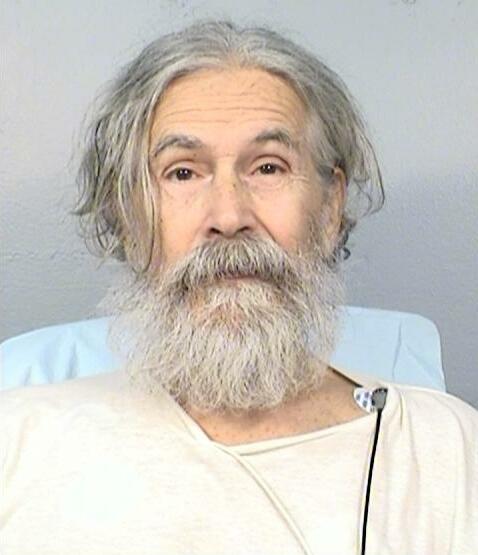
Kuklinski spent the remainder of his life in New Jersey state custody. By 2005, his health had seriously deteriorated, and he was transferred from prison to a secure medical facility in Trenton. He suffered from heart disease and other medical complications.
Richard Leonard Kuklinski died on March 5, 2006, at the age of 70. His death prevented prosecutors from using him as a witness in the case involving Peter Calabro and Sammy Gravano. Although speculation surrounded the timing of his death, a review of the medical findings concluded that he died from natural causes associated with cardiac disease.
Legacy
Richard Kuklinski remains one of the most recognizable American killers largely because of the contrast between his suburban family life and his criminal activities. The discovery that he had frozen Louis Masgay’s body, the undercover recordings produced during Operation Iceman, and his unemotional prison interviews created an enduring image of a calculating professional assassin.
The documented evidence presents a more precise picture. Kuklinski was a violent thief, fraudster, illegal-goods trafficker, and murderer who killed associates and business contacts for money, self-protection, and personal advantage. He was legally connected to six murders, while his claims of 100 or more killings remain unverified and are widely regarded as exaggerations. Separating the confirmed cases from Kuklinski’s self-created mythology is essential to understanding both the seriousness of his proven crimes and the limits of the legend surrounding the “Iceman.”