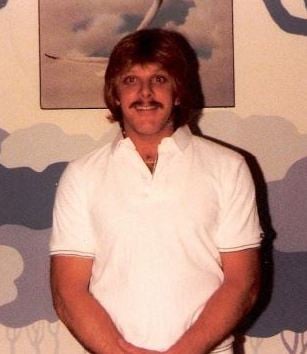
Robert Stevens, a 63-year-old British-born American male, served as a photojournalist and photo editor for the tabloid newspaper The Sun, published by American Media in Boca Raton, Florida. In early October 2001, he was hospitalized after experiencing flu-like symptoms—including vomiting and breathing difficulty—initially misdiagnosed as meningitis.
Further medical testing and confirmation by federal health authorities revealed that he had inhalational anthrax.
Stevens died on October 5, 2001 in Boca Raton, Florida, at age 63, from pulmonary anthrax, making him the first fatality in the United States from anthrax in approximately 25 years. In his case, the anthrax infection was traced back to a letter containing anthrax spores that had been mailed to the American Media offices and handled at his workplace. He thus became the first journalist fatality of the 2001 anthrax attacks that targeted media outlets and political figures.
The anthrax attacks resulted in a total of five deaths—Stevens being the first—and sickened seventeen others through varying forms of exposure. The anthrax strain involved was identified as the Ames strain, a rare and lethal variety linked to a military research laboratory. Investigators determined that at least one mailing had been sent to his workplace, although the specific envelope that infected Stevens was never recovered.
A sprawling federal investigation—known as the Amerithrax case—ensued. In the years following, the FBI identified Bruce Edwards Ivins, a government microbiologist associated with the U.S. Army’s research facility at Fort Detrick, Maryland, as the primary suspect. Forensic analysis of anthrax spores, lab access, and behavioral evidence pointed to Ivins. In 2008, just as law enforcement was preparing to formally charge him, Ivins died by suicide—his death occurring as prosecutors were moving toward indictment.
In the wake of Stevens’ death, his widow filed a lawsuit in 2003 against the U.S. government, alleging negligence in safeguarding dangerous biological agents at the research facility where the anthrax originated. The case was settled in 2011, with the government agreeing to pay the Stevens family $2.5 million—explicitly stating that the settlement did not constitute an admission of liability but rather aimed to avoid the expense and uncertainty of further litigation.