Harrison Frank Graham: The North Philadelphia “House of Death” Murders
Background
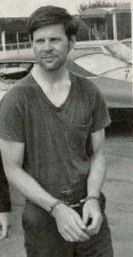
Harrison Frank “Marty” Graham was a Philadelphia serial killer convicted of murdering seven women during an approximately eleven-month period in 1986 and 1987. Graham lived in a small third-floor apartment at 1631 North 19th Street in North Philadelphia, near Cecil B. Moore Avenue. The deteriorating building stood in an area where abandoned properties and illegal drug activity were common. Graham’s apartment itself became a gathering place for people using drugs, allowing numerous acquaintances to enter and leave without attracting unusual attention.
Graham was known around the neighborhood as a physically imposing but generally quiet man. He had significant intellectual limitations and a long history of substance abuse. Nothing about his ordinary neighborhood reputation prepared residents for what police would eventually discover inside his apartment. Behind a nailed-shut door, Graham had accumulated the remains of women he had killed, some of which had been concealed for many months.
The Murders
According to Graham’s confession and the evidence presented against him, he brought women to his apartment where drugs and sexual activity were involved. Graham admitted putting his hands around the women’s necks and strangling them. Rather than removing the bodies from his residence, he left or concealed the victims’ remains inside the apartment and immediately around the building. As the killings continued, bodies in different stages of decomposition accumulated in the rooms where he continued to live.
The condition of the remains later made reconstruction of the murders extremely difficult. Some victims had been dead long enough to become substantially skeletonized, while two bodies were comparatively recent. Medical examination established strangulation in the more recently deceased victims, while decomposition made the precise medical cause of death harder to establish independently for several of the others. Graham nevertheless confessed to killing all seven women, and the prosecution presented his confession together with physical and circumstantial evidence at trial.
The Seven Victims
The women were eventually identified as Cynthia Brooks, Valerie Jamison, Mary Jeter Mathis, Barbara Mahoney, Robin DeShazor, Sandra Garvin and Patricia Franklin. Contemporary reporting established that the murders occurred over roughly eleven months in 1986 and 1987. Exact calendar dates of death were not reliably established for the individual victims, largely because five sets of remains had undergone extensive decomposition. Forensic estimates indicated that the two most recent victims had died shortly before the August 1987 discovery, while the remaining women had been dead for considerably longer. Because modern sources sometimes assign precise dates that conflict with this original forensic timeline, those unverified dates are not presented here as established facts.
- Cynthia Brooks, age 27 — Exact date of death: not conclusively established; killed during the 1986–1987 murder period. Her remains were recovered during the investigation centered on Graham’s residence at 1631 North 19th Street, Philadelphia.
- Valerie Jamison, age 25 — Exact date of death: not conclusively established; killed during the 1986–1987 murder period. Her remains were connected to Graham’s North 19th Street apartment and the surrounding crime scene.
- Mary Jeter Mathis, age 36 — Exact date of death: not conclusively established; killed during the 1986–1987 murder period. Her remains were recovered as part of the investigation at Graham’s North Philadelphia residence.
- Barbara Mahoney, age 22 — Exact date of death: not conclusively established; killed during the 1986–1987 murder period. Her remains were among those associated with Graham’s apartment at 1631 North 19th Street.
- Robin DeShazor, age 29 — Exact date of death: not conclusively established; killed during the 1986–1987 murder period. DeShazor had been Graham’s longtime girlfriend. Her remains were among those linked to his North Philadelphia residence.
- Sandra Garvin, age 33 — Exact date of death: not conclusively established; killed during the 1986–1987 murder period. Her remains were recovered in connection with the North 19th Street crime scene.
- Patricia Franklin, age 24 — Exact date of death: not conclusively established; killed during the 1986–1987 murder period. Her remains were among those attributed to the series of killings centered on Graham’s apartment.
The Discovery on August 9, 1987
By the summer of 1987, the odor coming from Graham’s apartment had become impossible for people in the building to ignore. On Sunday, August 9, 1987, a confrontation concerning the condition of the residence ended with Graham leaving. Before departing, he had secured or nailed shut an interior door. After the landlord’s representatives were unable to gain normal access and suspected that something was seriously wrong, police were summoned to the building.
Officers entering the apartment encountered extreme filth, accumulated trash, mattresses and the unmistakable evidence of human decomposition. The investigation quickly expanded as one set of human remains after another was located. Six victims’ remains were found in or closely associated with the apartment, including bodies or skeletal remains concealed beneath debris, mattresses or inside storage areas. Investigators subsequently recovered portions of another victim on the roof and in an adjacent part of the property. The discovery transformed what had begun as a landlord complaint into one of Philadelphia’s most disturbing multiple-homicide investigations of the decade.
Identification of the Victims
Identifying all seven women required extensive forensic work. The condition of several victims prevented investigators from relying on ordinary visual identification. Anthropological examination, personal belongings, clothing, reports from relatives and acquaintances, and forensic reconstruction were used to establish identities. In at least one instance, forensic sculptor Frank Bender reconstructed facial features from a skull in an effort to generate public recognition of an unidentified woman.
The investigation also demonstrated how easily the victims’ disappearances had escaped immediate connection with one another. Many of the women moved within a social environment affected by poverty and drug dependency. Graham’s apartment was already known as a place where people gathered to use drugs, so the repeated arrival of different visitors did not automatically appear suspicious to neighbors. That environment gave Graham an opportunity to commit repeated killings without producing the kind of immediate pattern that might otherwise have drawn attention.
Graham’s Confession and Arrest
Graham disappeared after leaving the apartment, beginning a police search throughout Philadelphia. After approximately a week as a fugitive, he surrendered in mid-August 1987 after contact with his mother. Contemporary court reporting places his arrest on August 16, 1987. During a lengthy interrogation, Graham gave detectives a signed confession describing the deaths of seven women.
He told investigators that the women had visited his apartment, that drugs and sexual activity had occurred, and that he had placed his hands around their necks. Graham attempted to portray aspects of the strangulations as something that had happened during sexual encounters rather than as deliberately planned murders. Prosecutors rejected that explanation. The physical circumstances, the repeated nature of the killings, his treatment of the bodies and his own statements became central parts of the case against him.
Trial and Conviction
Questions about Graham’s intellectual abilities and mental condition became major issues before and during his prosecution. Psychiatric and psychological experts disagreed over the extent of his mental illness and his ability to participate meaningfully in legal proceedings. Despite those disputes, he was ruled competent to stand trial. Graham ultimately waived a jury, leaving the verdict to Philadelphia Common Pleas Judge Robert A. Latrone.
On April 27, 1988, Graham was found guilty of seven counts of first-degree murder and seven counts involving abuse of the victims’ corpses. The prosecution had successfully argued that the seven deaths were intentional killings rather than the accidental strangulations Graham had attempted to describe. The verdict concluded a lengthy trial in which the extraordinary condition of the apartment, Graham’s confession and evidence concerning the recovered remains were examined in detail.
Sentencing
On May 3, 1988, Judge Latrone sentenced Graham to life imprisonment for one murder and imposed six death sentences for the other killings. He also received additional prison terms for offenses involving the handling and concealment of the victims’ remains. The unusual arrangement of the original sentences later produced additional litigation in Pennsylvania’s appellate courts.
Graham’s death sentences remained the subject of legal proceedings for years. Evidence concerning his lifelong intellectual disability eventually became especially important after the United States Supreme Court ruled that executing people with intellectual disabilities was unconstitutional. In December 2003, a Pennsylvania court granted Graham relief from his death sentences after concluding that his intellectual functioning met the applicable standard. The murders themselves, however, remained established by his seven first-degree murder convictions.
Legacy of the Case
The Harrison Graham case remains notable not merely because seven women were murdered, but because the victims’ remains accumulated in and around one small urban apartment before authorities discovered what had happened. Graham continued occupying the residence while decomposition progressed around him, and people continued to visit a building in which multiple victims had been concealed. Complaints about the increasingly powerful odor ultimately exposed the crimes.
The case also illustrates the difficulties involved in investigating victims whose disappearances may receive limited immediate attention. Cynthia Brooks, Valerie Jamison, Mary Jeter Mathis, Barbara Mahoney, Robin DeShazor, Sandra Garvin and Patricia Franklin were seven individual women, not simply the contents of a notorious crime scene. Their identification required the efforts of relatives, investigators, medical examiners and forensic specialists after decomposition had erased much of the evidence normally used to reconstruct a homicide. Although exact individual dates of death could not be reliably established, the evidence demonstrated that Graham killed the seven women during an approximately eleven-month period spanning 1986 and 1987 and concealed their remains at or near his North Philadelphia home until the discovery on August 9, 1987.