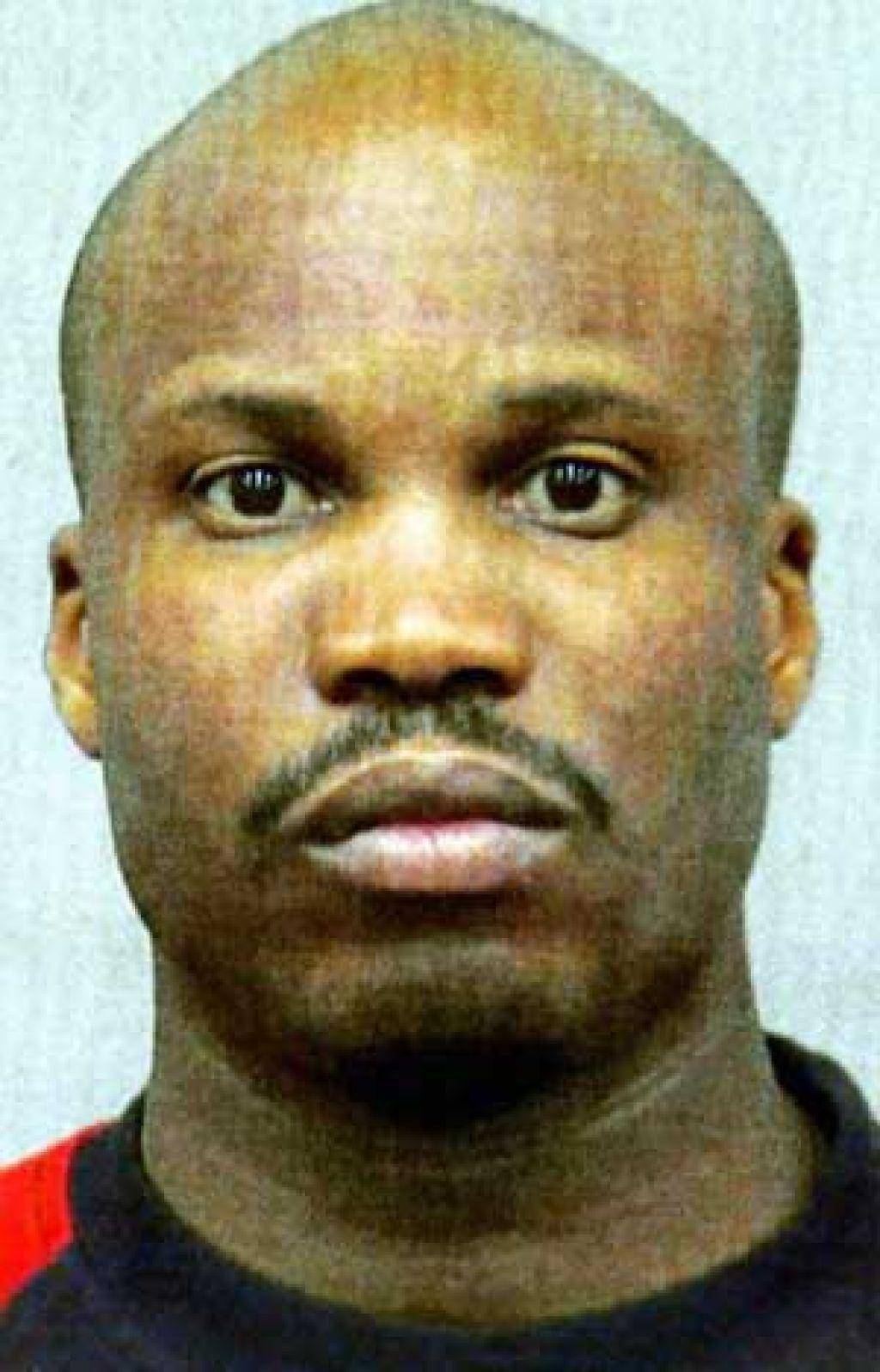
Henry Nesbitt: The Reported Georgia Serial Killer
Overview
Henry Nesbitt, whose surname also appeared in historical records as Henry Nesbit, was a convicted murderer and suspected serial killer active in southern Georgia during the 1890s. Surviving accounts describe him as a gunman who may have killed as many as nine men before his arrest in June 1897. However, documentation from the period is incomplete, and only one killing can be firmly connected to his conviction and execution. Another shooting death was attributed to him in later summaries, while the names and circumstances of several additional alleged victims have apparently been lost.
Nesbitt operated in and around Irwin County, Georgia, at a time when rural communities were separated by long stretches of farmland, woodland and poorly traveled roads. Law enforcement agencies had limited communication systems, forensic science was undeveloped and many violent deaths were reported only briefly in local newspapers. These conditions make it difficult to reconstruct the complete history of Nesbitt’s alleged crimes or determine whether every death attributed to him was investigated as part of a single series.
The Murder of James Arlington
The crime for which Nesbitt was convicted was the shooting death of James Arlington on June 1, 1897. Arlington was a Black man living in Georgia, although surviving summaries provide few reliable details about his age, occupation or family. The killing occurred in Irwin County, the jurisdiction in which Nesbitt was later tried and sentenced to death.
Available historical records identify shooting as the cause of Arlington’s death. The precise location of the confrontation and the events leading to the gunfire are not clearly preserved in widely available accounts. It is also uncertain whether the killing resulted from an argument, robbery, personal grievance or another motive. What is established is that authorities treated Arlington’s death as murder and identified Nesbitt as the person responsible.
The Arlington homicide became the central case against Nesbitt. He was apprehended during June 1897, only a short time after the killing. The speed of the arrest suggests that investigators either obtained witness information, recovered evidence connecting him to the shooting or already regarded him as a dangerous suspect. The surviving summaries do not provide enough detail to determine exactly how officers located or captured him.
The Suspected Murder of Dick Wright
Dick Wright is listed in historical crime compilations as a suspected victim of Henry Nesbitt. Wright was reportedly found dead from a gunshot wound on June 3, 1897, two days after the murder of James Arlington. His death was also associated with Georgia, although the precise community or site where his body was discovered has not been reliably documented in surviving summaries.
The proximity of the two deaths is significant. Arlington was killed on June 1, and Wright was found dead on June 3. Both men had been shot, and both deaths occurred shortly before Nesbitt’s apprehension. These similarities appear to have contributed to the suspicion that Nesbitt was responsible for Wright’s death. Nevertheless, Wright’s killing was not the murder for which Nesbitt was formally executed, and the available record does not establish that he was tried or convicted for it.
It is possible that investigators believed Wright’s death was part of a larger pattern of shootings attributed to Nesbitt. However, the surviving information does not describe witnesses, physical evidence, a confession specific to Wright or a proven motive. Wright must therefore be identified as a suspected victim rather than a confirmed victim.
Known and Suspected Victims
- James Arlington — June 1, 1897 — Irwin County, Georgia: Arlington was shot and killed. Henry Nesbitt was convicted of his murder and sentenced to death. Arlington is the only victim whose killing is firmly established through Nesbitt’s capital conviction.
- Dick Wright — June 3, 1897 — Georgia, precise location unconfirmed: Wright was reportedly found dead from a gunshot wound two days after Arlington’s murder. His death was attributed to Nesbitt in later crime records, but no separate conviction has been documented. He is considered a suspected victim.
- Several unidentified or undocumented men — during the 1890s — Georgia: Historical execution records described Nesbitt as a suspected serial killer who reportedly murdered nine men. The names, dates and locations associated with most of these alleged killings have not been reliably preserved and cannot be presented as confirmed victims.
Reports of Additional Murders
Nesbitt’s reputation as a serial killer rests primarily on reports that he had murdered as many as nine men. Some later accounts characterize him as a self-confessed killer, suggesting that he may have admitted responsibility for additional deaths after his capture. Unfortunately, no complete surviving confession, interrogation transcript or official list of those alleged victims is readily available.
The number attributed to Nesbitt must therefore be treated cautiously. A reported confession does not necessarily establish that every claimed murder occurred or that the person confessing was responsible. Nineteenth-century newspaper reports sometimes repeated sensational claims without providing supporting evidence. Names could also be misspelled, locations confused and separate crimes combined into one narrative.
Even with those limitations, the allegation that Nesbitt killed nine men indicates that authorities and contemporary observers believed the Arlington homicide was not an isolated act. The suspected killing of Dick Wright, occurring only two days later and involving the same general method, strengthened the impression that Nesbitt had committed repeated acts of lethal violence.
Method and Possible Pattern
The known and suspected killings associated with Nesbitt involved firearms. James Arlington was shot on June 1, 1897, and Dick Wright was reportedly found shot on June 3. Because details about the other alleged victims are unavailable, it cannot be established whether Nesbitt always used the same weapon, approached victims in a consistent manner or selected them according to a recognizable pattern.
There is also no reliable evidence of a clearly defined motive. Surviving accounts do not establish whether the shootings were connected to robbery, personal disputes, retaliation or a desire to kill. The absence of motive information makes it difficult to compare Nesbitt with better-documented serial offenders whose crimes involved identifiable rituals or victim preferences.
If the report of nine victims was accurate, Nesbitt may have committed several murders before the deaths of Arlington and Wright drew sufficient attention to bring about his capture. It is equally possible that some killings occurred in neighboring counties and were not initially connected because local authorities lacked centralized records. These possibilities remain speculative because the historical case file is incomplete.
Arrest, Trial and Conviction
Nesbitt was arrested in June 1897, during the same month in which Arlington and Wright died. He was prosecuted in Irwin County for the murder of James Arlington. Details of the trial, including the names of witnesses, the composition of the jury and the evidence presented, are not widely preserved in modern summaries.
The proceedings resulted in a conviction for capital murder. Under Georgia law at the time, the punishment was death by hanging. The rapid progression from the June killing to Nesbitt’s execution in December reflected the speed with which capital cases could move through the nineteenth-century justice system.
No surviving information establishes that Nesbitt received separate trials for the other murders attributed to him. Arlington’s death was sufficient to produce a death sentence, and prosecutors may have considered additional proceedings unnecessary. Authorities may also have lacked enough evidence to bring formal charges in the suspected cases.
Execution in Ocilla
Henry Nesbitt was executed by hanging on December 10, 1897, in Ocilla, Georgia. Historical execution records identify Irwin County as the jurisdiction responsible for carrying out the sentence. He was put to death for the murder of James Arlington.
Nesbitt’s execution occurred slightly more than six months after Arlington was killed. Contemporary records categorized both Nesbitt and Arlington as Black men. The case unfolded during an era of racial segregation and unequal treatment within the Southern legal system, circumstances that must be considered when evaluating the completeness and reliability of the surviving record.
The available accounts do not preserve a detailed description of Nesbitt’s final statement or whether he repeated any alleged confession before his execution. After the hanging, the possibility that he had committed additional murders could no longer be tested through further interrogation or prosecution.
Uncertainty Surrounding the Case
Henry Nesbitt is commonly classified as a suspected serial killer rather than a conclusively documented serial murderer. Although reports credit him with as many as nine victims, only James Arlington’s death resulted in a confirmed murder conviction. Dick Wright remains a suspected victim, and the identities of the other alleged victims are unknown.
The scarcity of surviving evidence prevents a complete reconstruction of Nesbitt’s life and criminal history. His birth date, age at execution, family background and activities before the 1897 killings are not clearly documented in accessible records. Even his surname appears in more than one form, with both Nesbit and Nesbitt used in historical and modern sources.
What remains certain is that Nesbitt was convicted of shooting and killing James Arlington, was suspected in the shooting death of Dick Wright and was publicly associated with reports of numerous additional murders. He was arrested in June 1897 and executed in Ocilla on December 10 of that year. Beyond those established facts, much of his alleged killing history remains hidden by incomplete records and the passage of more than a century.
Legacy
Nesbitt’s case illustrates the difficulty of studying violent crime from the late nineteenth century. Official files were often lost, destroyed or never preserved, while newspaper articles could be brief and inconsistent. As a result, the victims of historical offenders sometimes survive in the record only as names and dates, without the personal histories that would explain who they were and how their deaths affected their families.
James Arlington should be remembered as the confirmed victim at the center of the case rather than merely as the name attached to Nesbitt’s execution record. Dick Wright likewise represents a real person whose shooting death remains associated with Nesbitt but has never been fully explained in the surviving documentation.
Henry Nesbitt’s designation as a serial killer ultimately depends on reports that he confessed to or was suspected of killing several men. Those claims may reflect a genuine series of murders, but the evidence currently available is insufficient to verify the identities, death dates and locations of most alleged victims. His history is therefore best described as that of a convicted murderer and suspected serial killer whose full number of victims remains unknown.