Herbert Arnold: New York Serial Killer and Repeat Violent Offender
Overview
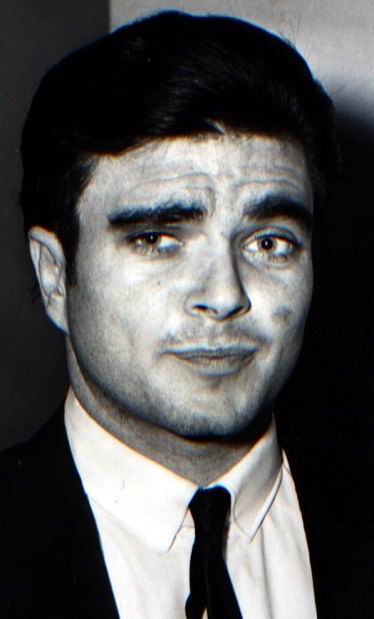
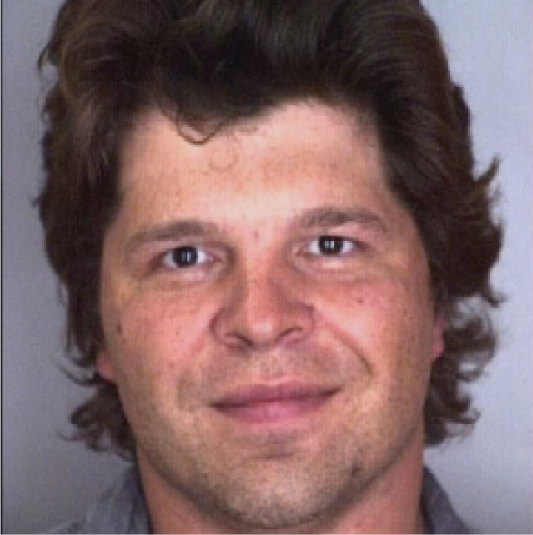
Herbert Arnold, also known as Tony or Anthony Arnold, was a New York murderer and sexual offender whose violent criminal history extended across several decades. Born around 1944, Arnold first came to the attention of authorities as a teenager and eventually developed a record involving murder, sexual assault, kidnapping, hostage-taking and escape from psychiatric custody. Historical accounts establish that he was responsible for at least three killings: a woman and her 13-year-old daughter in 1965 and another victim in a 1973 kidnapping and murder case.
Arnold's history is complicated by repeated findings that he was mentally incompetent to stand trial. Instead of remaining continuously in prison following his earliest alleged murders, he spent substantial periods confined in New York psychiatric institutions. He was later released, committed additional violent offenses, served time in prison, was paroled, and eventually returned to the forensic psychiatric system. His case became nationally publicized in 1994 when he and another convicted killer escaped from the Mid-Hudson Psychiatric Center.
The 1965 Murders of Ruth and Carol Burke
Arnold's first known killings occurred in New York in April 1965, when he was approximately 20 or 21 years old. The victims have been identified as Ruth Burke, 43, and her 13-year-old daughter, Carol Burke. Later accounts described Ruth as Arnold's girlfriend or a woman who lived near him. Carol was sexually assaulted before she was killed.
Contemporary retrospective reporting consistently describes the case as involving the rape of a 13-year-old girl and the murders of both the girl and her mother. Arnold was arrested and accused of the crimes, but the prosecution did not proceed in the manner of an ordinary murder trial because he was determined to be mentally incompetent to stand trial.
Arnold was subsequently sent to Matewan State Hospital, a New York institution that housed mentally ill offenders. He remained within the psychiatric system for a period of years. The disposition of the case meant that the murders of Ruth and Carol Burke did not result in a conventional murder conviction and lengthy prison sentence at that time.
Victims
- Ruth Burke, 43 – Killed in April 1965 in New York City, New York. Ruth was the mother of 13-year-old Carol Burke and was described in later reporting as Arnold's girlfriend or neighbor. Arnold was accused of killing Ruth during the same incident in which Carol was sexually assaulted and murdered. Available historical reporting verifies the killings as occurring in April 1965, although a precise day of death is not consistently established in the surviving reliable reports.
- Carol Burke, 13 – Killed in April 1965 in New York City, New York. Carol was Ruth Burke's daughter. Arnold was accused of sexually assaulting the child and killing her during the same episode in which her mother was murdered. As with Ruth, the surviving historical reporting consistently places Carol's death in April 1965 but does not provide a consistently verifiable exact day.
- Unidentified male victim – Killed in connection with a 1973 kidnapping and murder case in New York. Historical reporting confirms that Arnold was subsequently convicted and imprisoned for killing another person after his release from psychiatric custody. The victim's name and precise date of death are not consistently provided in readily available historical accounts, so they should not be stated as fact without additional documentation.
The 1973 Kidnapping and Murder
Arnold's release from psychiatric confinement did not mark the end of his violent behavior. In 1973 he was again charged in New York, this time with kidnapping and murder. The case involved a separate victim from Ruth and Carol Burke and established that Arnold's homicidal violence had continued years after the 1965 double killing.
Arnold was again considered mentally unfit to stand trial during portions of the proceedings and was sent to the Mid-Hudson Psychiatric Center in New Hampton, New York. He remained there for approximately three years. Historical accounts nevertheless state that Arnold was ultimately convicted in connection with the killing, sentenced to state prison and eventually paroled in 1983.
The 1973 killing is important when evaluating Arnold as a serial murderer. Even excluding later conflicting claims about another supposed homicide in the 1990s, the murders of Ruth and Carol Burke and the separate 1973 killing establish at least three homicide victims occurring during separate criminal episodes.
Release and Return to Violent Crime
Arnold was paroled from prison in 1983. His release again placed a man with an established history of homicide and sexual violence back into the community. During the years that followed, he commonly used the names Tony or Anthony rather than Herbert.
By 1991, Arnold had again become the subject of a major New York City police investigation. That year, Arnold and two other men were accused of abducting a young woman in Brooklyn. Contemporary reporting described the victim as 16 years old in some accounts, while later New York records described her as 23. What is clear from reporting closest to the investigation is that the woman was kidnapped and repeatedly sexually assaulted over approximately 12 hours.
Importantly, the 1991 victim survived. Later reporting from 2016 incorrectly or confusingly described Arnold as having raped and murdered a 16-year-old in the early 1990s. Detailed reporting from the period of Arnold's 1994 escape, however, identifies the 1991 crime as a kidnapping and rape and makes clear that Arnold was being pursued for abducting and sexually assaulting the woman, not for murdering her. For that reason, the 1991 victim should not be included among Arnold's confirmed homicide victims.
The 1991 Standoff
After detectives began searching for Arnold in connection with the kidnapping and rape, he barricaded himself inside an apartment near his mother's home in Brooklyn. Arnold claimed that he possessed explosives and threatened to blow up the building.
The confrontation developed into a prolonged police standoff. Hostage negotiators spent hours attempting to persuade Arnold to surrender. After approximately six or seven hours, Arnold finally gave himself up after his mother urged him to end the confrontation.
Arnold was subsequently found incompetent to stand trial on the kidnapping and rape charges and was returned to the forensic psychiatric system. By 1992, he was being held at the Mid-Hudson Psychiatric Center in New Hampton, approximately 55 miles northwest of New York City.
Escape from Mid-Hudson Psychiatric Center
Arnold's name received widespread attention again in May 1994. He was confined at Mid-Hudson with John Casablanca, a former Mafia-associated killer with several homicides in his criminal history. Authorities later determined that the men had apparently been discussing an escape for months.
On May 27, 1994, Arnold and Casablanca obtained a handgun that authorities believed had been smuggled into the facility. They seized treatment aide Robert Kamrowski and held a gun to his head. Because security personnel at the psychiatric center were unarmed, staff members opened doors rather than risk Kamrowski being shot.
The fugitives forced Kamrowski into his Chevrolet Cavalier and made him drive south toward New York City. Several hours after the escape, they released him unharmed near Yankee Stadium in the Bronx. Arnold and Casablanca then disappeared into New York City, setting off an extensive manhunt involving more than 100 state and city police officers.
The Manhunt
Police considered Arnold and Casablanca armed and extremely dangerous. Investigators concentrated heavily on New York City because both men had longstanding connections there. Officers watched relatives, friends and locations where the fugitives might seek food, money, clothing or shelter.
Lieutenant Vito Spano of the New York City Police Department played an important role because he had previously pursued Arnold during the 1991 kidnapping and rape investigation. Spano knew Arnold's habits and family connections and considered him extremely dangerous despite neighbors who remembered Arnold as outwardly friendly.
The pressure apparently forced the fugitives to remain outdoors. They hid in wooded and marshy areas around East New York and Canarsie near the Belt Parkway. By the end of their flight, the men reportedly had gone several days without eating.
Capture on June 3, 1994
Shortly before 3:00 a.m. on June 3, 1994, Casablanca approached two New York City police officers in East New York and surrendered. He appeared dirty, exhausted and confused.
Police immediately intensified their search for Arnold in the surrounding area. At approximately 5:55 a.m., investigators spotted Arnold walking along Pennsylvania Avenue near Twin Pines Drive. He was carrying a loaded Smith & Wesson .357 Magnum revolver in his waistband.
Despite being armed, Arnold did not resist. He raised his hands and surrendered. The weeklong escape ended without another murder, although authorities had feared throughout the search that either fugitive might kill again.
Conviction for the 1991 Sexual Assault
After his recapture, legal proceedings arising from the 1991 attack continued. New York records indicate that Arnold was convicted in 1994 in connection with the kidnapping and rape. His history as a sexual offender eventually required him to register with authorities after his release from custody.
The case demonstrates an important distinction in Arnold's criminal record. His established murders occurred during the 1965 and 1973 episodes. The 1991 crime was an extraordinarily serious kidnapping and sexual assault, but the victim survived. Reports published decades later that characterized the 1991 offense as a murder conflict with detailed contemporary accounts of the investigation.
2016 Arrest in Connecticut
Arnold returned to public attention more than two decades after the psychiatric-center escape. By 2016 he was approximately 72 years old and had been living in Vestal, New York. Authorities said he was required to register as a sex offender but failed to properly notify local officials after changing his residence.
Arnold was arrested in New York and released after arraignment, but he subsequently failed to appear in court. Broome County authorities issued a warrant and sought his extradition.
On December 2, 2016, police in Milford, Connecticut, learned through a law-enforcement information network that Arnold might be in their area. An officer located a vehicle matching the description associated with him, and Arnold was taken into custody. He appeared in Milford Superior Court on December 5 for proceedings intended to return him to New York.
Confirmed Murder Count and Conflicting Reports
Herbert Arnold has sometimes been described as having four murder victims, largely because of later accounts claiming that he murdered a teenage girl during the early 1990s. That claim conflicts with detailed reporting concerning the 1991 case. Reports published during Arnold's 1994 escape repeatedly describe the crime as the abduction and rape of a young Brooklyn woman and state that Arnold was wanted for kidnapping and rape rather than murder.
The better-supported account attributes three killings to Arnold: Ruth Burke, Carol Burke and the separate victim killed in the 1973 kidnapping and murder. Contemporary reporting from 1994 likewise stated that Arnold had previously served time for killing two people who were neighbors or family members and another individual. Another account was even more specific, describing the victims as Arnold's girlfriend, her daughter and another man.
Because the identity and precise death date of the 1973 male victim are not consistently preserved in accessible historical reporting, assigning a name or exact date without stronger documentation would risk attaching an innocent person's identity to the case. Likewise, the surviving victim of the 1991 attack should not be incorrectly included in a list of homicide victims.
Legacy of the Case
Arnold's criminal history stretched from the 1960s into the twenty-first century and repeatedly crossed the boundaries between the criminal justice and psychiatric systems. His record included the murders of a mother and child, a separate later homicide, kidnapping, sexual assault, threats involving explosives, hostage-taking, escape from a secure psychiatric hospital and later violations associated with sex-offender registration.
The case also illustrates the difficulty of reconstructing older serial-murder histories accurately. Later newspaper reports sometimes compressed decades of charges, psychiatric findings and convictions into a few sentences, creating contradictions about the number and identity of Arnold's victims. When those reports are compared with accounts published during the 1994 manhunt, the strongest documented evidence supports at least three murder victims and clearly identifies the 1991 kidnapping and rape victim as a survivor rather than a homicide victim.