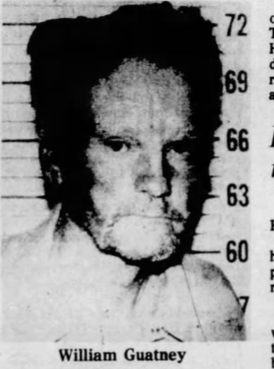
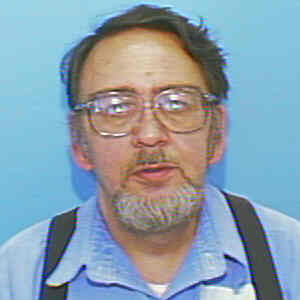
William J. Guatney: Suspected Serial Killer Known as "Freight Train"
William J. Guatney, born February 14, 1922, in Pekin, Illinois, was an American drifter and habitual offender who became a major suspect in a series of child murders during the 1970s. Often called "Freight Train," Guatney traveled extensively, frequently using railroads and moving between fairs and temporary jobs. Investigators ultimately examined him in connection with as many as fifteen killings in Nebraska, Kansas, Illinois, Arizona, and other locations. Although he was formally charged with several murders and reportedly confessed to three killings, he was never convicted of murder. His alleged confessions were disputed, and his severe mental illness complicated both the investigation and the criminal proceedings against him.
Background and Life as a Drifter
Guatney spent much of his adult life moving from place to place. He had a long history of arrests for offenses including theft, public intoxication, passing bad checks, and indecent exposure. He had also served in the United States Army during World War II and suffered a serious head injury. In later years, he experienced significant psychiatric problems and was repeatedly hospitalized.
His wandering lifestyle eventually became important to homicide investigators. Guatney sometimes worked around livestock at state and county fairs, and he traveled through communities connected by railroad lines. Investigators noticed that several murdered children had disappeared near fairs, railroad property, or locations where Guatney might have been present. He was also known for imitating train whistles, animals, and other sounds with his voice, an unusual talent that reportedly made him popular with children and helped produce his "Freight Train" nickname.
The Nebraska State Fair Murders
Two of the most important cases connected to Guatney involved 12-year-old Jacob "Jake" Surber and 13-year-old Jon Harding Simpson. Both boys disappeared in Lincoln, Nebraska, on August 30, 1975, after attending the Nebraska State Fair.
Surber's body was discovered approximately nine days after his disappearance in an area south of the fairgrounds. He had suffered multiple stab wounds. Simpson remained missing longer. His badly decomposed body was eventually discovered on September 22, 1975, inside a closed railroad hopper car. The railroad car had traveled outside Lincoln before returning to the area. Because of decomposition, authorities could not establish Simpson's cause of death with complete certainty, although investigators believed injuries to his bones were consistent with stabbing.
Guatney was questioned about the two murders in 1976. Investigators reportedly became particularly interested in a letter opener associated with him because its dimensions were considered consistent with wounds found on Surber. There was not enough evidence to charge him at that time, however, and Guatney denied responsibility.
The Murder of John "Jack" Hanrahan
Another major case occurred in Topeka, Kansas. Twelve-year-old John Fitzgerald "Jack" Hanrahan disappeared on May 20, 1979, after being seen at Gage Bowl. His disappearance led to an extensive search. Ten days later, his body was discovered in a creek bed in neighboring Osage County.
Authorities treated Guatney as a principal suspect and eventually charged him with first-degree murder, aggravated kidnapping, and aggravated sodomy in connection with Hanrahan's death. The Hanrahan case became one of the strongest official attempts to prosecute Guatney for murder. Nevertheless, the case never produced a murder conviction.
Illinois Murder Investigations
Police in Illinois also examined Guatney in connection with the deaths of children whose bodies were discovered close to railroad property. One was nine-year-old Mark Wayne Helmig of Pekin. Helmig disappeared in August 1976, and his decomposed body was subsequently discovered inside a railroad hopper car near East Peoria. Authorities determined that he had been strangled. Guatney was investigated as a suspect but was not charged with Helmig's murder.
Another Illinois case involved 14-year-old Marty Lancaster of the Bloomington-Normal area. Lancaster disappeared in June 1978. His decomposed remains were found on July 14 near Illinois Central Gulf railroad tracks in Normal. Investigators determined that he had suffered a severe head injury. Police publicly identified Guatney as a suspect in the Lancaster investigation, but prosecutors concluded that the available evidence was insufficient to charge him.
Victims and Cases Associated With Guatney
- Jacob "Jake" Surber, 12 - Died August 30, 1975, in Lincoln, Nebraska. He disappeared after visiting the Nebraska State Fair. His body was discovered about nine days later south of the fairgrounds with multiple stab wounds. Guatney was later charged with his murder.
- Jon Harding Simpson, 13 - Died August 30, 1975, in Lincoln, Nebraska. He disappeared with Surber after attending the Nebraska State Fair. His body was discovered September 22 inside a railroad hopper car. Decomposition prevented a definitive determination of the cause of death, although investigators believed his injuries were consistent with stabbing. Guatney was charged with his murder.
- Mark Wayne Helmig, 9 - Died in August 1976 in the Pekin/East Peoria, Illinois, area. His decomposed body was discovered in a railroad hopper car after he had been missing for several weeks. He had been strangled. Guatney was investigated as a suspect but was never charged in this case. Sources differ on the precise day of Helmig's death, so an exact date is not stated here.
- Marty Lancaster, 14 - Disappeared in June 1978 in the Bloomington-Normal, Illinois, area. His body was discovered July 14, 1978, near railroad tracks in Normal, and investigators determined that he had suffered a severe head injury. Because surviving accounts do not establish his precise date of death consistently, the discovery date rather than an uncertain death date is given here. Guatney was considered a suspect but was not charged.
- John Fitzgerald "Jack" Hanrahan, 12 - Died May 20, 1979, after disappearing from Gage Bowl in Topeka, Kansas. His body was found ten days later in a creek bed in Osage County. Guatney was charged with first-degree murder and related offenses in connection with Hanrahan's death.
- Jay Durnil, 11 - Disappeared April 29, 1976, near Waterloo, Nebraska, and was later found murdered. Guatney was at one point investigated as a possible suspect. Because reliable surviving information does not establish a sufficiently certain exact date of death or a definitive connection to Guatney, the case should be regarded only as one of the additional murders examined by investigators.
Arrest and Expanding Investigation
By 1979, law-enforcement agencies from several states were comparing unsolved murders of children and examining whether one traveling offender might have been responsible. Investigators looked at approximately fifteen cases involving young victims, many of them boys between roughly eight and fourteen years old. Railroad locations and fairs repeatedly appeared in the investigation, making Guatney's travel habits and employment particularly significant.
Guatney was arrested in Illinois in August 1979. He faced charges connected with the Surber, Simpson, and Hanrahan killings, while investigators continued examining him in relation to other deaths. Those additional investigations reportedly included murders in Illinois, Nebraska, Kansas, and Arizona. Being considered a suspect, however, did not establish that Guatney committed those crimes, and many of the proposed connections remained circumstantial.
Confessions, Mental Illness, and the Failure to Reach Trial
After his arrest, Guatney reportedly made statements amounting to confessions to three murders. The reliability of those statements became a major problem. Guatney suffered from serious psychiatric illness and expressed bizarre beliefs about another personality being responsible for killings. His mental competency became the central issue in the prosecution.
Legal proceedings continued into the early 1980s. Guatney was examined by mental-health professionals, and his competency status changed as his condition was evaluated. By September 1981, he was found unfit to stand trial. The murder prosecutions therefore did not result in a jury determining whether he was guilty or innocent.
Final Years and Unresolved Questions
Guatney spent much of his later life in psychiatric and veterans' facilities. He briefly left institutional supervision in the 1980s and was once again questioned in connection with another Nebraska homicide, but authorities determined that he was not responsible for that crime. He eventually returned to psychiatric care.
William J. Guatney died in Kansas on March 31, 1996, at the age of 74. He died without ever being convicted of murder. Consequently, describing him simply as a proven serial killer can be misleading. He is more accurately described as a suspected serial killer who was charged in several child murders, investigated in numerous others, and reportedly confessed to killings under circumstances that later raised serious questions about the reliability of his statements. The murders associated with his name remain disturbing not only because of the young ages of the victims, but also because the criminal proceedings ended without a definitive determination of Guatney's responsibility for them.