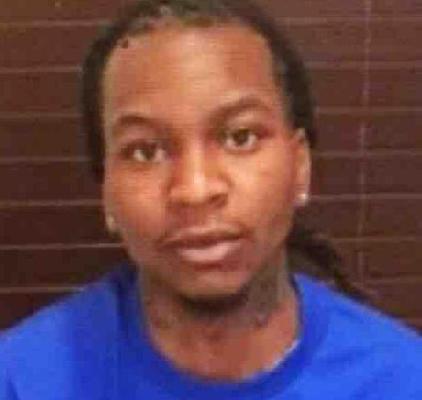
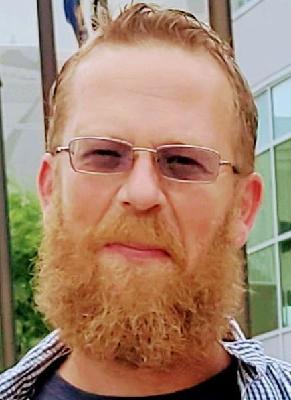
On a late summer day in Lincoln, Nebraska, what began as a youthful adventure to the Nebraska State Fair for two boys ended in a tragedy that would haunt the community for years. Thirteen-year-old Jon Simpson, a Caucasian male, and his twelve-year-old friend, Jacob Surber, disappeared after leaving the fairgrounds on August 30, 1975. The initial joy and excitement of the fair gave way to a deepening mystery as the two boys failed to return home, sparking a frantic search and a long, painful
wait for answers.
The first grim discovery came nine days after their disappearance when Jacob Surber's body was found south of the fairgrounds, having suffered multiple stab wounds. The search for Jon Simpson continued until September 22, 1975, when his body was located in a closed hopper car that had been transported to Council Bluffs, Iowa, and then returned to Lincoln. Due to the condition of his remains, the exact cause of death could not be determined, but investigators noted wounds on his bones that suggested he, too, had been stabbed.
In mid-1976, a transient who worked at fairs as a cattle herder, William J. Guatney, came under suspicion for the murders. Known by aliases such as 'Freight Train' and 'Choo Choo,' Guatney was known for his ability to imitate various sounds, a skill that reportedly helped him gain the trust of children. Though questioned by police, he denied any involvement and was released due to a lack of evidence. The case grew cold, but investigators did not give up.
Years later, in August 1979, a significant break in the case occurred when Guatney was arrested in Springfield, Illinois. He was subsequently charged with the murders of Jon Simpson and Jacob Surber, as well as the murder of another boy in Topeka, Kansas. Authorities suspected Guatney was responsible for the deaths of as many as 15 children across several states, often near railroad facilities during fairs. Following his arrest, Guatney pleaded not guilty and claimed to have multiple personality disorder, asserting that an alter ego was responsible for the killings. In 1980, he was deemed incompetent to stand trial and was committed to a mental institution, where he remained until his death from natural causes in 1996. While an arrest was made, the charges were ultimately dismissed, and Guatney was never convicted for the murders of Jon Simpson and Jacob Surber.