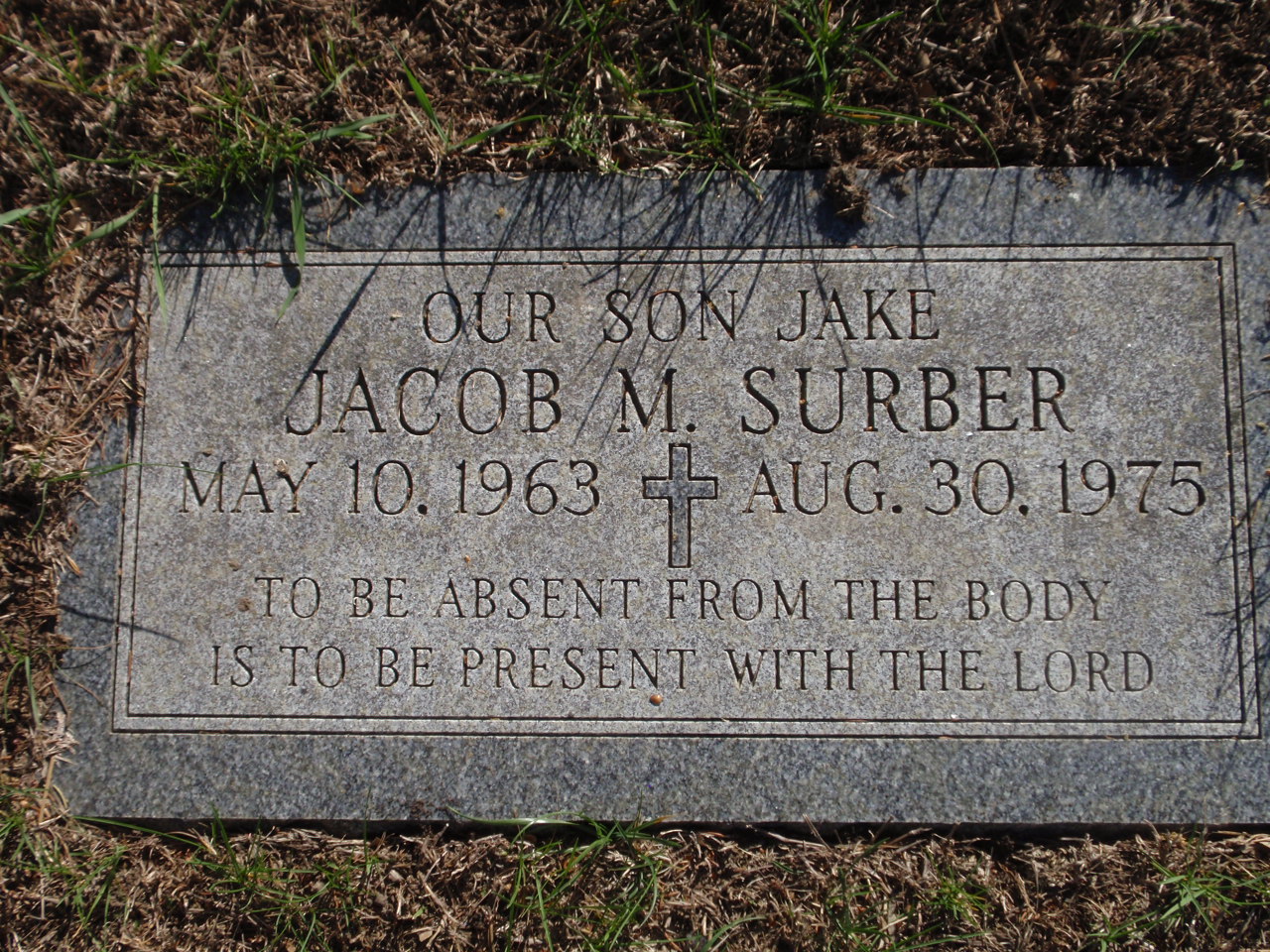
On a late summer day, August 30, 1975, a 12-year-old White/Caucasian male named Jacob Surber vanished from the Nebraska State Fair in Lincoln. What began as a day of youthful excitement turned into a parent's worst nightmare. Nine days later, his body was discovered south of the fairgrounds, bearing the tragic marks of a violent end; he had been stabbed multiple times.
The discovery sent a chill through the community, marking the beginning of a grim investigation into the abduction and murder of a young boy.
Jacob was not the only child to go missing that day. His 13-year-old friend, Jon Simpson, also disappeared from the fair. Simpson's body was found on September 22 in a closed hopper car that had been moved by train to Council Bluffs, Iowa, and then returned to Lincoln. The similar circumstances of their disappearances and deaths led investigators to believe they were dealing with a predator who targeted young boys, possibly someone who worked at or frequented fairs. The cases were frighteningly similar to a string of other murders of young boys throughout the Midwest, suggesting the work of a serial killer.
The investigation eventually led police to a drifter named William J. "Freight Train" Guatney. Guatney, who worked at fairs as a cattle herder, was known for his ability to imitate various sounds, a skill that reportedly helped him gain the trust of children. He first came under suspicion in mid-1976 when he was questioned about the murders of Surber and Simpson. A crucial piece of evidence emerged when a letter opener seized from Guatney during that interrogation was found to match the width and depth of the wounds on Jacob Surber's body.
On August 20, 1979, Guatney was arrested in Springfield, Illinois, and charged with the murders of both Jacob Surber and Jon Simpson. He was also considered a suspect in numerous other killings of boys across Nebraska, Kansas, and Illinois. During his trial in January 1980, Guatney exhibited erratic and troubling behavior, prompting a medical examination to determine his sanity. Although initially found competent, his mental state rapidly deteriorated. Ultimately, Guatney was deemed mentally incompetent to stand trial due to paranoid schizophrenia and organic brain damage. He was committed to a mental institution in 1980, where he remained until his death in 1997, never facing a conviction for the murders he was accused of.