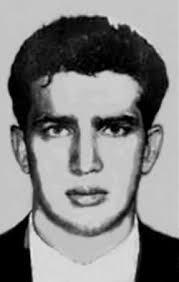
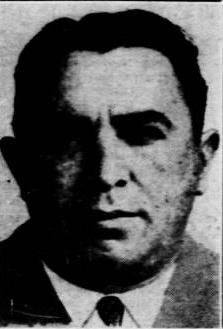
Richard Renner was a 20-year-old Black man whose life was taken during a sudden series of knife attacks that swept through midtown Manhattan on December 22, 1980. Renner was attacked late that evening, at approximately 10:40 p.m. Later accounts place the stabbing at a candy store on 49th Street. He was stabbed in the chest and was taken for medical treatment, but he died from his injuries. His killing came near the end of a day in which a lone attacker had moved through Manhattan striking victims at widely separated times and locations.
The violence had begun before noon. The first known victim survived after being stabbed at approximately 11:30 a.m., and another man escaped a later attack with injuries to his hand and wrist. By the afternoon, the assaults had turned fatal. Luis Rodriguez was stabbed at approximately 3:30 p.m., followed by Antone Davis during the early evening. Renner was attacked several hours later, and another victim was fatally stabbed shortly afterward. Contemporary investigators came to believe that six attacks were part of the same Manhattan spree, with four people killed and two wounded.
Police found little evidence of an ordinary dispute or personal confrontation in Renner's death. Witnesses to the broader series described an attacker who approached without apparent provocation and struck quickly, sometimes without saying anything. Investigators noted that the fatal wounds were generally directed at the chest. Police believed the manner in which the knife was driven into the victims suggested an assailant familiar with a particularly lethal stabbing technique. At the time, there was no publicly established motive specifically for Renner's killing.
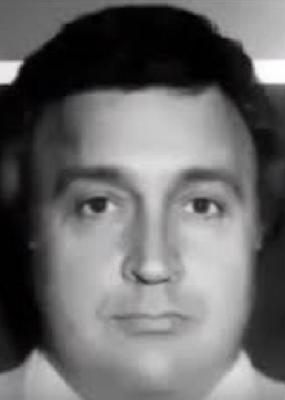
The attacks triggered an intensive Manhattan manhunt. A police task force numbering roughly 75 investigators searched rooming houses, inexpensive hotels and locations around Times Square, while a composite drawing of the suspected attacker was circulated. Early descriptions proved imperfect: witnesses generally described a muscular man in his early 40s, around five feet seven inches tall, wearing glasses. Detectives were also comparing the Manhattan attacks with a separate series of killings that had terrorized the Buffalo area earlier in 1980. At first, authorities cautioned that they had no proof that the different outbreaks of violence were connected.
The investigation eventually focused on Joseph Gerard Christopher, an Army private from Buffalo who later became known as both the ".22-Caliber Killer" and the "Midtown Slasher." Christopher had enlisted in the Army in November 1980 and was stationed at Fort Benning, Georgia. Records established that he was on Christmas leave during the Manhattan attacks and had arrived in New York City shortly before December 22. Investigators later learned that his leave also coincided with subsequent knife attacks in western New York.
The break in the larger investigation came after Christopher attacked another soldier at Fort Benning in January 1981. The soldier survived, and Christopher was confined in the military stockade on an assault-with-intent-to-kill allegation. While he remained in custody, his mental condition deteriorated and he spent time in the base hospital's psychiatric unit. During conversations with military medical personnel, Christopher made statements about killings in New York. Those statements were relayed to investigators and helped turn him from a possible suspect into the central figure in the investigation.
Authorities subsequently searched locations connected to Christopher and recovered evidence relating particularly to the earlier shootings in western New York, including. 22-caliber ammunition and gun components. Investigators also reconstructed his movements and determined that he had been away from Fort Benning during the period in which the Manhattan stabbings occurred. By the spring of 1981, prosecutors were bringing murder charges against him in connection with the broader series of killings.
There is an important distinction in Renner's case, however. Although investigators and later accounts attributed his killing to Christopher and consistently include Renner among the victims of the Midtown Slasher spree, the documented New York City prosecution did not charge Christopher with Renner's murder. The Manhattan indictments that ultimately went to trial concerned the murder of Luis Rodriguez and the nonfatal stabbing of Ivan Frazier. This means that while Christopher became the identified suspect responsible for the series containing Renner's killing, there was no separate trial verdict convicting him of murdering Renner.
Christopher's legal battles continued for years. He was initially convicted in Buffalo in 1982 of three murders committed during the earlier shooting spree and received a lengthy sentence, but those convictions were overturned in 1985 after New York's highest court found problems involving the exclusion of psychiatric evidence relevant to his competency. Later that year he was tried in Manhattan. Prosecutors presented evidence of his movements during his military leave and statements he had made while hospitalized at Fort Benning. The jury rejected his insanity defense and convicted him of murdering Rodriguez and attempting to murder Frazier. He was sentenced to life imprisonment in November 1985.
Christopher remained incarcerated and died in prison in 1993. He reportedly claimed responsibility for a larger number of killings than those for which he was actually convicted. Renner's death consequently occupies a difficult legal position: it is historically associated with Christopher's December 22 Manhattan rampage and is routinely identified as one of the Midtown Slasher killings, but the available record does not show that prosecutors ever obtained a conviction specifically for Renner's murder. No other suspect or arrest for Renner's killing appears in the sources reviewed.