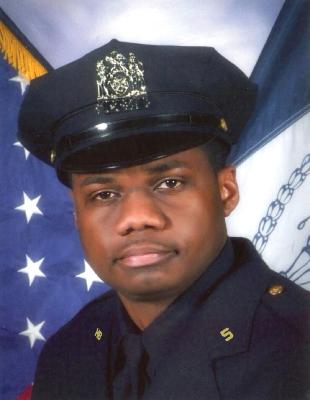
Vito Borelli, a male from Manhattan, New York, moved in the dangerous orbit of New York’s Mafia world and into the private life of Gambino boss Paul Castellano through a relationship with Castellano’s daughter, Constance. What began as a romance curdled into something fatal after Borelli was said to have made disparaging remarks about Castellano—most famously a comparison that mocked Castellano’s appearance by likening him to chicken magnate and commercial pitchman Frank Perdue.
In that culture, an insult could travel farther than a bullet, and when word of it reached the boss, the punishment that followed was not a lecture or a beating, but an order.
Accounts describe the murder as a coordinated favor between crime families, with the Bonanno family drawn into the plot through high-level intermediaries at a time when alliances mattered. Borelli was approached by Bonanno soldier Anthony Rabito and enticed to a warehouse connected to Rabito’s cookie business at 308 East 53rd Street in Midtown Manhattan. There, Borelli was ambushed and shot to death, with the actual trigger-pulling attributed in multiple accounts to Gambino figures John Gotti and Joseph Watts. Others were described as staging the area and guarding the perimeter as lookouts, including Bonanno leaders Joseph Massino and Dominick Napolitano, turning the block into a controlled scene where the killing could happen quickly and the witnesses would be none.
The violence did not end with the gunfire. The same narratives say that a stolen panel truck had been prepared for body transport, but when it failed to start, a different vehicle was used. Borelli’s body was placed into a trunk and driven out of Manhattan toward Queens, where another group was said to be waiting. Roy DeMeo’s name appears in the telling of what came next—an infamous figure associated with gruesome disposals—and the body was described as being dismembered, with the remains ultimately vanishing into the city’s hidden waste stream. Borelli’s remains have never been recovered, and the absence of a body hardened the silence around the crime, leaving only rumor, fear, and the slow seep of information years later.
In the immediate aftermath, there is no public record of an arrest or a murder charge brought specifically for Vito Borelli’s killing. Instead, the case lived on as something spoken of indirectly—an example of how favors were traded and insults repaid—until cooperators began to talk. Later court filings connected to Bonanno family prosecutions recount that Salvatore Vitale provided information about the Borelli murder, describing it as a joint Bonanno–Gambino operation ordered by Paul Castellano, and naming participants that included Massino, Gotti, Angelo Ruggerio, Frank DeCicco, Napolitano, and Rabito. Those filings state that, despite the detail, no defendant was charged with the Borelli murder itself; the story surfaced in court as background evidence in later trials and proceedings, and it was also referenced in arguments used to detain Rabito pretrial in a separate case.
Even the date is not perfectly settled in the public record. Some later summaries and listings place Borelli’s death on October 1, 1980 in Manhattan, while other official court descriptions frame the killing as occurring in the mid-1970s, with the discrepancy attributed in part to flawed memory and shifting recollections among witnesses and participants over time. What remains consistent across the overlapping accounts is the arc of the story: a boyfriend’s remark, a boss’s fury, a lure to a Midtown warehouse, gunfire in a place chosen for control, and a disappearance so complete that the city never gave Borelli back. Suspects and alleged participants are named in later testimony and filings, but the killing itself stands as an example of a murder widely described, heavily attributed, and yet left without a direct arrest, trial, or conviction tied solely to Vito Borelli’s death.