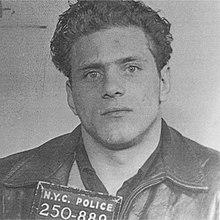
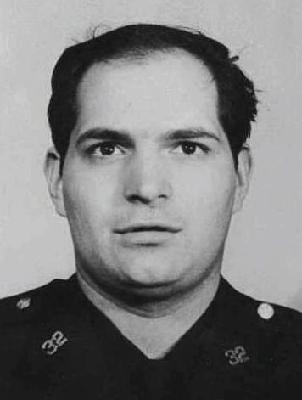
Salvatore “Toto” D’Aquila, a 54-year-old White male, was one of the most feared underworld figures in New York when his story ended in gunfire on October 10, 1928. By then he had built a reputation as an early Mafia boss whose influence stretched well beyond his neighborhood, and the years leading up to his death were filled with shifting alliances, gang rivalries, and the kind of quiet betrayals that often surfaced only after someone was already lying in the street.
That day in Manhattan, he was attacked on Avenue A near East 13th Street, caught in an ambush beside his automobile. Accounts describe multiple gunmen—often framed as three assailants—closing in and firing in a sudden burst before disappearing into the city. In the immediate aftermath, his body was pulled into a nearby drug store, transforming an ordinary storefront into a grim, improvised refuge from the chaos outside. The shooting was brazen enough to draw attention, but the killers moved with the speed and certainty of people who expected no interference and planned on leaving nothing behind but shock and speculation.
Police attention, such as it could be in the face of a professional underworld hit, centered less on a named triggerman and more on motive—who benefited, who had the leverage, and who had the nerve to strike. The prevailing narrative in later summaries is that Giuseppe “Joe the Boss” Masseria was believed to have ordered the assassination, part of a broader power struggle in which leadership and territory were being decided with bullets rather than meetings. Another suspicion that clung to the case was the possibility of an inside turn: some accounts point toward D’Aquila’s own underboss, Manfredi “Al” Mineo, as having played a role in setting him up—either as a willing conspirator or as someone forced to choose between loyalty and survival. None of these suspicions, as they are generally presented in accessible histories, resolve into a clean courtroom ending; instead they linger as the sort of “everyone in the life knows, but no one can prove” conclusion that surrounded many Prohibition-era killings.
What did follow was the clearest kind of consequence the underworld recognized: succession. After D’Aquila’s death, leadership of his organization shifted, with Mineo commonly identified as taking control in the immediate wake of the killing—an outcome that only sharpened the belief that the murder was as much about reordering power as it was about eliminating a man. The public record, as commonly summarized, does not highlight definitive arrests or a solved case tied to named shooters; the killing lives on instead as a landmark assassination, explained through the logic of organized-crime politics—orders attributed upward, execution attributed downward, and accountability lost somewhere in between.