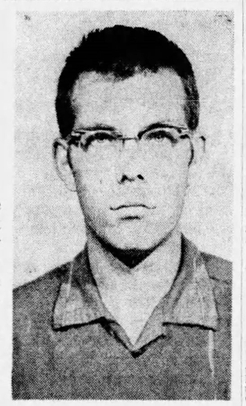
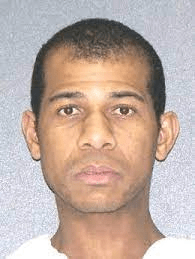
Stanley Everett Rice: The Crimes of a Predatory Drifter
Background and Early Criminal Behavior
Stanley Everett Rice was an American serial killer and sexual predator whose known crimes crossed international and state boundaries during the 1960s. Born on August 7, 1942, in Concord, Massachusetts, Rice spent part of his adolescence in the Kitchener-Waterloo region of Ontario, Canada. He accumulated a history of theft, vandalism, automobile offenses and institutional confinement while still young. His behavior eventually escalated into the abduction and sexual abuse of boys.
Rice frequently traveled and changed locations, moving through Canada and several parts of the United States. This mobility made it difficult for authorities in different jurisdictions to connect his offenses. He approached boys in outdoor recreational areas, particularly places where children went fishing. He sometimes carried firearms and knives, and he kept written records describing violent fantasies and criminal acts.
Rice is known to have killed at least three boys between 1963 and 1968. He also claimed responsibility for two additional killings, but those alleged victims were never identified. Only one of the known murders resulted in a conviction. Rice was never tried for the Canadian and Ohio killings because Florida authorities obtained a life sentence against him first.
Known and Admitted Victims
- Keith Henry, age 9 — July 12, 1963 — Waterloo, Ontario, Canada: Keith disappeared after leaving his neighborhood in Waterloo. Rice later admitted that he encountered the boy near the Grand River while Keith was fishing. Rice claimed that he stabbed Keith with a hunting knife and buried his body in an overgrown location along the riverbank. Despite extensive searches, Keith’s remains were never recovered. July 12, 1963, is therefore regarded as the date he disappeared and was presumed killed.
- Timothy David “Tim” Trask, age 8 — June 10, 1966 — Findlay, Ohio: Tim left his home on his bicycle to go fishing near the Blanchard River. He was attacked in a secluded area and killed by a combination of gunshot and stab wounds. His body was concealed beneath brush and pieces of wood and was discovered by a searcher on June 11. Rice was questioned during the original investigation but was not charged at the time. After his 1968 arrest in Florida, he confessed to killing Tim.
- Lowell “Nelson” Williams, age 11 — May 12, 1968 — Broward County, Florida: Nelson and his 10-year-old companion, Kevin Polittle, were fishing at a rural pond when Rice approached them. After the boys refused an invitation to leave with him, Rice opened fire with a sawed-off shotgun. Both boys were wounded. Rice then stabbed Nelson three times, killing him. Kevin survived, and two approaching teenagers interrupted the attack before Rice could kill him as well.
- Two unidentified boys — dates and locations uncertain: Following his arrest, Rice reportedly told investigators that he had killed four boys before the murder of Nelson Williams. His statements included the killings of Keith Henry and Tim Trask, as well as two additional boys whose identities could not be established. No remains, names or confirmed dates were connected to those claims.
The Disappearance of Keith Henry
Keith Henry vanished in Waterloo on July 12, 1963. The nine-year-old was last seen walking away from the area around his home. His disappearance prompted a large search involving police officers, volunteers and members of the community. A reward was offered, but investigators found no body and no physical evidence explaining what had happened.
Rice later described encountering Keith while the boy was fishing. According to his admission, he attacked Keith with a hunting knife and buried him near the Grand River. Rice claimed that he could no longer remember the precise burial location when authorities attempted to investigate his account. Searches failed to locate the grave, leaving Keith officially missing even though Rice’s confession provided a probable explanation for his disappearance.
The absence of Keith’s remains prevented investigators from establishing the crime through forensic evidence. Rice was not prosecuted for the killing, and Keith’s family never received the opportunity to recover and bury him.
The Murder of Timothy Trask
On June 10, 1966, Timothy Trask set out from his home in Findlay for a day of fishing. He rode his bicycle toward the Blanchard River, carrying his fishing equipment and a container of minnows. When he did not return that evening, his parents contacted authorities, and residents joined a rapidly organized search.
Tim’s body was discovered the following day in a wooded and marshy area near the river. He had been shot and stabbed, and his body had been hidden beneath natural debris. The killing shocked Findlay, where such an attack against a child was almost unimaginable. Local organizations and news outlets helped establish a substantial reward for information leading to the killer.
Rice had been in the area and was questioned during the investigation, but authorities lacked enough evidence to arrest him. He soon left Ohio. It was not until his capture in Florida in May 1968 that he admitted responsibility. His confession was consistent with important elements of the crime, but he was never brought to trial in Ohio.
The Murder of Nelson Williams and the Survival of Kevin Polittle
By early 1968, Rice had escaped from a Massachusetts psychiatric facility where he had been held for evaluation after an offense involving two boys. He traveled to Hollywood, Florida, and found temporary employment. He also obtained a place to sleep in an old ice-cream truck located at an automobile salvage yard.
On May 12, 1968, Rice went to a pond in rural Broward County where children commonly gathered to fish. He encountered Lowell “Nelson” Williams and Kevin Polittle. Rice spoke with them and attempted to persuade them to accompany him elsewhere. When the boys refused, the encounter turned violent.
Rice used a sawed-off shotgun to shoot and wound both children. He then approached Nelson with a knife and stabbed him three times. Kevin remained alive despite his injuries. Two teenage boys came upon the scene and saw Rice holding a bloodstained knife. Their arrival interrupted the attack and forced Rice to flee before he could kill Kevin.
Kevin and the teenage witnesses gave investigators a description of the attacker. One of the most distinctive details was the man’s pronounced stutter. Police circulated a composite drawing and searched for the vehicle connected to the fleeing suspect.
Arrest and Confessions
Rice was arrested on May 25, 1968, after Broward County sheriff’s deputies stopped him for speeding. The deputies noticed that he resembled the composite drawing prepared in the Williams investigation. His stutter further increased their suspicion.
A search of Rice’s vehicle uncovered a sawed-off shotgun and other incriminating material. Investigators also found photographs showing boys in sexually exploitative circumstances. Witnesses identified Rice as the man seen at the pond, and physical evidence connected him to the weapons used in the attack.
During questioning, Rice confessed to killing Nelson Williams. He also admitted responsibility for the deaths of Keith Henry and Timothy Trask. He claimed that he had killed two more boys, although investigators were unable to identify them. Rice additionally directed authorities to a concealed collection of weapons, photographs and other material stored near his Massachusetts hometown, confirming portions of his account.
Trial and Life Sentence
Rice’s attorneys attempted to show that he was mentally incompetent to stand trial. They argued that he suffered from serious psychiatric problems that interfered with his ability to participate in his defense. Court-appointed psychiatrists examined him and concluded that, although he was emotionally disturbed, he understood the charges and the consequences of his actions.
Rice ultimately pleaded guilty to the murder of Nelson Williams. On November 21, 1968, he received a sentence of life imprisonment. Because Florida had secured a life sentence, Canadian and Ohio authorities did not conduct separate murder trials for the deaths of Keith Henry and Timothy Trask.
The decision meant that Rice was formally convicted of only one murder, even though his statements connected him to at least three. His admissions concerning two additional victims remained unverified.
Imprisonment and Death
Rice was confined within the Florida prison system and spent the remainder of his life incarcerated. In interviews conducted after his conviction, he discussed his violent compulsions, his sexual interest in children and his belief that he needed treatment. His comments offered disturbing insight into his pattern of selecting isolated boys and using recreational settings to gain access to them.
Stanley Everett Rice died on November 3, 2007, at Florida State Prison in Raiford. He was 65 years old. He had served nearly four decades of his life sentence.
Legacy of the Investigation
Rice’s case demonstrated the difficulties faced by investigators before criminal databases and rapid interstate information sharing became widely available. His offenses occurred in Ontario, Ohio, Massachusetts and Florida, and the separate investigations were not immediately recognized as the work of the same offender.
The surviving witnesses in Florida were central to his capture. Their descriptions, particularly their recollection of his distinctive speech, allowed deputies to recognize him during what began as a routine traffic stop. The arrest ended a pattern of predatory violence that had continued for approximately five years.
Questions nevertheless remain about the full extent of Rice’s crimes. Keith Henry’s body has never been found, Rice never faced trial for Tim Trask’s murder, and the identities of the two additional boys he claimed to have killed remain unknown. His confirmed and admitted offenses left families in three communities dealing with losses that continued long after his imprisonment.