Stella Elizabeth Williamson: The Gallitzin Attic Murders
Overview
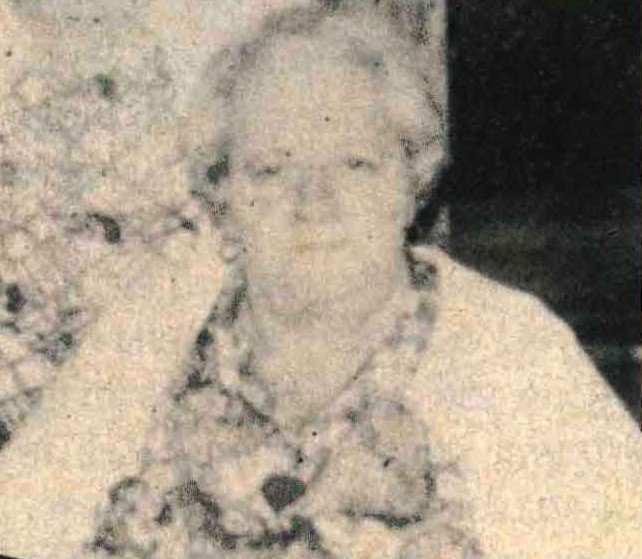
Stella Elizabeth Williamson was a woman from Gallitzin, Pennsylvania, whose crimes were discovered only after her death. She was not publicly known as a criminal during her lifetime. To neighbors, she was remembered in sharply different ways: some described her as quiet, religious, and friendly, while others later recalled her as severe, controlling, and difficult. The truth about her life emerged in 1980, when a letter she had written years earlier led investigators to a steamer trunk hidden in the attic of her home.
Inside that trunk were the mummified remains of five infants. The babies were believed to be Williamson’s own children. They had been hidden for decades in her house at 310 Forest Street in Gallitzin, Cambria County, Pennsylvania. The remains were wrapped in old newspapers dated from the 1920s and early 1930s. Because the bodies had been concealed for so long, investigators could not determine every detail with certainty. The infants’ names were never publicly confirmed, and exact dates of death could not be verified. The available dates come mainly from the newspapers wrapped around the bodies, which helped investigators estimate when the deaths occurred.
Discovery of the Remains
Stella Williamson died in Gallitzin, Pennsylvania, on August 25, 1980, at the age of 76. After her death, family friend Guy Schrack found a sealed letter among her belongings. The letter had reportedly been written around 1960, when Williamson feared she might die during medical complications. In the letter, she admitted that there were babies hidden in the attic and said she did not want anyone else blamed for what had happened.
The letter directed authorities to an old trunk in the attic. On September 2, 1980, investigators found the trunk and opened it. Inside were five small bodies, preserved by time and dry conditions. The discovery shocked Gallitzin because the infants appeared to have been hidden there for roughly five decades. The remains were later sent for forensic examination. Experts concluded that at least three of the infants had been strangled. The causes of death for the other two babies could not be determined with certainty because of the condition of the remains.
The Victims
The victims were five unidentified infants. Their legal names, if they were ever given any, were not publicly verified. Their exact dates of birth and death were also not verified. The best available information places their deaths between the mid-1920s and early 1930s, based on the dated newspapers wrapped around their remains.
- Unidentified Infant 1: Believed to be one of Stella Williamson’s children. Exact name unknown. Exact date of death could not be verified. Estimated death period: between 1925 and 1933. Location of death and concealment: Williamson home, 310 Forest Street, Gallitzin, Pennsylvania. Cause of death was not individually confirmed in public records.
- Unidentified Infant 2: Believed to be one of Stella Williamson’s children. Exact name unknown. Exact date of death could not be verified. Estimated death period: between 1925 and 1933. Location of death and concealment: Williamson home, 310 Forest Street, Gallitzin, Pennsylvania. Cause of death was not individually confirmed in public records.
- Unidentified Infant 3: Believed to be one of Stella Williamson’s children. Exact name unknown. Exact date of death could not be verified. Estimated death period: between 1925 and 1933. Location of death and concealment: Williamson home, 310 Forest Street, Gallitzin, Pennsylvania. Forensic examination found that at least three of the five infants had been strangled, but public reports do not reliably match each specific cause of death to a specific infant.
- Unidentified Infant 4: Believed to be one of Stella Williamson’s children. Exact name unknown. Exact date of death could not be verified. Estimated death period: between 1925 and 1933. Location of death and concealment: Williamson home, 310 Forest Street, Gallitzin, Pennsylvania. Cause of death was not individually confirmed in public records.
- Unidentified Infant 5: Believed to be one of Stella Williamson’s children. Exact name unknown. Exact date of death could not be verified. Estimated death period: between 1925 and 1933. Location of death and concealment: Williamson home, 310 Forest Street, Gallitzin, Pennsylvania. Cause of death was not individually confirmed in public records.
Stella Williamson’s Background
Stella Elizabeth Williamson was born in Gallitzin, Pennsylvania, in 1904. She lived much of her life in the same community and never married. She was part of the Williamson household, which included her parents and siblings. Later accounts described the home as strict and controlled, with her mother, Dessie Williamson, remembered by some relatives and acquaintances as domineering.
Williamson’s private life remained hidden for decades. The discovery of the infants raised immediate questions about how she had concealed multiple pregnancies and births in a small community. Investigators and reporters later found no clear evidence that neighbors had known about the children. There was also no conclusive evidence that the alleged father, whose identity was reportedly mentioned in Williamson’s letter, participated in the killings.
The Crimes
The crimes appear to have taken place over a period of years, most likely from the mid-1920s into the early 1930s. During that time, Williamson was a young unmarried woman living in Gallitzin. The infants were believed to have been born secretly. At least three were killed by strangulation. The other two were so small and so deteriorated that investigators could not determine a definite cause of death.
After the babies died, their bodies were wrapped in newspapers and placed inside a steamer trunk in the attic. This concealment suggests that Williamson intended the remains to stay hidden indefinitely. The trunk remained undisturbed for decades. The crimes were not discovered by police, relatives, neighbors, or local officials during Williamson’s lifetime. They only became known because Williamson herself left written instructions that revealed where the bodies were hidden.
The House on Forest Street
The Williamson home at 310 Forest Street became the center of the case. It was an old frame house in Gallitzin, a borough in Cambria County. The attic was where the trunk was stored, and the trunk was where the five infants remained hidden for roughly fifty years. The setting made the case especially disturbing because the remains had been inside an ordinary family home for decades while Williamson continued living in the community.
The house also deepened the mystery. Investigators could not fully reconstruct what happened inside it during the 1920s and 1930s. They did not know who, if anyone, helped Williamson. They did not know whether her family suspected anything. They did not know whether the infants were born alive in every case. The strongest evidence was the letter, the remains, the newspaper wrappings, and the forensic conclusion that at least three babies had been strangled.
Forensic Examination
After the remains were discovered, they were examined by forensic experts. Because the bodies were mummified and decades old, the investigation had serious limits. Modern DNA testing was not available at the time. Identification was difficult, and the infants’ sex could not be reliably determined. The age of each infant was also difficult to establish precisely, though public reports described the victims as infants under one year old, with two possibly being newborns.
The most important forensic finding was that at least three of the babies showed signs of strangulation. Materials were reportedly still present around the necks of some of the infants. For the remaining two, investigators could not make a firm ruling. Their deaths were still suspicious because they were hidden with the other victims, but the exact cause of death could not be verified.
Why the Case Remained Hidden
The case remained hidden because the victims were infants, the births were apparently concealed, and the bodies were placed in a private attic where no one found them for decades. Gallitzin was a small community, but there is no verified evidence that anyone outside Williamson’s household knew the full truth while the crimes were happening. This has remained one of the most troubling questions in the case.
Williamson’s own letter suggested that she understood the seriousness of what she had done. She wrote that she did not want anyone else blamed. That statement became one of the central pieces of evidence linking her to the infants. Since she died before the discovery, she was never arrested, charged, tried, or convicted. The case therefore exists as a posthumous confession and homicide investigation rather than a prosecuted criminal case.
Later Developments
After the forensic examination, the remains were believed to have been returned to Cambria County and buried in an unmarked grave. Decades later, the case received renewed attention when two infant skulls connected to the Williamson case were found in the collection of the Mütter Museum in Philadelphia. The skulls had reportedly been donated in 1999 by a forensic pathologist who had examined the remains in 1980.
This discovery raised new questions about whether all of the babies’ remains had actually been buried as believed. In 2025, Cambria County officials investigated the burial site connected to the case. A search at Laurel United Cemetery did not resolve all questions about the location of the remaining remains. The case therefore remains historically significant not only because of the killings, but also because of the later uncertainty over the handling and burial of the victims.
Legacy of the Case
Stella Williamson is remembered as the woman at the center of the Gallitzin baby murders. Her case is one of the most disturbing examples of concealed infant homicide in Pennsylvania history. The most painful part of the story is that the five victims were never publicly identified by name, were hidden for decades, and never had their exact dates of death confirmed.
The known facts are limited but grim: five infants were found in Williamson’s attic after her death; they were wrapped in newspapers dated from the 1920s and early 1930s; at least three had been strangled; and Williamson’s own letter directed authorities to the bodies. Because she died before the crimes were discovered, there was no trial, no confession under questioning, and no full legal accounting. The victims remain unidentified infants whose short lives ended in secrecy inside a quiet house in Gallitzin, Pennsylvania.