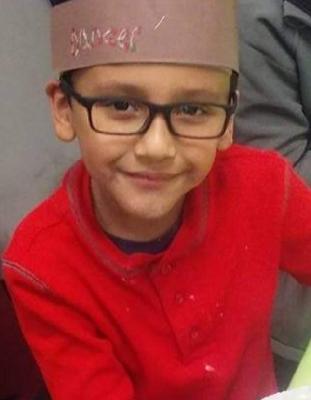
Wally Jay Simoneaux, a 14-year-old Caucasian male, tragically lost his life on October 2, 1972, in Houston, Texas. His death was later determined to be a homicide caused by asphyxia due to strangulation. Wally was one of the victims of Dean Corll, infamously known as the 'Candy Man Killer,' a serial killer who preyed on young boys in the Houston area during the early 1970s.
Corll, along with his accomplices David Owen Brooks and Elmer Wayne Henley, lured boys into his residence under false pretenses before subjecting them to horrific acts of violence.
On the day of his disappearance, Wally and his friend Richard Hembree, aged 13, were last seen walking to Hamilton Junior High School. Witnesses reported seeing the boys near a white van parked outside a grocery store in the Heights neighborhood. It was later revealed that they were taken to Corll's residence, where Wally attempted to call his mother before the phone line was disconnected. His remains were discovered nearly a year later, on August 8, 1973, buried in Corll's boat shed alongside the remains of other victims.
The investigation into Wally's death and the broader series of murders unfolded after Elmer Wayne Henley fatally shot Dean Corll in self-defense on August 8, 1973. Henley's confession to the police led to the discovery of the burial sites and the identification of multiple victims, including Wally. Both Henley and Brooks were arrested and later convicted for their roles in the abductions and murders. The case shocked the nation and highlighted the vulnerabilities of young boys in the community.
The legal proceedings against Henley and Brooks were extensive, with both receiving life sentences for their involvement in the crimes. The case remains one of the most harrowing examples of serial killings in U.S. history, and Wally Jay Simoneaux's story is a somber reminder of the lives lost to such senseless violence.