Nancy Farrer: The Cincinnati Arsenic Poisoner
Overview
Nancy Farrer was a nineteenth-century American nurse and domestic servant who was accused of poisoning several people in Cincinnati, Ohio. Her crimes occurred during 1851 and involved arsenic, a widely available poison that could initially produce symptoms resembling cholera or severe natural illness. Historical records identify four deaths that were confirmed through chemical examination to have been caused by arsenic. Farrer was convicted of murder in 1852, but the conviction was overturned because of problems with the trial. A later jury declared her to be of unsound mind, and she was committed to an asylum.
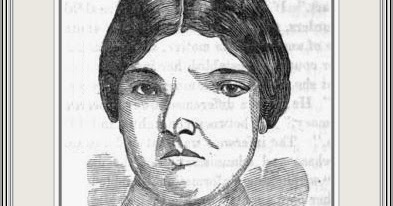
Farrer was a woman, although some later summaries have incorrectly referred to her as male. Accounts from the period described her as quiet, obedient and apparently affectionate toward the people she nursed. These qualities allowed her to remain close to sick adults and children without immediately attracting suspicion. At the same time, witnesses recalled disturbing remarks in which she predicted deaths before they occurred or commented that people under her care frequently died.
The Poisoning of Mrs. Green
In July 1851, Farrer entered the Cincinnati home of a woman identified in surviving records only as Mrs. Green. She had been hired to care for Mrs. Green following the birth of a child. Farrer learned that Mrs. Green kept several hundred dollars beneath her pillow. Evidence presented later suggested that Farrer and another woman, Mrs. Bazley, discussed taking the money, although the money was removed before they could obtain it.
Mrs. Green remained in good health until August 6, 1851, when she suddenly developed violent vomiting, burning in her throat and other symptoms associated with arsenic poisoning. Cincinnati had recently experienced cholera, so the illness was initially treated as a natural disease. Her symptoms repeatedly improved and returned, suggesting that she was receiving additional small doses of poison. Farrer prepared or handled the drinks given to her during this period.
A visitor who drank water from a pitcher used for Mrs. Green also became seriously ill. The visitor survived. Mrs. Green’s infant died approximately three weeks before its mother after displaying similar symptoms, although surviving records do not provide an exact date or confirm the infant as one of the four victims whose organs later tested positive for arsenic.
Mrs. Green died in Cincinnati on October 3, 1851, after nearly two months of suffering. Her body was later exhumed, and arsenic was detected during chemical analysis. Investigators believed that Farrer had placed poison in the ice water repeatedly given to Mrs. Green.
The Forest Household
At about the end of October 1851, Farrer entered the home of Elisha Forest, whose surname is also written as Forrest in some later accounts. The Forest residence was located a short distance from the Green home in Cincinnati. Mrs. Forest was already suffering from pulmonary tuberculosis, making her especially vulnerable and allowing a poisoning to be mistaken for the worsening of her existing illness.
On the evening Farrer began working in the Forest household, she prepared fried potatoes for Mrs. Forest. After eating them, Mrs. Forest complained that they contained a hot substance that burned her throat. She then experienced severe vomiting and other symptoms consistent with arsenic poisoning. She died approximately one week later, in early November 1851. The surviving medical narrative does not give a completely certain calendar date for her death, so an exact date cannot be responsibly stated.
A former servant testified that Farrer had complained about being ordered to scrub a floor again because Mrs. Forest considered it insufficiently clean. According to the witness, Farrer said that she would “fix” Mrs. Forest. While the woman was dying, Farrer repeatedly compared her vomiting to the illness that had killed Mrs. Green.
The Deaths of the Forest Children
The deaths continued after Mrs. Forest’s burial. On November 20, 1851, her youngest child, John Edward Forest, became violently ill. He was two years and eight months old. John died the following day. While preparations were being made for his burial, witnesses heard Farrer remark that she had remarkable luck with sick people because they all died while in her hands.
Farrer then predicted that another Forest child, James Wesley Forest, would die within a week or two. At that time, James appeared healthy and was playing normally. On the morning of December 1, 1851, Farrer was seen walking toward a drugstore. She claimed that she was going to purchase cloth, but evidence later established that she bought arsenic.
James, who was eight years and four months old, was given an onion syrup prepared by Farrer as a treatment for a minor cold. Less than an hour later, he began vomiting violently. He reportedly said that the syrup had made him sick. His condition sometimes improved while his father watched him but became worse after he was left alone under Farrer’s care.
James died shortly after 2:00 p.m. on December 3, 1851, following convulsions. Before his death, Farrer had already asked a neighbor to wash a shirt that could be used when his body was prepared for burial. She also told people that she did not believe he would survive.
Confirmed Victims
- Mrs. Green — Died October 3, 1851, at her home in Cincinnati, Ohio. She had suffered repeated attacks of vomiting and severe internal irritation beginning on August 6. Her exhumed remains tested positive for arsenic.
- Mrs. Forest — Died in early November 1851 at the Forest family home in Cincinnati, Ohio. She became ill after eating fried potatoes prepared by Farrer. The surviving account does not provide a certain exact death date. Arsenic was detected after her body was exhumed.
- John Edward Forest — Died November 21, 1851, at the Forest family home in Cincinnati, Ohio. He was two years and eight months old. His exhumed remains tested positive for arsenic.
- James Wesley Forest — Died December 3, 1851, at the Forest family home in Cincinnati, Ohio. He was eight years and four months old. A post-mortem examination revealed arsenic in his stomach.
Other Suspected Poisonings
Several people survived illnesses that occurred after consuming food or water handled by Farrer. These included the visitor who drank from Mrs. Green’s water pitcher, a former Forest servant who drank water at the house, one of Elisha Forest’s nieces and both Elisha Forest and his eldest son. Elisha and the boy became ill after eating fried potatoes, but Farrer avoided the potatoes and later threw the remains outside.
Mrs. Green’s infant and a child belonging to a former employer, Mrs. Isherwood, also died during periods associated with Farrer. However, the available historical evidence does not establish exact dates or provide the same chemical confirmation available for the four listed victims. They therefore should not be presented as confirmed murder victims.
Discovery of the Arsenic
Suspicion finally developed after James Forest’s death. His father ordered a post-mortem examination, during which arsenic was found in the child’s stomach. Investigators then exhumed the bodies of Mrs. Green, Mrs. Forest and John Edward Forest. Chemical tests detected arsenic in all three.
Drugstore employees testified that Farrer had purchased arsenic on several occasions from different stores. She generally claimed that it was intended for killing rats. One seller recalled providing a quantity described as sufficient to poison many people. Evidence suggested that Farrer used different foods and drinks to deliver the poison, including ice water, potatoes, syrup and possibly other household preparations.
Trial and Insanity Proceedings
Farrer was prosecuted for murder in 1852. The first jury found her guilty. Her case then reached the Supreme Court of Ohio, which overturned the verdict and ordered a new trial. The court found serious irregularities, including jurors reading newspaper reports about the proceedings, consuming alcohol and communicating with people outside the jury room. It also ruled that the trial judge had given improper instructions concerning the legal definition of insanity.
Farrer’s mental condition became the central issue in the later proceedings. Some witnesses regarded her as intellectually limited and easily influenced. Others believed that her careful purchase of arsenic, attempts to conceal poisoned food and repeated false explanations demonstrated planning and an understanding that her actions were wrong. Medical testimony was divided, and some opinions relied on phrenology, a now-discredited belief that personality and mental ability could be determined from the shape of a person’s skull.
After lengthy deliberations, the second jury found Farrer to be of unsound mind. She was considered legally irresponsible and was sent to the Hamilton County Lunatic Asylum. Records describe her behavior there as cheerful, orderly and industrious. The surviving documentation does not clearly establish when or where she died, whether she was ever released or how long she remained institutionalized.
Historical Significance
The Nancy Farrer case is remembered both as an early American serial-poisoning case and as an important nineteenth-century dispute over criminal insanity. The deaths illustrate how arsenic could be administered repeatedly within an ordinary household and concealed behind symptoms of cholera, tuberculosis or stomach disease. The case also exposed weaknesses in contemporary forensic medicine, jury procedure and psychiatric testimony.
Although Farrer is commonly classified as a serial killer, the historical record contains uncertainties. Four deaths were chemically connected to arsenic, but Farrer was originally tried specifically for the murder of James Wesley Forest. Her final legal disposition was not a conventional acquittal based on innocence; it was a finding that she was mentally incapable of being held criminally responsible. Her ultimate fate remains unknown.