The Ann Arbor Hospital Murders
Overview
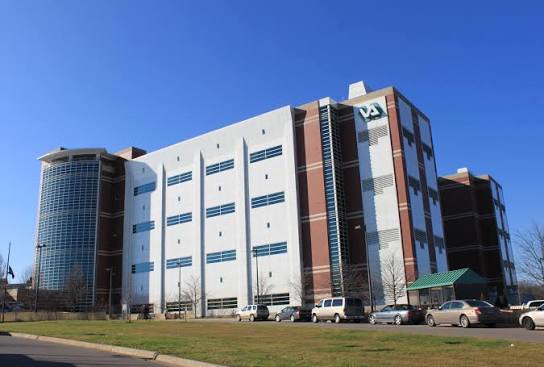
In the summer of 1975, a terrifying and mysterious wave of medical emergencies struck the Ann Arbor Veterans Administration (VA) Hospital in Michigan. Over a period of just six weeks in July and August, an alarming number of patients—many of whom were stable or recovering—suffered sudden and catastrophic respiratory failures. In total, there were at least 51 of these unexplained arrests involving 35 different patients. Up to eleven of these men died. The events triggered a massive FBI investigation that pointed towards deliberate acts of poisoning. The case culminated in the controversial indictment and trial of two Filipina nurses, Filipina Narciso and Leonora Perez, whose convictions were later overturned, leaving the deaths officially unsolved and the identity of the person or persons responsible unknown.
A Summer of Fear
The crisis began in July 1975, when the number of "Code 7" emergencies, signaling a patient's respiratory or cardiac arrest, began to spike dramatically at the VA hospital. Normally, the hospital averaged about two such events per week; suddenly, they were occurring with frightening frequency. On one day in mid-August, three patients required emergency resuscitation within a mere 20-minute span.
Dr. Anne Hill, the hospital's chief of anesthesiology, grew suspicious. She observed that the affected patients, while unable to breathe, often remained conscious and had a steady pulse. The symptoms were inconsistent with natural cardiac events. Her instincts pointed to the use of a powerful neuromuscular blocking agent, a type of drug used in surgery to temporarily paralyze a patient's muscles, including those required for breathing. During the cluster of emergencies on August 15, Dr. Hill administered an antidote for a paralyzing drug to the afflicted patients, and they quickly recovered. Her suspicions confirmed, the hospital administration contacted the Federal Bureau of Investigation that same evening.
The Investigation
The FBI descended on the Ann Arbor hospital, launching one of the most complex medical investigations in its history. Agents interviewed hundreds of staff members and reviewed countless medical records. The investigation soon centered on the theory that patients were being injected with pancuronium bromide, a potent muscle relaxant marketed under the brand name Pavulon. The drug was stored in an unlocked refrigerator in the hospital's intensive care unit (ICU), where many of the attacks occurred.
Investigators believed the poison was administered directly into the patients' intravenous (IV) lines, causing respiratory arrest within minutes. Their focus narrowed to personnel who were on duty and had access to the victims during the critical window before each collapse. This process led them to two nurses who had recently immigrated from the Philippines: Filipina Narciso, 30, and Leonora Perez, 32. The FBI determined that one or both nurses were on duty during a significant number of the poisoning incidents.
The case against them was entirely circumstantial. No eyewitness saw either nurse inject a patient with Pavulon. The investigation relied on scheduling charts and the testimony of a few patients and family members who placed the nurses in the victims' rooms shortly before they stopped breathing. One patient, John McCrery, identified Narciso in a bedside lineup, but he later suffered brain damage after a separate medical event and died before trial, rendering his identification inadmissible. Another patient, Richard Neely, claimed to have seen Perez inject something into his IV, but his memory was hazy and had been retrieved under hypnosis, a controversial technique. Furthermore, Neely also died before the trial began.
The Victims
The poisonings at the Ann Arbor VA Hospital affected dozens of men who were entrusted to the facility's care. While many survived the respiratory attacks, the events left a lasting impact on them and their families. Up to eleven men did not survive. Due to the passage of time and a desire to protect the privacy of the families, a complete and officially confirmed list of the deceased has not been made widely public. A comprehensive book on the case, "Paralyzing Summer," noted that the names of patients were altered for anonymity. However, court records and news reports from the time have identified two of the men who died.
- John Herman, age unknown — Mr. Herman was one of the patients whose death was investigated as a murder. Filipina Narciso was charged with his murder but was ultimately acquitted by the jury.
- Bennie C. Blaine, age unknown — Mr. Blaine suffered three separate respiratory failures during his hospital stay and died on August 28, 1975. His widow later filed a lawsuit against the hospital.
Other patients who were poisoned but survived included Mark Hogan, Charles Gasmire, William Loesch, and a Mr. Fletcher.
Indictment and Trial
In June 1976, a federal grand jury indicted Narciso and Perez on multiple counts of murder, poisoning, and conspiracy. The subsequent trial began in March 1977 and lasted for months, becoming one of the longest in American history at the time. The prosecution, led by Assistant U.S. Attorney Richard Yanko, presented its case based on the nurses' presence at the scene of the crimes. They argued that the rapid onset of paralysis after a Pavulon injection meant the perpetrator had to be in the room moments before each incident, and that Narciso and Perez were the only common denominators.
The defense, led by attorney Thomas O'Brien, argued that the FBI had zeroed in on the two immigrant nurses as convenient scapegoats to solve a high-profile case. They highlighted the lack of direct evidence and motive. The prosecution's own theory on motive was that the nurses were not trying to kill patients, but rather to create medical emergencies to highlight understaffing in the ICU. The trial attracted widespread media attention, both in the United States and the Philippines, and became a cause célèbre for Filipino-American groups who believed the nurses were victims of racial prejudice.
Verdict and a Shocking Reversal
On July 13, 1977, after 15 days of deliberation, the jury delivered a mixed verdict. They acquitted Narciso of the single murder charge she faced. However, they found both Narciso and Perez guilty of several counts of poisoning and of conspiracy. The two women faced the possibility of life in prison.
The verdict was met with shock and outrage by their supporters. The government of the Philippines condemned the outcome, and a defense fund was established. But the case took a dramatic turn in February 1978. U.S. District Judge Philip Pratt, who had presided over the trial, set aside the guilty verdicts and ordered a new trial. In a rare move, Judge Pratt ruled that the jury may have been prejudiced by "persistent misconduct" from the prosecution. He cited improper arguments made during the trial and inappropriate communications with the press and witnesses.
Faced with the prospect of a new trial without some of their key evidence and with waning public support, the U.S. Department of Justice chose not to proceed. On February 1, 1978, the government formally moved to dismiss all charges against Filipina Narciso and Leonora Perez.
Aftermath and Legacy
Though the charges were dropped, Filipina Narciso and Leonora Perez were never officially exonerated. The dismissal of the case left the guilty verdict standing but without penalty or the possibility of a retrial to clear their names. The ordeal had a profound and lasting impact on their lives.
For the victims and their families, there was no closure. The sudden, terrifying deaths and near-deaths at the Ann Arbor VA Hospital in 1975 remain, in the eyes of the law, unsolved. No one else was ever charged in connection with the poisonings. The case serves as a haunting example of a medical mystery that turned into a criminal investigation fraught with complexity, circumstantial evidence, and questions of justice that linger to this day. The identity of the person or persons who injected dozens of vulnerable patients with a paralyzing poison remains unknown.