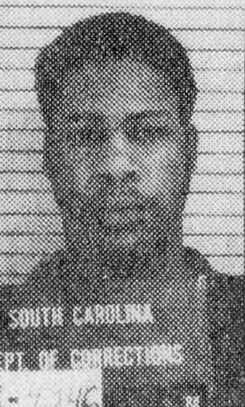
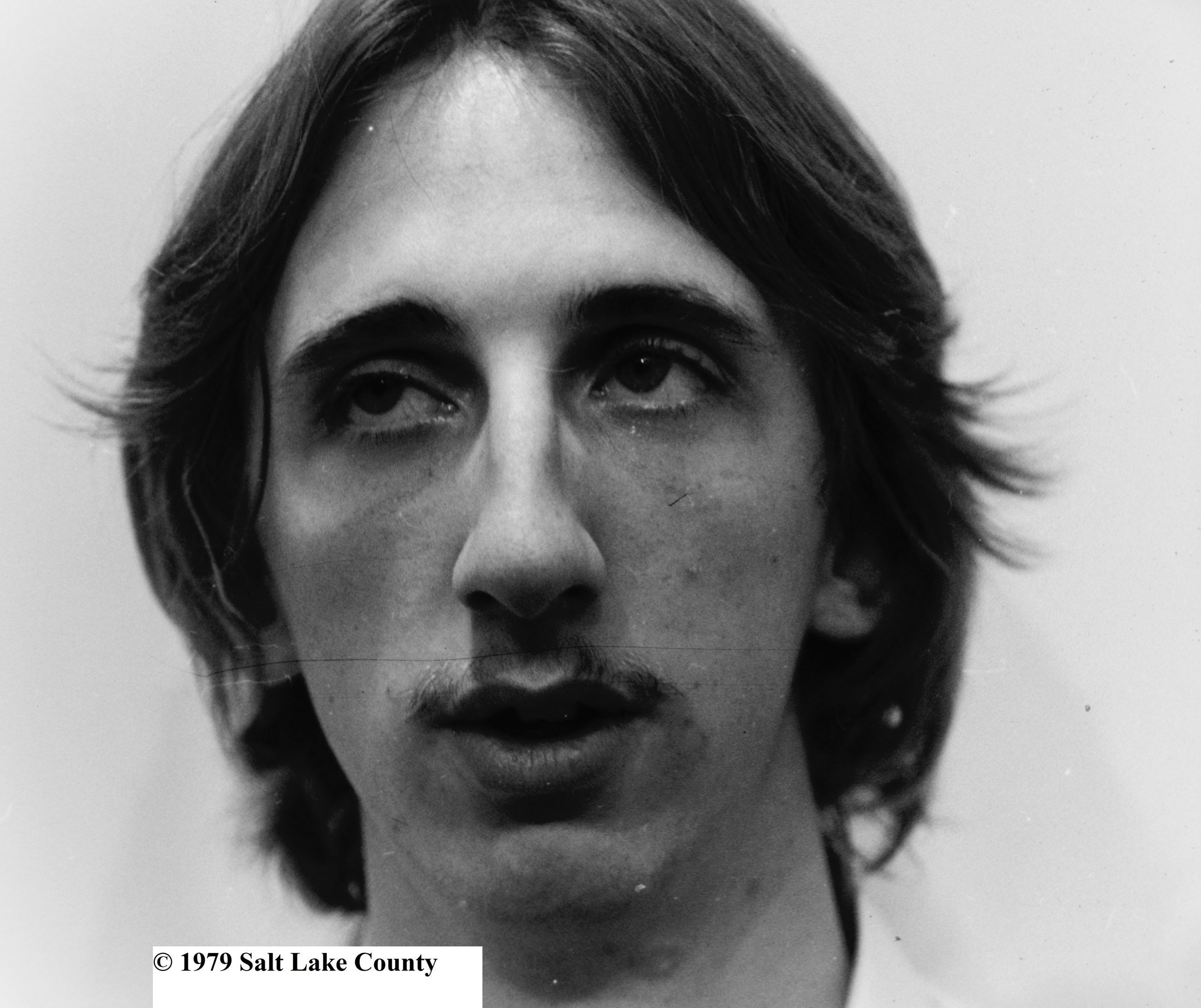
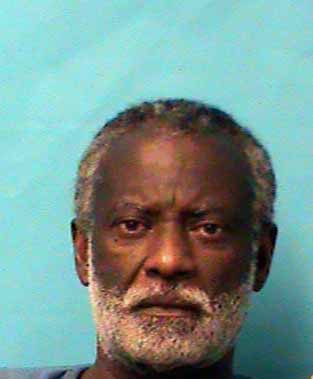
Andrew Lavern Smith: The I-85 Killer
Overview
Andrew Lavern "Andy" Smith was a South Carolina serial killer whose violent spree along the Interstate 85 corridor struck fear into communities in the early 1980s. Over a three-year period, Smith was responsible for four murders and a savage abduction and assault. His victims appeared to be chosen at random, their lives cut short in sudden, brutal encounters. Smith's crimes were marked by their ferocity, involving stabbings and shootings. He was ultimately arrested after a ballistics match connected him to one of the murders.
Though he was linked to all four homicides, Smith was only tried and convicted for the murders of an elderly couple, Christy and Corrie Johnson, who were his own distant cousins. His 1984 trial resulted in a death sentence, which, after years of appeals, was ultimately carried out. On December 18, 1998, Andrew Lavern Smith was executed by lethal injection, his death marking a grim milestone as the 500th execution in the United States since the reinstatement of capital punishment in 1976. The case left a lasting scar on the communities he terrorized and the families whose lives he irrevocably shattered.
Early Life and Background
Andrew Lavern Smith was born on March 15, 1960, in Anderson, South Carolina, to Ruth and Willie Smith. By all outward appearances, his upbringing was stable and unremarkable. He grew up in the area, attending the Fairview African American Methodist Episcopal Church with his family. He was a student in the local school system and successfully graduated from Pendleton High School in 1978.
After high school, Smith sought vocational training, enrolling at Tri-County Technical College. There, he completed a program in auto body repair and earned a certificate, a skill that provided him with a trade and employment. He found work at a local restaurant in Anderson. To those who knew him casually, he was just another young man from the community, with no obvious signs of the extreme violence he would later commit. He had no significant prior criminal record that would have signaled a potential for such brutality. This seemingly normal facade made the later discovery of his crimes all the more shocking to those who knew him.
A Spree of Violence Begins
The first known attack attributed to Andrew Smith occurred on the night of February 24, 1980. A young woman working as a clerk at a convenience store in Anderson County was abducted at gunpoint by a man she did not know. He forced her into his car and drove her to a secluded, wooded area where he sexually assaulted her. After the assault, he drove her to an overpass on Interstate 85. In a final, horrific act of violence, he threw her from the bridge, leaving her for dead.
Miraculously, the woman survived the fall. She was able to provide a description of her attacker to the Anderson County Sheriff's Department, but with few other leads, the case remained unsolved. For more than three years, the identity of the man who had committed this brutal crime was a mystery. It was only after Smith's arrest for murder in 1983 that he would be identified as the assailant. The surviving victim positively identified him in a lineup, finally putting a name to the face of the man who had attacked her. This incident, while not a murder, was the first known act in a pattern of violent, opportunistic attacks that would escalate over the next few years.
The Murders
David Evan Craig
The first murder occurred on July 28, 1981. David Evan Craig, a 22-year-old working the overnight shift as a cashier at a Phillips 66 gas station on I-85 in Anderson, was nearing the end of his workday. At around 3:30 a.m., a customer named Henry Poore pulled into the station. As he approached the building, he heard faint cries for help coming from inside. He entered the station and found a horrifying scene. David Craig was lying on the floor behind the counter, bleeding profusely from a gunshot wound.
Poore immediately called for help. Emergency services arrived and rushed Craig to what was then Anderson Memorial Hospital. Despite the efforts of medical staff, his injuries were too severe. David Craig died from a single gunshot wound a few hours after being found. Investigators from the Anderson County Sheriff's Department determined that the motive was likely robbery, as money was missing from the cash register. However, there were no witnesses to the shooting itself, and the initial investigation yielded few leads. The .22 caliber bullet recovered from the scene was the only significant piece of evidence. For nearly two years, the murder of David Craig remained a cold case.
Nirad Jay Patel
Almost a year later, on June 5, 1982, another young man was found dead in Anderson. The body of 22-year-old Nirad Jay Patel of Spartanburg was discovered in a room at the Southerner Motor Lodge, not far from the interstate. He had been stabbed to death. The circumstances surrounding his murder were unclear, and much like the Craig case, the investigation quickly hit a wall. There was little evidence left at the scene, and no clear motive was established at the time. The case was added to the growing list of unsolved homicides in the area, leaving another family grieving without answers.
Christy and Corrie Johnson
The crime that would ultimately lead to Andrew Smith's downfall was his most savage. On Saturday, May 28, 1983, neighbors of an elderly couple in Pendleton grew concerned. Christy Johnson, 85, and his wife, Corrie Johnson, 80, were well-known in their community, but no one had seen them, and they were not answering their telephone. A neighbor went to their home on the Six and Twenty Creek Road to check on them.
Upon entering the house, the neighbor discovered a scene of unimaginable horror. The Johnsons had been brutally murdered. Christy Johnson was found with 26 stab wounds, and Corrie Johnson had been stabbed 18 times. The sheer violence of the attack was shocking. Investigators found a six-inch kitchen knife, believed to be the murder weapon, left at the scene. The couple's car, a Chevrolet, was missing from the home. It was later found abandoned on a dirt road about two miles away. The community was left in a state of shock and fear, horrified that such a beloved and vulnerable couple could be the victims of such a vicious crime. Unbeknownst to them, the killer was one of their own relatives.
The Victims
- David Evan Craig, 22 — July 28, 1981, in Anderson, South Carolina. A young man working as a gas station cashier to make his way, he was shot and killed during a robbery. His father, David "Dave" Eskew Craig, was a decorated U.S. Air Force veteran of both the Korean and Vietnam Wars.
- Nirad Jay Patel, 22 — June 5, 1982, in Anderson, South Carolina. A resident of nearby Spartanburg, he was found stabbed to death in a motel room. His life was cut short in a crime that remained a mystery for a year.
- Christy Johnson, 85 — May 28, 1983, in Pendleton, South Carolina. An elderly man who was a distant cousin of his killer, he was brutally stabbed 26 times in his home. He and his wife had previously rented a house to Smith.
- Corrie Johnson, 80 — May 28, 1983, in Pendleton, South Carolina. Christy's wife and also a cousin to Smith, she was killed alongside her husband in the frenzied attack, sustaining 18 stab wounds.
Investigation and Capture
The brutal double murder of the Johnsons spurred an intensive investigation. The turning point came just days later, on June 1, 1983. Investigators, working through leads, began to look at Andrew Lavern Smith. A crucial piece of information emerged from a seemingly unrelated past incident. On November 7, 1981, Smith had been involved in an incident that constituted a gun law violation. The weapon he possessed at that time was a .22 caliber revolver.
Detectives recalled the unsolved murder of David Craig at the I-85 gas station, where the killer had used a .22 caliber weapon. They retrieved the bullet from the Craig murder file and performed a ballistics test, comparing it to records from Smith's previous violation. The results were a match. The bullet that killed David Craig had been fired from Andrew Smith's gun.
With this powerful evidence in hand, detectives moved quickly. They located Smith at the Anderson restaurant where he worked and arrested him, initially charging him with the murder of David Craig. Once in custody, investigators began questioning him about the other unsolved crimes. Under interrogation, Smith confessed to the murders of Christy and Corrie Johnson. He told police that he had gone to their home to borrow their car. When they refused, he became enraged and attacked them. He admitted to stabbing them to death and then stealing their car. The fact that the Johnsons were his own relatives—distant cousins—added another layer of horror to the crime.
Two days after his initial arrest, based on further investigation and his own statements, Smith was also charged with the murder of Nirad Jay Patel. The evidence linking him to that crime was less direct but considered strong enough by prosecutors. Furthermore, detectives arranged a lineup that included Smith. The woman who had survived the 1980 abduction, rape, and fall from the I-85 overpass viewed the lineup and positively identified Andrew Smith as her attacker. In the span of a few days, a string of terrifying, unsolved crimes had been linked to one man.
Trial and Sentence
Prosecutors decided to focus their case on the crime with the most direct evidence: the murders of Christy and Corrie Johnson, backed by Smith's detailed confession. Smith was indicted on two counts of murder, and his trial began in January 1984.
In court, Smith recanted his confession, claiming it had been coerced and fabricated by detectives. His defense team pursued a strategy of not guilty by reason of insanity. They called a clinical psychologist who testified that Smith suffered from paranoid schizophrenia. The psychologist argued that Smith was in a psychotic state at the time of the killings and was unable to distinguish right from wrong, and therefore could not be held legally responsible for his actions.
The prosecution vigorously contested this claim. They presented their own expert psychiatric witness who had also evaluated Smith. This expert testified that while Smith may have had some personality disorders, he was not schizophrenic and did not meet the legal definition of insanity. The state argued that Smith's actions were deliberate and that he understood the nature and consequences of what he was doing. On January 14, 1984, after deliberating, the jury rejected the insanity defense. They found Andrew Lavern Smith guilty on both counts of murder. During the sentencing phase, they recommended the death penalty, and the judge formally imposed two death sentences.
Smith's legal journey was far from over. His case entered the lengthy appeals process. In 1986, his case was appealed to the U.S. Supreme Court, which declined to hear it. However, in 1987, the Supreme Court of South Carolina overturned his death sentence due to an error in the judge's instructions to the jury during the original sentencing phase. This granted Smith a new sentencing trial. In October 1987, a new jury was convened to hear arguments solely on the question of his punishment. After hearing the evidence of the brutal murders once again, this second jury also recommended the death penalty. The judge reimposed the sentence. Smith continued to file appeals in state and federal courts for the next decade, but all were ultimately denied.
Aftermath and Legacy
On December 18, 1998, after 14 years on death row, Andrew Lavern Smith was executed by lethal injection at the Broad River Correctional Institution in Columbia, South Carolina. He was 38 years old. He offered no final statement to the families of his victims, reportedly saying only, "Let's do it," before the lethal drugs were administered.
His execution was a significant event, marking the 500th time a person had been put to death in the United States since the Supreme Court allowed the practice to resume in 1976. The milestone drew national media attention and protests from anti-death penalty activists who gathered outside the prison.
For the families of the victims, the execution brought a final, somber end to a long and painful chapter. Ann Roberts, Corrie Johnson's daughter, spoke to the media about the devastating impact the murders had on her family. "It's torn apart our family," she said. "It's taken a toll on my mental and physical health. I have no sympathy for him. That was a gruesome thing he did."
While Smith was only ever convicted for the Johnson murders, law enforcement officially closed the cases of David Evan Craig and Nirad Jay Patel following his arrest and confession, satisfied that he was the perpetrator. The series of violent, seemingly disconnected attacks had created a climate of fear along the I-85 corridor. The resolution of the cases brought a measure of relief to the public, but the memory of the senseless loss of life and the brutality of Andrew Smith's crimes left an indelible mark on the communities of Anderson and Pendleton.