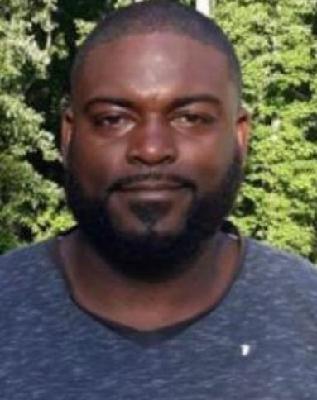
Mark Peters, a 71-year-old man from Hamilton, Ohio, disappeared in October 1993 after allowing Glen Edward Rogers, a much younger Hamilton-area man, to stay in his home. Peters was a retired electrician and military veteran. Accounts of the case indicate that Peters vanished along with his automobile and a number of valuable possessions, including antiques, firearms and a coin collection.
Rogers also left the area around the same period, immediately drawing investigators’ attention to the connection between the two men.
The date of Peters’s death cannot be established as October 1, 1993 from the available reliable online reporting. Contemporary and later accounts instead place his disappearance in October 1993 and indicate that investigators believed he was killed around that time. Peters was not discovered until January 10, 1994, when police found his remains at a cabin near Beattyville, Kentucky, that belonged to Rogers’s family. His remains were found bound to a chair and concealed beneath or among furniture inside the cabin. Because of the condition in which the body was recovered, reports do not establish a precise day of death.
The discovery followed information connected to Rogers’s family. Rogers’s brother Clay reportedly directed or encouraged investigators to search the family property for evidence. The location of Peters’s body, combined with Rogers having lived with Peters before the disappearance, Rogers leaving Hamilton at about the same time, and Peters’s missing property, made Glen Rogers the principal suspect. Authorities believed Peters may have been stabbed or strangled, although available accounts do not describe a definitive publicly established cause of death.
Rogers was not arrested for the Peters case immediately after the body was discovered. He remained at large and later surfaced in a string of investigations involving murdered women in several states. By 1995, he was wanted in connection with multiple killings. On November 13, 1995, police captured him near Waco, Kentucky, after a high-speed pursuit that reportedly stretched for roughly 13 miles. After his arrest, Rogers made sensational statements claiming that he had killed nearly 70 people, but he later withdrew those claims and said he had been joking. Authorities never substantiated such a large number of victims.
Reports published decades later state that Rogers was charged in connection with Peters’s killing, but the Peters case did not produce a murder conviction against him. Instead, Rogers was prosecuted successfully for other homicides. In Florida, he was convicted in 1997 of murdering Tina Marie Cribbs, who had been found stabbed to death in a Tampa motel bathroom in November 1995. He received a death sentence in that case. In California, he was convicted in 1999 of the murder of Sandra Gallagher, whose strangled and burned body had been found in her pickup truck in 1995, and he received another death sentence.
The circumstances surrounding Peters’s disappearance remained one of the earliest killings attributed to Rogers by investigators. Peters had given Rogers a place to live, then vanished along with his vehicle and belongings, while Rogers left Ohio. Months later Peters was found restrained inside a Rogers family cabin in Kentucky. Those facts kept Rogers at the center of the investigation even though the case never resulted in a completed murder prosecution establishing his guilt beyond a reasonable doubt.
Rogers ultimately spent decades on death row for the unrelated Florida murder of Cribbs. He was also considered a suspect in additional killings in Ohio, Mississippi and Louisiana. Florida executed him by lethal injection on May 15, 2025, for the Cribbs murder. Peters’s death therefore remained associated with Rogers as a suspected homicide rather than one of the murders for which Rogers was convicted, leaving the legal record of Peters’s killing without the same final courtroom resolution reached in the Florida and California cases.