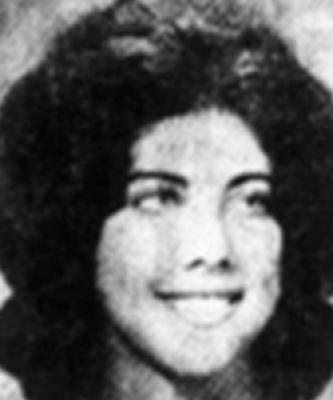
Margaret Byron was a 59-year-old White woman from Albany, New York, working as a secretary at the Hedderman Religious Shop at 50 Columbia Street when she was killed on November 24, 1976. It was Thanksgiving Eve, and by roughly midafternoon the quiet of the shop had been shattered: Byron and the store’s proprietor, Robert Hedderman, were found dead inside the business, each attacked with repeated stab wounds to the chest and with their throats slit.
In the first frantic sweep of the investigation, police tried to reconstruct the minutes around the killings from fragments—who had been seen, who had come and gone, what looked ordinary until it didn’t. One witness, William Weber, told investigators he had seen a “wild-eyed” man in the store that day, standing close to Byron’s body, a detail that landed like a weight on the case. Another witness, Maureen Toomey, reported seeing a man leaving the shop at about the time the murders occurred. In those early days the suspect they questioned did not stay in custody; he was interviewed and released as detectives pressed on, looking for something solid enough to hold.
That “something” arrived in pieces over the following months. By the fall of 1977, investigators had developed evidence pointing back to Lemuel Smith. The witness statements hardened into identifications when Weber and Toomey were each shown photo lineups at different points and selected Smith’s photograph. Around the same time, an Albany police lieutenant, searching a building where Smith had been employed, found one of Smith’s sweaters in a closet; a hair recovered from it was sent to the FBI laboratory in Washington, which reported that the hair matched Byron. What had been a brutal mystery on a downtown street began to tighten into a case with a name on it.
Smith’s legal troubles were also unfolding elsewhere. Court records describe him as already under indictment in Schenectady County for a separate kidnapping and attempted robbery, after being arrested only hours after that abduction while still holding the victim. With prosecutors in multiple counties involved, Smith’s attorney approached district attorneys in Schenectady, Albany, and Saratoga to discuss a global plea proposal that would have resolved the allegations—including the Hedderman-Byron homicides—on concurrent terms; prosecutors rejected it. Not long after, on March 5, 1978, Smith met with law enforcement under conditions negotiated by his defense, and he made incriminating statements admitting to multiple killings, including the murders at the Hedderman Religious Shop. As his defense pivoted toward insanity, a psychiatrist later testified that Smith claimed a delusional belief that his deceased brother “John” lived within him and was responsible for the crimes.
An Albany County grand jury indicted Smith for the Hedderman and Byron murders on July 27, 1978. Prosecutors moved to secure the transcript and tapes of the March 5 meeting, and before the murder trial Smith tried and failed to suppress that material, as well as the eyewitness identification and the hair evidence tied to his clothing. The case went to trial, the insanity defense was presented and rejected, and Smith was convicted and sentenced to consecutive terms of 25 years to life for each murder. The convictions and the use of the March 5 statements were later litigated on appeal, with the courts upholding the outcome described in the case record.