Eugene Barrett: The Honolulu Serial Killer
Overview
Over a span of 36 years, Eugene Walter "Gene" Barrett murdered three women in Honolulu, Hawaii, each of whom he had been romantically involved with. His violent spree was punctuated by a flawed justice system that repeatedly granted him parole, allowing him to kill again. Barrett’s case is a chilling study of domestic violence escalating to murder, fueled by alcohol and an inability to accept rejection. He was convicted of murder or manslaughter for each of his three killings, and his final crime in 1995 led to a life sentence that he served until his death in 2003. His story left a legacy of sorrow and raised profound questions about the state's parole decisions that enabled his decades-long terror.
Early Life and Background
Eugene Walter Barrett was born on June 30, 1931, in Oakland, California, to Howard and Emily Barrett. Little is known about his early childhood, though he attended Washington Intermediate School in Honolulu before dropping out in the ninth grade. As a young man, he joined the U.S. Army and served in the Korean War. However, his military career was cut short in 1955 when he was dishonorably discharged due to his excessive drinking, a problem that would plague him throughout his life.
After his discharge, Barrett returned to Honolulu and worked intermittently as a house painter. He was known for his heavy alcohol consumption and unstable emotional behavior. His mother, Emily, later recalled that a divorce in 1957 left him dejected. It was his pattern of failed relationships and his violent reactions to their endings that would define his criminal history.
The Murder of Annie E. Phillips
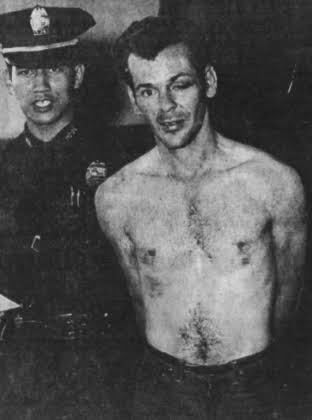
In the late 1950s, Barrett began a relationship with Annie E. Phillips, a divorced mother of five. The relationship was troubled by Barrett's unemployment and alcoholism, and in early 1959, Phillips ended their connection. Unable to handle the rejection, Barrett's rage culminated in murder. On the evening of March 7, 1959, he took a bus to her apartment in the Mayor Wright Homes public housing project.
Armed with a gun, he forced his way inside, walking past two of her children who were watching television. He found Phillips in her bedroom tending to her youngest child and, without a word, shot her multiple times, killing her instantly. The gunshots alerted neighbors and Phillips's brother, Joseph Correa, who was visiting. They managed to subdue a fleeing Barrett, holding him down until police arrived. Witnesses reported hearing Barrett say that Phillips "deserved it."
First Trial, Sentence, and Parole
At his trial for the murder of Annie Phillips, Barrett claimed he was in an alcoholic blackout and could not remember the shooting. This defense was contradicted by multiple witnesses, including his own admission to police that he had been drinking vodka since 10 a.m. and went to her apartment with the gun. His nine-year-old stepdaughter testified to seeing him enter the apartment just before she heard "firecracker noises."
In June 1959, a jury found him guilty of second-degree murder, believing the crime was not premeditated. Barrett was sentenced to life in prison, but this was later reduced to a term of 15-to-50 years. In a decision that would have fatal consequences, Governor John A. Burns commuted his minimum sentence. In 1967, after serving only eight years, Eugene Barrett was paroled.
The Murder of Roberta Ululani Aveiro
After his release, Barrett returned to Honolulu. In February 1971, he married Roberta Ululani Aveiro, and the couple had a son. However, the marriage quickly deteriorated due to Barrett's continued heavy drinking. Roberta filed for divorce in November 1972.
Just one month later, on December 27, 1972, Barrett's pattern of reacting to rejection with violence repeated itself. He located Roberta at the Hawaii Hotel where she was staying and brutally stabbed her multiple times with a kitchen knife. After the attack, Barrett went to a nearby bar and called the police to turn himself in. To avoid a trial, he pleaded guilty to a reduced charge of manslaughter and was sentenced to ten years in prison. In another stunning failure of the justice system, he was paroled in 1976 after serving only three to four years. His parole requirements were dismissed entirely by 1982.
The Murder of Doneshia "RoxAnne" Kastner
For more than a decade, Barrett lived a relatively quiet life in an apartment on Kinau Street, though his struggles with alcohol and emotional instability persisted. He developed a fixation on his 41-year-old neighbor, Doneshia "RoxAnne" Kastner. While there was no confirmed romantic relationship, Barrett grew paranoid, believing she mocked him by dating other men. Kastner was a mother to a seven-year-old son, Ethan, and was described by her estranged husband as an outgoing and friendly person who had faced her own struggles with alcohol.
Barrett's obsession became so intense that he voluntarily admitted himself for psychiatric treatment at The Queen's Medical Center in mid-1995. He was released in early August. On August 11, 1995, just days after his release, Barrett spent the day drinking. He saw Kastner enter her apartment across the street, went back to his own apartment to retrieve a .25 caliber semi-automatic pistol, and walked past her son, who was playing outside. He entered Kastner's apartment and shot her twice in the head. She was rushed to the hospital but died later that day.
Investigation and Final Capture
Doneshia Kastner's son witnessed Barrett leaving the apartment after the gunshots and immediately told his father, who called the police. An arrest warrant was issued for Barrett. The following day, August 12, 1995, he walked into the Columbia Inn and asked the manager to call the police so he could surrender. He was arrested without incident.
The news that a twice-convicted killer had been free to murder a third time caused public outrage. The case highlighted the inexplicable leniency Barrett had been shown for his previous crimes and raised serious questions for the Hawaii Paroling Authority.
Trial and Final Sentence
At his final trial, Barrett's defense attorney argued that he had "snapped" after perceived mistreatment from Kastner. Barrett himself told the court he "wanted to kill the bitch" for choosing other men over him. A key witness for the prosecution was Kastner's seven-year-old son, Ethan, who became one of the youngest witnesses to ever testify in a Hawaii murder trial.
The jury was not swayed by the defense's claims. They found Eugene Barrett guilty of second-degree murder. This time, the justice system ensured he would not be a threat again. The judge imposed an automatic life sentence and, acknowledging his history, mandated that he serve a minimum of 40 years before being eligible for parole, a sentence designed to keep him imprisoned for the rest of his life.
The Victims
- Annie E. Phillips, age unknown — Murdered on March 7, 1959, in Honolulu. A divorced mother of five children, she ended her relationship with Barrett due to his alcoholism, a decision that tragically cost her her life in her own home.
- Roberta Ululani Aveiro, age unknown — Murdered on December 27, 1972, in Honolulu. She married Barrett after his first parole and had a son with him, but his persistent drinking led her to file for divorce, for which he murdered her a month later.
- Doneshia "RoxAnne" Kastner, 41 — Murdered on August 11, 1995, in Honolulu. Remembered as a warm and outgoing mother whose greatest joy was her young son, she became the object of Barrett's obsession and his final victim.
Death and Legacy
After his final conviction, Eugene Barrett was transferred to a prison in Oklahoma to serve the majority of his sentence. In 2003, with his health failing, he was returned to Hawaii and incarcerated at the Halawa Correctional Facility. He soon fell ill and was moved to the Pali Momi Medical Center in Waimalu, where he died from an undisclosed illness on November 8, 2003, at the age of 72.
Eugene Barrett is remembered as one of Hawaii's few confirmed serial killers. His case stands as a stark reminder of the devastating consequences of domestic violence and a criminal justice system's repeated failure to recognize a pattern of deadly rage, allowing a man who killed twice to be freed to take a third life.