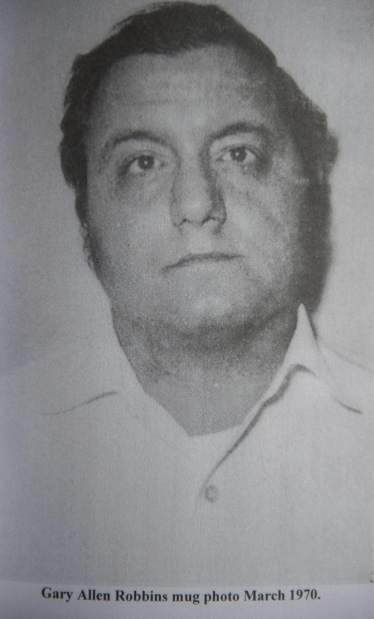
Gary Allan Robbins: The Traveling Salesman Serial Killer
Background
Gary Allan Robbins, whose middle name also appears as Alan in some records, was an American suspected serial killer, rapist and torturer whose known criminal activity stretched from approximately 1981 until 1988. Born on May 9, 1935, Robbins lived at different times in the Pittsburgh area, including Squirrel Hill and Murrysville, Pennsylvania. He reportedly worked as a traveling or door-to-door insurance salesman, an occupation that allowed him to move between communities without immediately attracting suspicion.
Investigators ultimately associated Robbins with violent attacks in Pennsylvania and Ohio and suspected that he had committed additional murders in Michigan and Maryland. Some accounts described his travels as extending across numerous states. Authorities believed that at least four women were murdered, although the available public record does not identify every victim or provide a verified date for each killing. Because Robbins died before he could be arrested and questioned, the full number of women he attacked remains unknown.
Method of Selecting Victims
Robbins reportedly looked for houses advertised for sale and approached women who were alone inside them. By presenting himself as an insurance salesman, prospective buyer or ordinary traveler seeking assistance, he could persuade a resident to open her door without creating immediate alarm. Once inside or close enough to overpower the woman, he would reveal his true intentions.
Descriptions of his attacks indicate that he bound and gagged victims, frequently using scarves or similar pieces of cloth. Some women were sexually assaulted, and investigators believed that certain victims were tortured before being killed. Robbins was also known to use a firearm. The combination of restraints, sexual violence and shooting suggested a repeated pattern rather than unrelated crimes committed during robberies.
His attacks were especially frightening because they occurred in private homes, places where the victims expected to be safe. Robbins reportedly depended on deception rather than forced entry. The innocent appearance of a salesman or lost motorist allowed him to get close to women before they understood the danger.
Known and Reported Victims
- Christine Campbell — 1987 — Jefferson County, Ohio area: Campbell was abducted and murdered in 1987. Jefferson County authorities linked Robbins to her disappearance and killing. Publicly accessible reports identify the year of her death but do not consistently provide a verified exact date. Her case became one of the principal homicides directly associated with Robbins.
- Unnamed Butler County survivor — date not publicly established — Butler County, Pennsylvania: Robbins was connected to the abduction, restraint, torture and sexual assault of a woman from Butler County. She survived and later described the terrifying violence inflicted upon her. Her experience gave investigators important insight into Robbins’s methods and predatory behavior.
- Mary Ann Marker — April 14, 1988 — Somerset County, Pennsylvania: Marker survived Robbins’s final known attack. He approached her home while her husband, a Pennsylvania state trooper, was away and asked for directions to a local maple festival. Robbins then shot Marker in the face. Despite her wound and severe bleeding, she managed to shut and lock the door, reach a telephone and alert the Pennsylvania State Police.
- Unidentified suspected victims — 1981 through 1988 — Michigan, Maryland and possibly other states: Investigators suspected Robbins in the murders of additional women, including cases in Michigan and Maryland. The names and exact dates of death of these women have not been reliably established in the available public accounts, so they cannot be presented as confirmed victims.
The Murder of Christine Campbell
Christine Campbell’s 1987 murder was the best-known fatal case publicly connected to Robbins. Jefferson County, Ohio, Sheriff Fred Abdalla later identified Robbins as the man believed responsible for Campbell’s abduction and death. The investigation showed similarities to Robbins’s other known attacks, including the targeting of a woman, the use of restraints and the possibility of sexual violence before the killing.
Campbell’s murder helped reveal that Robbins was not merely an opportunistic attacker operating in one Pennsylvania community. He was believed to be traveling across state lines while searching for vulnerable women. Authorities examining the case reportedly compared it with unsolved crimes elsewhere and found enough similarities to suspect that Campbell was one victim in a much larger series.
Robbins was never placed on trial for Campbell’s murder. His death in 1988 prevented prosecutors from presenting their evidence in court, leaving the case without the public examination that accompanies a criminal trial. Nevertheless, investigators continued to describe him as being linked to Campbell’s abduction and killing.
The Butler County Attack
One of the most important surviving witnesses was a woman abducted from Butler County, Pennsylvania. She described Robbins as a calculating predator who restrained, sexually assaulted and tortured her. Her survival offered authorities a rare account of what may have happened to women who did not escape.
The Butler County attack also demonstrated that Robbins was willing to keep a victim alive while subjecting her to prolonged terror. His behavior was not limited to killing quickly to avoid identification. The reported torture and sexual assault suggested that domination and suffering were central parts of his crimes.
Although the woman’s identity has not been consistently published in accounts of the case, her testimony later became part of presentations examining predatory behavior. Her experience supported the belief that Robbins followed an established pattern and had probably attacked more women than investigators were able to identify.
The Attack on Mary Ann Marker
On April 14, 1988, Robbins arrived at Mary Ann Marker’s home in Somerset County, Pennsylvania. He used a harmless-sounding request to approach her, asking for directions to a maple festival. The encounter suddenly became violent when Robbins shot Marker in the face.
The gunshot knocked Marker to her knees, but she remained conscious. Realizing that Robbins could enter the house and finish the attack, she managed to close and lock the front door. Wounded and bleeding, she reached a telephone and called the Pennsylvania State Police barracks where her husband worked.
Marker’s actions immediately set an intensive search in motion. State troopers and other officers converged on the area while Robbins fled in his vehicle. Her detailed warning gave police information about the attacker and allowed them to react before he could disappear into another state or select another victim.
Marker survived the shooting, although she endured serious physical pain and later struggled with post-traumatic stress. Her courage brought Robbins’s crime spree to an abrupt end. She subsequently received official recognition for her actions, including commendations connected with the Pennsylvania State Police and President Ronald Reagan.
Robbins’s Death
Police located Robbins on Route 219, approximately eight miles from Marker’s home. A Pennsylvania state trooper stopped his vehicle as officers attempted to close in on him. Facing capture and the likelihood that his earlier crimes would finally be uncovered, Robbins used the same gun involved in Marker’s shooting to take his own life.
Gary Allan Robbins died on April 14, 1988, at the age of 52. His suicide meant that authorities lost their best opportunity to question him about Christine Campbell and the unidentified women believed to have been killed in other states. It also prevented investigators from learning where he had traveled, how he had selected every victim and whether human remains in unresolved cases could be connected to him.
Extent of the Suspected Crime Series
Robbins is commonly described as having killed at least four women between 1981 and 1988. That number remains an estimate rather than the result of convictions. He was never tried for murder, and only a small portion of the suspected series has been described publicly with specific names and dates.
Authorities believed Robbins’s occupation and mobility gave him opportunities to commit crimes far from his home. A traveling salesman could visit unfamiliar neighborhoods, approach homes during the day and leave a community before investigators realized that a serious crime had occurred. Women living in houses advertised for sale may have been especially vulnerable because they were accustomed to receiving inquiries or showing their homes to strangers.
Investigators in Ohio believed Robbins might have been responsible for crimes in Michigan and Maryland. Other reports referred more broadly to a multistate pattern involving numerous jurisdictions. Without a confession, trial record or complete public accounting of the evidence, however, many of those suspected connections remain unconfirmed.
Unanswered Questions
The central mystery surrounding Robbins is the true number of his victims. Police had reason to suspect at least four murders, but the publicly identified fatal victim list remains incomplete. Some women may have disappeared without their cases initially being connected to a traveling offender. Others may have been found in distant jurisdictions where investigators had no reason to compare their deaths with crimes in Pennsylvania or Ohio.
Robbins’s use of several identities or variations of his name may also have complicated efforts to reconstruct his movements. His middle name has been recorded as Allan, Allen and Alan. Such inconsistencies, combined with frequent travel, could have made it difficult for law enforcement agencies in different states to recognize that they were investigating the same man.
His suicide also denied victims’ families the possibility of a trial, conviction or full confession. The evidence linking him to particular crimes was never tested through courtroom testimony, and investigators were left to compare physical evidence, witness accounts and behavioral similarities after his death.
Legacy of the Case
Gary Allan Robbins remains an example of a mobile predator who used an ordinary occupation and polite deception to disguise extreme violence. Rather than appearing openly threatening, he approached women with believable explanations and exploited the trust associated with routine business or requests for directions.
Christine Campbell’s murder, the Butler County survivor’s testimony and Mary Ann Marker’s near-fatal shooting revealed a pattern of abduction, restraint, sexual assault, torture and gun violence. Marker’s survival was particularly significant because her immediate call to police ended Robbins’s ability to continue traveling and attacking women.
Although Robbins died on April 14, 1988, the unanswered questions surrounding his activities remain. He was linked or suspected in crimes spanning several states, yet many potential victims have never been publicly named. The available evidence supports his classification as a suspected serial killer, but the complete history of his crimes may never be known.