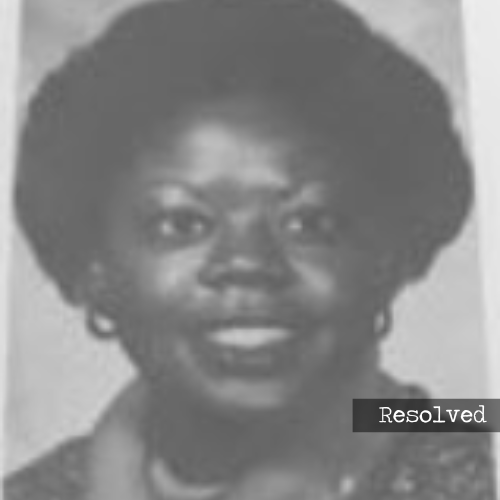
Doneshia “RoxAnne” Kastner was a 41-year-old woman living in Honolulu when her life ended in violence on August 11, 1995. Public reporting describes a summer day that turned ordinary and then suddenly catastrophic: Kastner had gone into her apartment on Kinau Street while her 7-year-old son was outside nearby, and within moments gunfire shattered the afternoon. She was shot in the head inside her home and rushed to The Queen’s Medical Center, but she died later that day.
The killing left behind not just a crime scene, but a child who would become one of the most haunting witnesses in the case.
The man authorities focused on was Eugene Walter Barrett, a neighbor from across the street who had a long and deeply troubling history of violence against women. Accounts published after the killing say Barrett had become fixated on Kastner and believed she had mocked or rejected him. In the days before the murder, he had reportedly been so disturbed by his own thoughts that he checked himself into psychiatric treatment, only to be released shortly before Kastner was killed. On the day of the shooting, according to later court reporting, he had been drinking, saw Kastner return to her apartment, went back for a. 25 semiautomatic pistol, and then crossed the street toward her door. Her son later said he saw “Gene” leave after the shots were fired, and a neighbor’s account helped support that sequence.
There was an arrest, and it came quickly. Police recovered the suspected weapon near the apartment complex and issued a warrant when Barrett was not immediately found. The next day, on August 12, 1995, he surrendered after asking a hotel manager at the Columbia Inn to call police. He was taken into custody without incident, held on $120,000 bail, and charged with murder, theft, and unlawful possession of a firearm. He initially pleaded not guilty. The case drew even more attention because Barrett was not an unknown danger: news accounts revealed that Kastner was the third woman he had killed in Honolulu over a span of decades, after earlier killings in 1959 and 1972.
As the case moved toward trial, Kastner’s son became central to the prosecution’s narrative. Reporting at the time described him as one of the youngest witnesses in Hawaii history to testify in such proceedings. His words placed Barrett at the apartment just after the shooting, and that testimony carried the raw force of a child trying to explain the instant his world was destroyed. Barrett’s defense argued that he had acted out of rage over what he saw as Kastner’s mistreatment of him, but his own statements were devastating. At trial, he said he “wanted to kill” her because she kept choosing other men over him. The jury was not persuaded by any attempt to soften or explain away the act. He was found guilty on all counts.
The conviction brought a sentence meant to ensure he would never truly return to society. Barrett received an automatic life sentence, and the judge ordered that he serve at least 40 years before becoming eligible for parole, effectively making it a life term. Later coverage noted that he was sent to an out-of-state prison and eventually died in custody in 2003. In the years after Kastner’s death, the case came to be remembered not only as the murder of a Honolulu mother in her own apartment, but also as the final confirmed killing in the history of a man widely described as Hawaii’s first known serial killer. For Kastner, the public record preserves a life cut short and a case that was solved, prosecuted, and carried through to conviction, even though nothing in the court’s final judgment could undo the violence of that afternoon.