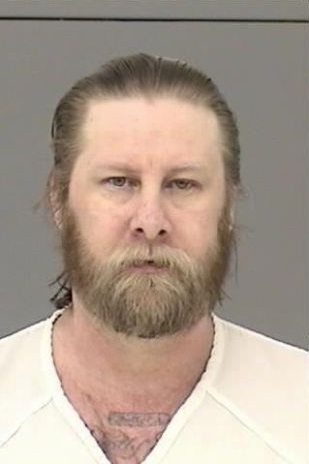
Darren Dee O'Neall: Convicted Murderer and Suspected Serial Killer
Overview
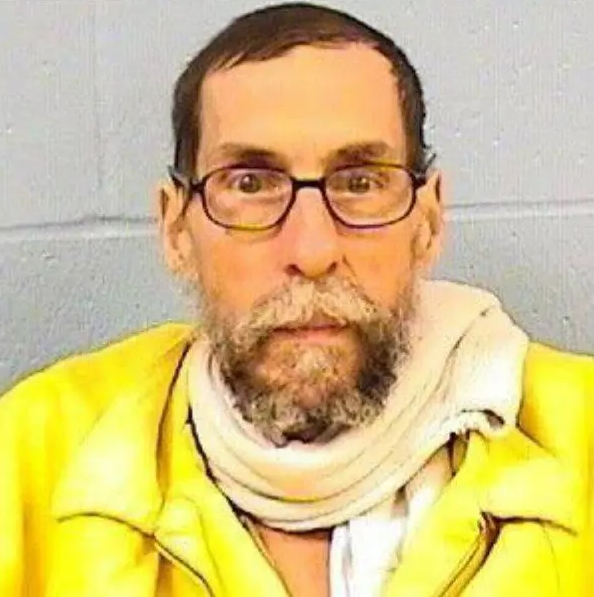
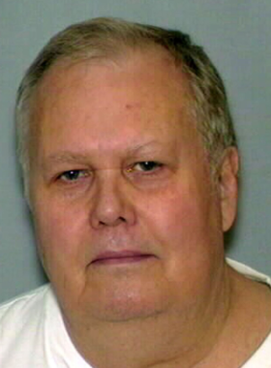
Darren Dee O'Neall is an American convicted murderer, serial rapist and suspected serial killer whose known crimes followed a path through several western states during the 1980s. Born on February 26, 1960, in Albuquerque, New Mexico, O'Neall became a transient who frequently changed his name, appearance, occupation and location. Investigators connected him to crimes in Washington, Oregon, Idaho and Colorado, while authorities also examined whether he could have been responsible for additional unsolved killings.
O'Neall has been conclusively convicted of one murder: the 1987 killing of Robin Smith in Washington. He was also convicted of kidnapping and sexually assaulting a 14-year-old girl in Oregon. Authorities later charged him with the presumed murder of Wendy Aughe, whose body has never been recovered, and investigators identified him as a suspect in the murder of Lia Elizabeth Szubert. Because only one homicide resulted in a completed murder conviction, he is most accurately described as a convicted murderer and suspected serial killer rather than a legally confirmed serial killer.
A Drifter Using Numerous Identities
O'Neall grew up in a military family and lived in several locations during his childhood. He later served in the United States Army before being discharged in 1982. As an adult, he traveled extensively and supported himself through temporary work, including jobs as a truck driver, bartender, laminator and woodworker.
His mobility gave him opportunities to disappear whenever police began examining his activities. He used numerous aliases, including Herb Johnson, Mike James Johnson, Jerry Zebulun Macranahan, Larry Sackett and John Mayeaux. Several of the names were reportedly taken from characters appearing in western novels. Each identity allowed him to obtain employment, enter relationships and establish temporary residences without immediately revealing his criminal history.
Long before the murder of Robin Smith, O'Neall had accumulated allegations involving indecent behavior and sexual violence. Colorado authorities investigated him for sexual assaults during the 1980s, but his movement between jurisdictions made it difficult for investigators to assemble a complete picture of his conduct. When he fled after new accusations arose, the trail frequently ended at a false name or abandoned vehicle.
The Kidnapping and Assault of a Portland Teenager
On January 17, 1987, O'Neall was driving toward Portland, Oregon, when he noticed a 14-year-old girl walking near a freeway overpass on her way to a convenience store. He passed her, returned and waited for her to leave the store. He then forced the teenager into his truck while threatening her with a knife and claiming that he also had a firearm.
O'Neall bound and gagged the girl before driving her to an isolated area. He held her captive for several hours and repeatedly sexually assaulted her. Although he threatened to kill her, he ultimately released her near a place where she could obtain assistance. The girl immediately reported what had happened and provided investigators with a description of her attacker.
The teenager survived and later identified O'Neall from a photographic lineup. Her testimony became crucial when he was eventually prosecuted in Oregon. The assault also demonstrated the calculated behavior that appeared repeatedly in his later crimes: watching a vulnerable victim, using a vehicle for control and transportation, selecting an isolated location and fleeing before police could identify him.
The Murder of Robin Smith
In March 1987, O'Neall was living in the Puyallup and Edgewood area of Washington under the name Herb Johnson. On the night of March 27 and the early morning of March 28, he was at Baldy's Tavern in Puyallup. Twenty-one-year-old Robin Pamela Smith was also at the tavern with her fiancé. O'Neall helped arrange an after-hours gathering at the apartment where he was staying.
Smith's fiancé eventually left, believing that she would be safe and would return later. Instead, Smith disappeared during the early hours of March 28, 1987. Suspicion quickly focused on O'Neall when he vanished at approximately the same time.
Investigators located an abandoned vehicle associated with him near Marysville, Washington. Inside the trunk, they found Smith's bloodstained clothing, blood and human teeth. The physical evidence showed that Smith had suffered a violent attack. Witness information also placed O'Neall in the Greenwater area near Mount Rainier, where investigators believed he had disposed of her body.
Smith's mother, Edna Smith, became deeply involved in the search for her daughter. She distributed information, organized searches and continued pressing authorities to pursue O'Neall. On May 25, 1987, hikers found skeletal remains in a wooded area near Greenwater. Additional remains and personal property were recovered during the search, and the victim was identified as Robin Smith.
Forensic examination determined that Smith had been killed by severe blunt-force trauma. Investigators recovered a rusty claw hammer near the scene and concluded that O'Neall had used a hammer to beat her to death. Her death occurred on or shortly after March 28, 1987, the day she disappeared.
Known and Suspected Victims
- Robin Pamela Smith — Age 21. Smith disappeared during the early morning of March 28, 1987, after attending an after-hours gathering connected to O'Neall in the Puyallup and Edgewood area of Washington. She was killed by blunt-force trauma, and her skeletal remains were discovered on May 25, 1987, near Greenwater, Washington. O'Neall pleaded guilty to her murder.
- Wendy L. Aughe — Age 29. Aughe was last seen during the early morning of April 25, 1987, after leaving the La Paloma restaurant in Bellingham, Washington, with O'Neall, who was using the name Mike Johnson. Evidence indicated that she was violently attacked inside her home. Her body has never been recovered, so an exact date of death has not been established. O'Neall was charged with her murder decades later.
- Lia Elizabeth Szubert — Age 22. Szubert disappeared on June 9, 1987, after experiencing automobile trouble near Mountain Home, Idaho, while traveling toward Boise. Her body was discovered on June 13, 1987, beside Interstate 84 approximately 12 miles east of La Grande, Oregon. Investigators believed she had been strangled. O'Neall was regarded as a leading suspect but was not convicted of her murder.
The Disappearance of Wendy Aughe
After fleeing the area where Robin Smith was murdered, O'Neall appeared in Bellingham, Washington. He used the alias Mike James Johnson and obtained work as a bartender at the La Paloma restaurant. He had been employed there only briefly when he met 29-year-old Wendy Aughe, a beauty-school student and mother of two children.
Aughe was last seen with O'Neall during the early morning of April 25, 1987. She failed to collect her daughter from a babysitter, which was considered highly unusual. When family members entered her residence, they discovered blood in the bedroom and evidence indicating that a violent assault had occurred.
Blood-spatter evidence suggested that Aughe had been struck repeatedly. Her clothing was found folded and concealed near the bed, while her wallet, keys and red 1972 Ford Torino were missing. O'Neall disappeared from his bartending job without collecting his wages, and money and liquor were reportedly missing from the restaurant.
Authorities learned that O'Neall had been seen driving Aughe's car. Border records indicated that he crossed into the United States from Canada at Oroville, Washington, while alone in the vehicle. The car was later abandoned in Eugene, Oregon. Investigators recovered fingerprints and clothing that helped identify the man calling himself Mike Johnson as Darren Dee O'Neall.
O'Neall was initially convicted of stealing Aughe's automobile, but prosecutors did not immediately have enough evidence to charge him with murder. Advances in forensic testing eventually changed the case. DNA associated with O'Neall was identified from evidence preserved from Aughe's home, and additional testing strengthened the connection. In October 2022, authorities charged him with second-degree murder. He was transferred to Whatcom County in March 2023 and pleaded not guilty. Aughe's remains have never been found, and no verified date of death is available.
The Murder of Lia Elizabeth Szubert
On June 9, 1987, 22-year-old Lia Elizabeth Szubert was traveling from Twin Falls toward Boise, Idaho, where she planned to meet her fiancé at the airport. Her car developed mechanical trouble along Interstate 84 near Mountain Home. She contacted a friend from a truck stop, but she never reached Boise and was reported missing.
Four days later, on June 13, a motorist found Szubert's body beside Interstate 84 east of La Grande, Oregon. She had been left in an isolated location along a major route used by interstate travelers and truck drivers. Investigators concluded that she had been strangled.
Witnesses reportedly described a man resembling O'Neall near locations connected to Szubert's disappearance. He was traveling through the region at the time and had experience working as a truck driver. Authorities considered the timing, route and witness accounts significant, but the evidence did not lead to a murder conviction. O'Neall remained a suspect in Szubert's killing.
Additional Suspicions
Investigators considered whether O'Neall had committed other murders while moving across the western United States. He was examined in connection with the shooting deaths of three women in the Salt Lake City area between 1985 and 1986. Those inquiries were reportedly discontinued after authorities determined that he had an alibi placing him outside the area.
He was also suspected of attempting to abduct another woman near Burley, Idaho, shortly after Szubert's murder. Other allegations involved sexual assaults in Colorado and possibly in locations where he had lived or served in the military. However, many of those accusations did not result in completed prosecutions, and they should not be treated as proven homicides.
The number of murders attributed to O'Neall has therefore varied. Investigators and writers have sometimes suggested that he may have killed as many as six women, but only Robin Smith's murder produced a final conviction. Wendy Aughe's presumed death resulted in a later murder charge, while the murder of Lia Szubert remained officially unresolved.
The Nationwide Hunt
Following the discovery of evidence connected to Robin Smith and the disappearance of Wendy Aughe, O'Neall became the target of a multistate investigation. Police circulated descriptions of his tattoos, physical appearance, aliases, vehicles and employment history. His tendency to work in bars, construction businesses and transportation-related jobs gave investigators a pattern to follow, but his frequent identity changes repeatedly delayed the search.
On June 25, 1987, the FBI placed O'Neall on its Ten Most Wanted Fugitives list. He was wanted for violent offenses and was believed to be traveling under assumed names. His case drew particular urgency because investigators feared that he would continue attacking women while moving from state to state.
O'Neall eventually adopted the name John Mayeaux and traveled through parts of the South. In September 1987, police in Lakeland, Florida, attempted to stop him for a traffic violation. He fled, crashed his vehicle and tried to escape on foot before officers arrested him. Because he continued using a false identity, authorities did not immediately realize that they had captured an FBI fugitive.
Fingerprint comparisons ultimately revealed his true identity in early 1988. He was then returned to Washington to face prosecution for the murder of Robin Smith and later transferred to Oregon for the attack on the teenage survivor.
Convictions and Sentences
In January 1989, O'Neall pleaded guilty to first-degree murder in the killing of Robin Smith. The plea avoided a full murder trial and resulted in a sentence of 27 years and nine months in Washington. He was also convicted of automobile theft in connection with Wendy Aughe's missing vehicle.
O'Neall was subsequently prosecuted in Oregon for kidnapping and sexually assaulting the 14-year-old girl. The survivor testified against him and described the prolonged attack. He was convicted on numerous charges and sentenced in 1990 to a total of 135 years in prison.
The lengthy Oregon sentence ensured that O'Neall would remain incarcerated long after the completion of his Washington sentence. His later transfer to Washington in connection with the Wendy Aughe murder charge demonstrated that investigators had continued preserving and testing evidence despite the passage of more than three decades.
Legacy of the Case
Darren Dee O'Neall's crimes illustrate the difficulties investigators once faced when offenders crossed state lines, adopted false identities and committed crimes in separate jurisdictions. During the 1980s, police databases and forensic technologies were far less integrated than they are today. Information about a sexual assault in Colorado, a kidnapping in Oregon and a disappearance in Washington might remain divided among several agencies.
His capture depended on cooperation between local police, state investigators and the FBI, as well as the persistence of victims, witnesses and relatives. Robin Smith's mother played an especially important role by refusing to allow her daughter's disappearance to be forgotten. The surviving teenage victim also provided testimony that established O'Neall's pattern of predatory violence.
Although O'Neall has frequently been called a serial killer, the distinction between proven and suspected crimes remains important. He admitted responsibility for Robin Smith's murder and was convicted of it. He was later charged in Wendy Aughe's presumed murder and remained a suspect in Lia Szubert's killing, but those cases should be described according to their individual legal status. What is certain is that O'Neall was a highly dangerous offender whose violence included abduction, prolonged sexual assault, murder and the deliberate use of aliases to avoid detection.