Robert Rubane Diaz: The Lidocaine Killer
Overview
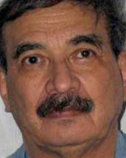
Robert Rubane Diaz was an American registered nurse convicted of murdering 12 hospital patients in Southern California during the spring of 1981. His crimes were particularly disturbing because they were committed inside intensive care units, places where critically ill people and their families expected medical personnel to protect life. Prosecutors proved that Diaz deliberately administered massive overdoses of lidocaine, a medication routinely used in hospitals to control certain dangerous disturbances of the heart's rhythm.
Diaz was born on March 23, 1938. By 1981 he was working as a registered nurse, frequently taking night assignments in cardiac and intensive care units. His access to medications, intravenous lines, syringes, and seriously ill patients allowed the murders to initially resemble sudden medical emergencies rather than deliberate poisonings.
The Deaths at Community Hospital of the Valleys
On March 29, 1981, Diaz began working the night shift in the cardiac care and intensive care unit at Community Hospital of the Valleys in Perris, California. During approximately the next three and a half weeks, an extraordinary pattern developed. Numerous patients suddenly experienced violent seizure-like episodes, followed by respiratory failure and cardiac arrest. Nurses later testified that these seizures were unlike anything they normally saw among cardiac patients.
Many of the victims were elderly and already suffered from serious illnesses, circumstances that initially made their deaths appear medically plausible. However, several patients had been stable or conscious shortly before suddenly deteriorating. The repeated appearance of similar violent seizures among unrelated patients became increasingly difficult to explain as coincidence.
Eleven of the 12 murders for which Diaz was ultimately convicted occurred at Community Hospital of the Valleys. The hospital eventually became so concerned about the unusual deaths that additional precautions were instituted and medication syringes were preserved for examination. The intensive care unit was closed on April 24, 1981. Diaz then obtained work at another hospital, where another suspicious patient death occurred almost immediately.
Lidocaine as a Murder Weapon
Lidocaine has legitimate medical uses. In cardiac care, it was commonly administered to control certain potentially dangerous heart rhythms. This legitimate purpose made the drug especially useful to someone trying to conceal poisoning inside an intensive care unit. A dose of lidocaine appearing on a patient's chart was not necessarily suspicious, and a seriously ill cardiac patient suffering a fatal heart disturbance might initially appear to have died from the underlying illness.
The prosecution's theory was that Diaz obtained highly concentrated lidocaine and used it to give selected patients enormous doses. Investigators found evidence indicating that medication containers had been altered so that solutions supposedly containing ordinary concentrations of lidocaine instead contained concentrations of roughly 20 percent or more. Medical experts testified that doses approaching or exceeding 1,000 milligrams administered rapidly could be lethal, particularly in medically fragile patients.
At trial, prosecutors connected the poisonings through several forms of evidence. The patients displayed remarkably similar symptoms, including sudden seizures followed by respiratory and cardiac failure. Toxicological examinations showed unusually large concentrations of lidocaine in blood or tissue samples. Electrocardiogram evidence from several victims also displayed abnormalities that prosecution experts considered consistent with severe lidocaine toxicity.
The Victims
The following are the 12 patients Diaz was convicted of murdering. Because the killings occurred on overnight hospital shifts, some court summaries identify a shift by the date it began rather than the calendar date on which the patient actually died. The dates below reflect the verified calendar dates of death when the overnight timing is established in the record.
- Irene Annie Graham - March 30, 1981 - Community Hospital of the Valleys, Perris, California. Graham was hospitalized with chest pain and serious heart problems. She had been relatively stable before suffering an extraordinarily violent seizure, respiratory arrest, and cardiac arrest. She was pronounced dead at approximately 6:15 a.m. Prosecutors presented evidence that the lidocaine concentration in her tissues was extremely high and argued that a massive overdose had been introduced through her intravenous line.
- Bernard Vernon-Lee Kean - April 4, 1981 - Community Hospital of the Valleys, Perris, California. Kean had been admitted with chest pain and alcohol intoxication. Although he suffered significant underlying medical problems, he was sleeping with a normal heartbeat shortly before suddenly developing repeated seizures. His condition deteriorated through several episodes of cardiac and respiratory arrest, and he died at approximately 5:07 a.m. Prosecution experts concluded that the concentration of lidocaine in his tissues was lethal.
- Beatrice Roberson Cline - April 5, 1981 - Community Hospital of the Valleys, Perris, California. Cline was admitted because of chest pain and had a history of heart disease and congestive heart failure. She was described as alert and conversational before her condition abruptly changed. Shortly after receiving treatment for a slow heart rate and renewed chest discomfort, she experienced a seizure, stopped breathing properly, and suffered cardiac arrest. She was pronounced dead at approximately 2:32 a.m. Prosecution experts attributed her death to lidocaine poisoning with heart disease as an additional significant condition.
- Minnie Lee Dempsey - April 6, 1981 - Community Hospital of the Valleys, Perris, California. Dempsey entered intensive care suffering from chest pain, difficulty breathing, and congestive heart failure but was conscious and able to communicate. She suddenly developed violent seizures followed by cardiac and respiratory arrest. Medical personnel initially revived her, but she suffered additional emergencies and died shortly after 7:00 a.m. Toxicologists concluded that she had received one, and possibly more than one, massive overdose of lidocaine.
- Gertrude I. Bryant - April 8, 1981 - Community Hospital of the Valleys, Perris, California. Bryant suffered from high blood pressure and congestive heart failure. During the night she deteriorated and began experiencing seizures. She remained alive but unconscious when the morning staff arrived, then suffered additional seizures and cardiac arrest. Resuscitation was unsuccessful. Large quantities of lidocaine were detected in her tissues, and prosecution experts concluded that an overdose caused her death.
- John W. Rainwater - April 11, 1981 - Community Hospital of the Valleys, Perris, California. Rainwater was a 95-year-old cardiac patient suffering from congestive heart failure, but a nurse described him as alert and stable earlier in the shift. At approximately 4:00 a.m. his condition suddenly changed. He developed seizures followed by cardiac and respiratory arrest and died at approximately 4:45 a.m. Prosecution experts concluded that he had received a massive dose of lidocaine shortly before his death.
- Kenneth Lancelot Silvera - April 14, 1981 - Community Hospital of the Valleys, Perris, California. Silvera had been admitted with chest pain and heart palpitations. During the night Diaz administered lidocaine as part of Silvera's treatment. Silvera subsequently suffered violent seizures and repeated medical emergencies. Shortly after 7:00 a.m. he stopped breathing, was temporarily revived, deteriorated again, and died at approximately 7:32 a.m. Toxicological and cardiac evidence was used to support the conclusion that he had received a lethal overdose.
- Marian E. Stewart - April 14, 1981 - Community Hospital of the Valleys, Perris, California. Stewart was being treated for serious respiratory illness, pneumonia, and possible congestive heart failure. She was conscious enough to recognize the emergency occurring in Silvera's room and reportedly expressed fear that she might die. Later she developed ventricular fibrillation, followed by cardiac and respiratory arrest. She died at approximately 6:15 a.m. Experts concluded that approximately 1,000 milligrams of lidocaine had been administered shortly before her death.
- Virginia Bayless - April 20, 1981 - Community Hospital of the Valleys, Perris, California. Bayless had suffered a stroke and possible heart attack and was comatose. During a night in which several patients suddenly developed emergencies, nurses discovered that Bayless no longer had a heartbeat. Attempts to revive her failed. Her case was especially important because hospital personnel and medical records did not indicate that she had been therapeutically given lidocaine, yet a blood sample later contained a very large quantity of the drug. Prosecutors argued that she had received more than 1,000 milligrams shortly before her death.
- Henry Lucero Castro - April 20, 1981 - Community Hospital of the Valleys, Perris, California. Castro had initially been admitted with dizziness and pain in his chest, neck, and arm. He suffered a seizure during an earlier Diaz shift but survived. Two nights later, while Diaz was again working, Castro suddenly experienced another series of seizures followed by respiratory and cardiac arrest. He was temporarily revived but continued suffering seizures and died at approximately 4:53 a.m. Toxicologists concluded that he had received more than 1,000 milligrams of lidocaine shortly before his death.
- Bertha Mae Boyce - April 23, 1981 - Community Hospital of the Valleys, Perris, California. Boyce suffered from congestive heart failure and chronic pulmonary disease. During the overnight shift, Diaz obtained authorization to administer lidocaine after reporting abnormalities on her heart monitor. Her physician later found her drowsy but conscious. Minutes after the doctor temporarily left the room, Boyce stopped breathing and suffered a seizure. She died several hours later. Two syringes associated with Boyce were subsequently found to contain lidocaine concentrations of more than 20 percent even though their labels indicated much weaker solutions.
- J. Clifford Swanson - April 26, 1981 - San Gorgonio Pass Hospital, Banning, California. Swanson became Diaz's final convicted murder victim after Diaz left the Perris hospital. Swanson was being treated in intensive care for serious complications involving diabetes. Early on April 26 he developed abnormal heartbeats and received legitimate doses of lidocaine. Shortly after another nurse returned from a break and saw Diaz near Swanson's bedside with a syringe, Swanson began having seizures and then suffered respiratory and cardiac arrest. He died within minutes. Toxicological examination and cardiac evidence convinced prosecution experts that he had received a massive additional overdose of lidocaine.
The Evidence Hidden in the Syringes
Some of the strongest physical evidence concerned syringes collected from the Perris hospital. After administrators became alarmed by the recurring emergencies, they required used medication syringes to be saved. Two syringes bearing Bertha Boyce's name and the date April 22, 1981, were examined. Their labels indicated that they should have contained lidocaine solutions of only 1 percent or 2 percent. Laboratory testing instead found concentrations exceeding 20 percent.
Another important piece of evidence involved Henry Castro. During efforts to revive Castro, Diaz handed another nurse a syringe and asked her to inject part of its contents into Castro's intravenous line. The nurse, who was not authorized to make the intravenous injection, did not administer the medication. A syringe later recovered from the intensive care unit contained an extraordinarily concentrated lidocaine solution. Evidence concerning the syringe became part of the prosecution's circumstantial case.
Investigators also searched Diaz's residence. They recovered syringes and lidocaine, including a partially used vial containing highly concentrated lidocaine. Prosecutors argued that the medical evidence, suspicious syringes, Diaz's access to the patients, his presence during the episodes, and the material found at his residence formed a consistent pattern that could not reasonably be explained by a series of unrelated natural deaths.
The Investigation
The investigation initially extended far beyond the 12 murders eventually prosecuted. Authorities examined numerous suspicious patient deaths at hospitals where Diaz had worked in Riverside, San Bernardino, and Los Angeles counties. Contemporary reports described investigators reviewing dozens of deaths. Those broader investigations, however, should not be confused with proven murders. Diaz was formally prosecuted and convicted for 12 killings.
Investigators faced an unusually difficult case because the victims were hospital patients with genuine illnesses and lidocaine was a legitimate medication. Establishing homicide required toxicologists, physicians, pathologists, hospital records, cardiac-monitor strips, witness testimony, and analysis of medication concentrations. The prosecution ultimately argued that the repeated combination of massive lidocaine levels, unusual seizures, abnormal cardiac readings, and Diaz's access demonstrated intentional poisoning.
Arrest and Trial
Diaz was arrested at his Apple Valley home on November 23, 1981. By then investigators had spent months examining hospital records, performing or reviewing autopsies, studying tissue samples, and attempting to distinguish natural deaths from deliberate poisonings.
His trial began on October 31, 1983. Diaz waived his right to a jury, leaving Superior Court Judge John H. Barnard to determine his guilt. The proceeding became an unusually complex murder trial because much of the case depended on medical and toxicological evidence rather than eyewitness testimony to the actual administration of a fatal dose.
The defense challenged the prosecution's scientific conclusions and argued that the victims were seriously ill people who could have died from their underlying medical conditions, complications of treatment, or legitimate therapeutic doses of medication. Defense experts disputed portions of the toxicological interpretation and offered alternative explanations for several of the seizures and cardiac abnormalities.
Judge Barnard rejected those arguments. On March 29, 1984, Diaz was convicted of 12 counts of first-degree murder. The court found that massive lidocaine overdoses had caused the patients' deaths and that Diaz had administered the fatal doses.
Death Sentence and Appeals
On April 11, 1984, Diaz was sentenced to death in California's gas chamber. The formal judgment of death was entered on June 15, 1984. His convictions automatically went before the California Supreme Court because California law required review of death sentences.
On August 31, 1992, the California Supreme Court upheld the murder convictions. The court struck 11 of the 12 multiple-murder special-circumstance findings because they were duplicative, but the modification did not overturn the convictions or eliminate the death sentence. The court concluded that substantial evidence supported the finding that each of the 12 patients died from a lidocaine overdose administered by Diaz.
Motive
No single motive for the murders was conclusively established. The California Supreme Court specifically noted that the evidence did not support describing the deaths as mercy killings. Although many of the victims were elderly and seriously ill, several were not considered terminally ill and some appeared medically stable shortly before their sudden deterioration.
The killings instead demonstrated an extraordinary abuse of professional access and trust. Diaz worked in an environment where he could approach vulnerable patients, handle potent medications, enter rooms without attracting suspicion, and participate in the emergency response when a patient's condition suddenly collapsed. Whatever his private motivation, the hospital setting provided both opportunity and an initial explanation for the deaths.
Death in Prison
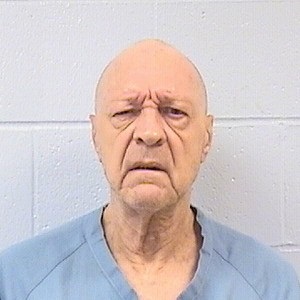
Diaz remained under sentence of death for more than 26 years. He was never executed. On August 11, 2010, Robert Rubane Diaz died in prison from natural causes at the age of 72.
Legacy of the Case
The Robert Rubane Diaz case remains a notable example of a medical serial murder investigation because the crimes were concealed within legitimate treatment. There was no conventional crime scene and no obvious external injury. The victims were already hospitalized with serious illnesses, and the murder weapon was a drug doctors and nurses routinely used to save lives.
What ultimately exposed the pattern was the repetition of unusual medical crises, the increasingly suspicious behavior surrounding medication, toxicological testing, and the concentration of deaths on shifts worked by the same nurse. The case demonstrated how difficult it can be to recognize deliberate homicide in a medical environment and why clusters of unexplained patient deaths require careful examination rather than automatic attribution to illness or age.
Diaz was investigated in connection with considerably more deaths than the 12 cases brought to trial, but those additional deaths were never established in court as murders committed by him. His confirmed legal record therefore remains 12 first-degree murder convictions: 11 patients at Community Hospital of the Valleys in Perris and one patient at San Gorgonio Pass Hospital in Banning, all killed through massive overdoses of lidocaine during a period of only weeks in the spring of 1981.