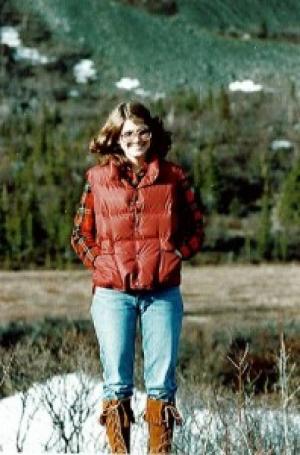
White/Caucasian, female, 11-year-old Doris Oehring left home on her bicycle on June 13, 1980, in North Pole, a small community just outside Fairbanks, Alaska, and never returned. Her bicycle was later found hidden in the brush off Badger Road near her home, and a witness reported a small blue car speeding away as if the driver were wrestling with someone in the passenger seat. Days earlier, Doris's brother had seen her talking with a man by a blue car; the man had a GI-style haircut and appeared to be in a military-type uniform. Fear settled over the neighborhood as the search turned up few immediate answers.
In the months surrounding Doris's disappearance, investigators were already grappling with the killing of Glinda Sodemann and, over the next year, the murders of three more young women around Eielson Air Force Base. The common threads—strangulation followed by a gunshot to the face, a pattern of bodies found south of Fairbanks, and the recurring presence of a blue car—led detectives to believe the offender might be tied to the nearby base. Early suspicion swirled around Glinda's husband, an airman, but polygraph issues and lack of evidence ultimately cleared him, leaving investigators without a viable suspect in either case and heightening public anxiety.
Two years passed without new murders, and investigators refocused on personnel with troubling histories at the base. Their attention sharpened on Technical Sergeant Thomas Richard Bunday, an electronics instructor who drove a blue car and whose name surfaced during inquiries with the Air Force's Office of Special Investigations. After Bunday transferred to Sheppard Air Force Base in Texas, Alaska detectives traveled south in March 1983. A search of his home and vehicle yielded ammunition and hairs later linked to a victim. During interviews, Bunday admitted that he strangled and shot Doris and acknowledged killing the other four victims in the same manner, describing where Doris's body would be found on the base.
Despite the confession, jurisdictional and warrant issues meant investigators could not immediately arrest him in Texas. Eight days later, on March 15, 1983, as Alaska authorities moved to finalize an arrest warrant, Bunday steered his motorcycle into an oncoming truck near Wichita Falls, Texas, in an act that authorities deemed a suicide. With the confessed suspect dead, the case against him never reached a courtroom, but physical evidence—including matching ballistics and victim hairs—supported the confession. In August 1986, searchers found Doris's skull in a remote section of Eielson Air Force Base, close to the area Bunday had indicated, bringing a measure of confirmation and closure to a family and community that had waited six long years for answers.