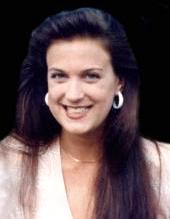
In the late summer of 1987, the life of 21-year-old Paula Beverly Davis of Kansas City, Missouri, came to a tragic and mysterious end. A young mother to a 10-month-old baby, Paula disappeared around August 9th, leaving her family consumed with worry. Her mother's attempts to file a missing person report were initially met with resistance from law enforcement, who pointed to Paula's age and her known habit of hitchhiking from a local truck stop.
Days turned into weeks, and weeks into years, with no word of Paula's whereabouts. Her family, particularly her mother, was left in a painful state of limbo, a grief compounded by the lack of answers. The vibrant young woman with distinctive tattoos of a unicorn and a flower on her breasts had seemingly vanished without a trace.
On August 10, 1987, the day after Paula was last seen by her roommate, the body of a young woman was discovered dumped on an eastbound off-ramp of Interstate 70 in Englewood, Ohio. She had been strangled. The victim, wearing jeans, blue panties, and a blue headband, but no shirt or shoes, remained unidentified. For 22 long years, she was known only as "Englewood Jane Doe" or the "Blue Bandana Girl". Her case grew cold, one of many unsolved homicides that haunted investigators. However, a breakthrough came in 2009, not from a police lead, but from the unwavering love of a sister. While watching a television show called "The Forgotten," Paula's sister, Stephanie Clack, saw a public service announcement for the National Missing and Unidentified Persons System website. Searching the database, she found a Jane Doe case with tattoos that matched her sister's. A subsequent DNA test confirmed the heartbreaking truth: Englewood Jane Doe was Paula Beverly Davis.
The identification of Paula's remains brought a measure of closure to her family but also reignited the quest for justice. Investigators explored several theories regarding her killer. One possibility was that she fell victim to a serial killer. The name Lorenzo Gilyard, a convicted serial killer, was mentioned as a person of interest, though he was never charged in connection with Paula's murder. Another theory pointed to a drug dealer in Kansas City from whom Paula and her roommate had allegedly stolen drugs. Rumors had circulated that "something bad was going to happen to Paula" if the drugs weren't returned. Her roommate, Cathy Wood, told police she last saw Paula at a truck stop with an unknown blonde girl on the night she disappeared. Despite these leads, no arrests have ever been made in the case. The investigation into who killed Paula Beverly Davis remains open but inactive, a painful reminder of a life cut short and a family still waiting for the final chapter of justice to be written.