Thomas Edward Maupin: The Itinerant Killer
Overview
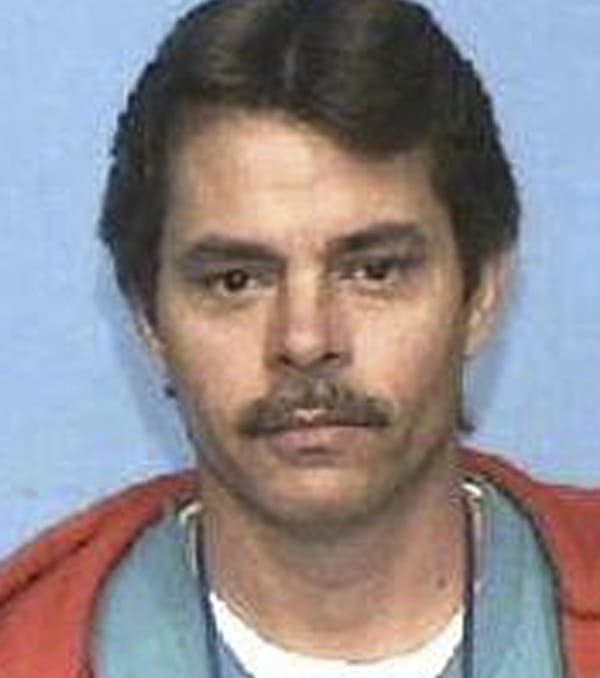
Thomas Edward Maupin is an American serial killer whose violent criminal career spanned at least 13 years, leaving a trail of victims across the country. A lifelong drifter with an extensive history of sexual assault and other offenses, Maupin is known for the 1988 murder of a six-year-old girl in Washington and the 2001 slayings of two women in Tennessee. His case is a study in the complexities and failures of the justice system; he was twice convicted of the first murder, only to have both verdicts overturned on appeal before he secured his release on a plea deal. He was free to kill again. Years later, a bizarre and crucial piece of evidence—a pair of dentures bearing his name, left at the scene of a brutal rape—finally connected him to his later crimes, bringing an end to his decades of violence and evasion.
Early Life and Background
Thomas Edward Maupin was born in Louisiana on October 9, 1949. Public records offer few details about his childhood, other than his family moved to Ohio shortly after his birth, where he was raised. His life of crime began early, and his adult record shows a pattern of escalating offenses committed in various states, including thefts, robberies, child molestation, and sexual assaults. He was a transient, moving from place to place, and was considered a seasoned criminal long before his first murder conviction. News reports from the late 1980s described him as a "drifter with an extensive criminal record," which included a 1977 conviction in Texas for indecency with a child. By the time he arrived in Spokane, Washington, Maupin had already escaped from custody three times and had twice been declared a federal fugitive for unspecified charges.
The Murder of Tricna Cloy
On the evening of January 25, 1988, Maupin was a guest at a small house party in Spokane, Washington. There, he met Christine Fraijo and her two young children, six-year-old Tricna Dawn Cloy and four-year-old Elston. Maupin was reportedly friendly, commenting that the children were pretty and needed a father. Around 11 p.m., he walked Fraijo and her children back to their nearby home at 319 South Ralph Street. The next morning, Fraijo awoke to a parent's worst nightmare: Tricna was gone. Suspicion quickly fell upon Maupin, who had also vanished, and a large-scale manhunt was launched.
The search for Tricna ended in heartbreak nearly six months later. On June 9, 1988, children playing in a gravel pit on the eastern edge of Spokane discovered a human skull and clumps of hair. Authorities were called to the scene, and further investigation uncovered more skeletal remains and the faded blue nightgown and orange snowsuit Tricna had been wearing. Using dental records and the clothing, the Spokane County coroner positively identified the remains as those of Tricna Cloy. A forensic pathologist determined her death was a homicide, but the advanced state of decomposition made it impossible to ascertain the specific cause of death.
The Murders in Memphis
After a convoluted legal battle in Washington, Maupin was released from prison in September 1997. He eventually made his way to Memphis, Tennessee, and by 2001, his violent impulses resurfaced. He became a regular at Harpo's, a bar in the Frayser neighborhood, where he was known to meet women, sometimes paying them for sex.
In the fall of 2001, he targeted two women from the bar. Sometime in late September or early October, he met 46-year-old Nancy Carol Alvis. He strangled her and abandoned her body in a remote, weed-choked area near the dead-end of Old Millington Road. Her badly decomposed body was discovered on October 22, 2001, and she could only be identified through her dental records.
The very next day, October 23, as sheriff's investigators were conducting a follow-up search of the desolate area, they made a second horrifying discovery: the body of 37-year-old Patricia Cook Thornton. An autopsy revealed she had been stabbed to death. Medical examiners estimated she had been killed about two days prior, around October 20. At the time, Maupin was questioned as a person of interest. He admitted to police that he knew both women from Harpo's and frequently took women to that specific dead-end road. However, with little physical evidence to link him directly to the slayings, he was not charged, and the two murders became cold cases.
The Victims
- Tricna Dawn Cloy, 6 — Abducted from her home in Spokane, Washington, on January 25, 1988. Born on April 12, 1981, Tricna was a first-grader whose disappearance sparked a city-wide search before her remains were found nearly six months later. She is buried at Pines Cemetery in Spokane Valley.
- Nancy Carol Alvis, 46 — Murdered in late September or early October 2001 in Memphis, Tennessee. Nancy was a restaurant worker whose body was found weeks after she was killed.
- Patricia Cook Thornton, 37 — Murdered around October 20, 2001, in Memphis, Tennessee. Her body was discovered in the same remote area as Nancy Alvis, just one day after Nancy's remains were found.
Investigation and Capture
Maupin was first captured for Tricna Cloy's murder on January 11, 1989. After nearly a year on the run, he made a critical mistake by phoning a former employer to request a tax form be sent to an apartment in Akron, Ohio, where he was living with his ex-wife. Authorities used this information to track him down, arrest him, and extradite him to Washington to stand trial.
For sixteen years, the murders of Nancy Alvis and Patricia Thornton remained unsolved. The crucial break came not from the murder investigation, but from another violent crime Maupin committed. On August 19, 2001, just weeks before killing Alvis and Thornton, Maupin attacked a 31-year-old woman in Memphis. He approached her as she was walking, forced her into an alley, and brutally assaulted her. He stabbed her under the chin with a metal object with such force that it hit the roof of her mouth, then sexually assaulted her. During the struggle, Maupin accidentally left behind his dentures.
Crime scene investigators collected the dentures and placed them into a sexual assault kit. In a remarkable oversight, no one at the time noticed that the dentures, which had been made for him in a Washington state prison, had his name clearly imprinted inside. The kit, along with thousands of others, was shelved in a police property room, a victim of the massive backlog of untested rape kits that plagued the city of Memphis. In 2013, the city acknowledged it had over 12,000 untested kits and began a multi-million dollar effort to clear them.
In July 2016, the kit from the 2001 assault was finally sent to the Tennessee Bureau of Investigation for analysis. Forensic technicians developed a partial DNA profile from the dentures that was consistent with Thomas Maupin. This long-delayed forensic hit led to his arrest in 2017 for the 16-year-old rape. The resolution of this cold case gave investigators the evidence they needed to officially link Maupin to the 2001 murders. In June 2020, while serving his sentence for the rape, a Shelby County Grand Jury indicted him for the murders of Nancy Alvis and Patricia Thornton.
Trial and Sentence
Maupin's legal proceedings for the murder of Tricna Cloy were a protracted and frustrating ordeal for the justice system. In 1990, he was convicted of first-degree felony murder, with the underlying felony being kidnapping and/or rape, and received an exceptional sentence of 40 years (480 months). The Washington Court of Appeals overturned this conviction, ruling that since there was no evidence of sexual intercourse, the jury should not have been instructed on rape as a possible predicate felony. Because the jury returned a general verdict, it was impossible to know if they had based their decision on the valid kidnapping charge or the unsupported rape charge.
Maupin was retried in May 1992, this time on a charge of first-degree felony murder predicated only on kidnapping. He was convicted a second time and given the same 40-year sentence. In a stunning turn, this conviction was also overturned in 1996 by the Washington Supreme Court. The court ruled that the trial judge had improperly excluded a defense witness who claimed to have seen Tricna alive with other people after the state claimed she had been abducted and killed by Maupin.
As a third trial was set to begin in July 1997, the prosecution's case suffered a fatal blow. The state's key witness, Tricna's brother Elston, who was four at the time of the crime, recanted his testimony from the previous trials, admitting he had lied about seeing Maupin carry his sister away. Facing the high probability of an acquittal, prosecutors offered Maupin a plea bargain. He pleaded guilty to the reduced charge of second-degree murder and was sentenced to 12 years. Factoring in credit for the time he had already served and good behavior, Maupin was released from prison in mid-September 1997, just two weeks after his plea.
His freedom ended with his 2017 arrest for the Memphis rape. Unwilling to face a trial where the victim would have to testify, Maupin pleaded guilty to first-degree rape in July 2017. In exchange for his plea, he was sentenced to eight years in prison. While serving this sentence at the Trousdale Turner Correctional Center, he was indicted for the 2001 murders. In April 2021, he accepted another plea deal, pleading guilty to two counts of the lesser charge of voluntary manslaughter for the deaths of Nancy Alvis and Patricia Thornton. He received a 12-year sentence, to be served concurrently with his ongoing eight-year rape sentence.
Aftermath and Legacy
The criminal saga of Thomas Maupin serves as a sobering example of how legal technicalities can undermine justice and allow a dangerous predator to remain free. His successful appeals in Washington, while based on valid constitutional principles, ultimately resulted in his premature release and enabled him to kill again.
Conversely, his final capture is a powerful testament to the importance of clearing backlogs of untested sexual assault kits. A single piece of evidence, overlooked for years, held the key not only to solving a violent rape but also to closing two cold-case murders and ensuring a serial killer would remain behind bars. The name inscribed on a pair of dentures, coupled with modern DNA technology, brought a measure of long-overdue justice to the families of three victims whose lives were cut short by a remorseless and itinerant killer.