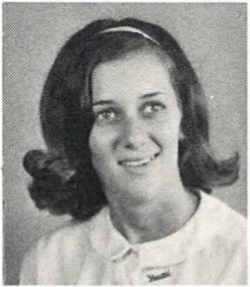
Ronnie Sue Gorlin, a 27-year-old White woman, was in South Florida in July 1975 visiting her family and preparing for an upcoming marriage. Online records place her disappearance on July 22, 1975, and the discovery of her body on July 23, rather than the July 1 date sometimes associated with her case. Gorlin was a respiratory therapist who had grown up in South Florida but had been living and working in Pennsylvania with her fiancé.
During her visit home, she had recently returned from a trip to the Bahamas with her parents, and her mother had become ill and was admitted to Parkway General Hospital.
On the afternoon of July 22, Gorlin visited former coworkers at the Asthmatic Children's Foundation in North Miami Beach. She spoke enthusiastically about her plans to marry and told people she intended to stop at the 163rd Street Shopping Center before going to Parkway General Hospital to see her mother. She was expected at the hospital during the afternoon, but she never arrived. When hours passed without word from her, her family became alarmed, and her father reported her missing that evening.
Her rented or leased burgundy-and-white Oldsmobile Cutlass remained behind at the 163rd Street Shopping Center. A security guard noticed the automobile positioned awkwardly in the parking area near Burdines, reportedly obstructing traffic, and contacted police about having it removed. Investigators discovered that a rear tire was flat and appeared to have been deliberately punctured. That detail would become one of the most important clues in the investigation because police eventually suspected that Gorlin's attacker had damaged the tire intentionally and then waited for her to return to the vehicle.
The following day, a surveying crew working in an undeveloped section of northwest Dade County discovered Gorlin's body floating facedown in the Graham Canal, in the vicinity of Northwest 138th Street and 105th Avenue. The site was miles west of the shopping center where her automobile had been abandoned. She had been stripped of virtually all of her clothing, with contemporary accounts describing sandals as the only item she was still wearing. The condition of the scene immediately indicated that this was not an accidental drowning.
The autopsy was performed under the direction of Dade County medical examiner Dr. Ronald Wright. Investigators determined that Gorlin had been sexually assaulted and subjected to severe violence before entering the water. Accounts of the medical findings describe knife injuries and sexual mutilation, and some reports also describe bite injuries. Although she suffered significant injuries during the attack, drowning was reported as the ultimate cause of death, indicating that she was still alive when she was placed or thrown into the canal.
Detectives developed a theory that explained the damaged tire as part of the killer's method of approaching Gorlin without immediately alarming her. They believed the offender may have watched her enter the shopping center, punctured the tire while she was away from the automobile, and waited nearby for her return. When she discovered the problem, the man could then approach as an apparently helpful stranger, offering assistance or transportation to a service station. Police believed such a "Good Samaritan" approach would have allowed an otherwise unknown man to gain her trust voluntarily rather than attempting to abduct her openly in a busy shopping center.
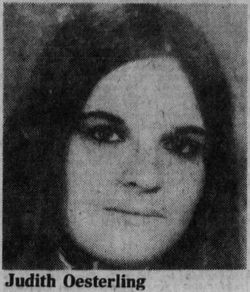
That theory became considerably more compelling only eight days later. On July 30, Elyse Rapp disappeared after going shopping in neighboring Broward County. Rapp's automobile was also discovered in a shopping-center parking area with a deliberately deflated or damaged tire. Her body was subsequently found in the same Graham Canal where Gorlin had been recovered, less than a mile from Gorlin's disposal site. Rapp had also been stripped, sexually assaulted and killed. Investigators regarded the similarities between the Gorlin and Rapp homicides as so strong that the two deaths were considered positively linked, even when police remained divided over whether a much larger group of South Florida canal murders had been committed by the same offender.
The two cases became central to what newspapers and later investigators called the "Flat Tire Murders" or "Canal Murders." During 1975, the bodies of numerous girls and young women were being discovered in canals and isolated areas of Dade and Broward counties. Some had been sexually assaulted, some were unclothed, and several had suffered blunt-force injuries, stabbing or gunshot wounds. Dr. Wright publicly theorized that several of the killings could have been committed by one offender, although detectives in different jurisdictions did not uniformly accept such a broad connection. Investigators were far more confident about the direct link between Gorlin and Rapp because of the combination of disabled automobiles, shopping-center settings, sexual violence, removal of clothing and placement of the bodies in the same canal.
Contemporary investigators attempted to construct a behavioral description of the man they were seeking. The suspected flat-tire offender was theorized to be a relatively young man who would not appear threatening and who could convincingly approach strangers in public. Accounts from the period described the hypothetical killer as possibly well dressed, intelligent, physically attractive and capable of presenting himself as an ordinary, helpful person. Police believed those qualities would have been particularly important if he was persuading stranded motorists to leave voluntarily with him. A reward was offered as authorities appealed for information and examined hundreds of tips, but investigators were unable to identify a man who could be charged with Gorlin's murder.
Years later, convicted serial killer Ted Bundy attracted investigative attention because his known crimes involved young women and because he frequently employed deceptive ruses to gain victims' confidence. Investigators reportedly questioned Bundy about the Gorlin and Rapp murders shortly before his execution in Florida in January 1989. Bundy denied responsibility. Investigators had difficulty definitively documenting all of his movements during the period in which Gorlin and Rapp were killed, but no evidence emerged establishing that he committed either homicide, and he was never charged in connection with them.
A major development in the wider group of 1975 canal murders came decades later, but it did not solve Gorlin's case. DNA testing eventually identified Robert Clark Keebler as one of the men responsible for the June 1975 murders of teenagers Barbara Schreiber and Belinda Darlene Zetterower, two victims who historically had sometimes been grouped with the Canal or Flat Tire murders. Further investigation identified Lawrence Stein as the second man involved in those killings. By the time authorities reached those conclusions, Keebler had died in 2019 and Stein had died in 2005, so neither could be arrested or prosecuted. Broward County investigators announced in May 2025 that the teenagers' murders had been solved.
That breakthrough did not establish that Keebler or Stein killed Gorlin. Investigators examining the old cases have noted significant differences between their known method of operation and the distinctive tire-puncturing method seen in the Gorlin and Rapp cases. Authorities have continued examining whether either man could be associated with additional South Florida homicides, but publicly available information does not establish a forensic connection between either man and Gorlin's death.
No arrest, criminal charge, trial or conviction has been reported for Ronnie Gorlin's murder itself. More than five decades later, the strongest conclusion reached by the original investigation remains that Gorlin and Elyse Rapp were probably victims of the same unidentified offender. The punctured tire, the apparent offer of assistance, the sexual violence and the use of the Graham Canal created a recognizable pattern, but the man believed to have approached Gorlin in the 163rd Street Shopping Center parking lot on July 22, 1975, has never been conclusively identified or brought to justice.