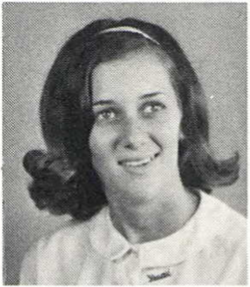
Judith Ann Oesterling was a 19-year-old White woman originally from Rushville, Indiana, who had come to Florida during the summer of 1974 and eventually found work at a South Florida massage parlor. Her father later told investigators that he had last heard from her in December, when she said she had found work but gave few details about where she was living. By early 1975 she was in the Miami-area massage-parlor scene and depended heavily on hitchhiking for transportation.
The date of her death is reported inconsistently in later online accounts: some place her disappearance on February 1 and the recovery of her body two days later, but contemporaneous reporting and later accounts of the confession in the case place the fatal events on January 25, 1975, while a biographical record gives her death as January 26.
Oesterling was last associated with the massage parlor operated by Sue Jane “Tiger Sue” Walter. According to accounts reconstructed from newspaper coverage, Walter initially told investigators that she had fired Oesterling on January 25 and did not know what happened afterward. Witnesses reportedly placed Oesterling leaving work that evening, and because she commonly hitchhiked, detectives initially considered the possibility that she had accepted a ride from a stranger. Her body was subsequently recovered from a canal in western Broward County, in the desolate canal-and-Everglades corridor west of the developed Miami metropolitan area. She had suffered a severe beating and was still alive when she entered the water; drowning was described as the ultimate cause of death.
For months the homicide remained unresolved. That changed in October 1975, when Walter, then 22, confessed that she had participated in Oesterling’s killing. An Associated Press report published that month said Walter admitted involvement in the January 25 murder and said the killing followed Oesterling’s refusal of sexual advances. A later Sun-Tattler account similarly reported that Walter told homicide investigators that she and her boyfriend, Clarence “Deacon” Carnivale, had driven Oesterling to the C-9 canal. Walter’s statement transformed the case from an apparently random roadside or hitchhiking murder into a crime allegedly committed by people connected to Oesterling through her workplace.
Walter identified Carnivale as the principal attacker. According to her account, Carnivale assaulted Oesterling after she resisted him, beating her with his fists and a rock. Walter said Oesterling was bound, sexually assaulted and then thrown into the canal. Walter maintained that she had remained silent afterward because she was afraid of Carnivale. Her confession therefore implicated both herself and Carnivale: Carnivale was described as carrying out the most violent acts, while Walter acknowledged participating in the sequence of events that brought Oesterling to the canal and ended in her death.
Carnivale could not be arrested or prosecuted for Oesterling’s murder by the time Walter confessed. On June 13, 1975, several months after the killing, he had himself been shot to death in the backyard of his Miami home. His homicide was never solved. Available accounts describe Carnivale as having a criminal record that included several felony arrests and a charge of contributing to the delinquency of a minor, with encounters with authorities dating back to 1964. Because he was dead before Walter implicated him, there was never a trial in which prosecutors could attempt to prove his responsibility for the attack on Oesterling.
Walter, however, was prosecuted. Later reporting states that she pleaded guilty to second-degree murder for her role in helping Carnivale rape and kill Oesterling and was sentenced to 15 years in prison. Her guilty plea resolved the criminal case against her without a jury trial. The outcome made Oesterling’s homicide unusual among the string of deaths then alarming South Florida investigators: although her body had been found in the same general canal country associated with several other killings, police eventually said they did not consider her murder connected to the other unresolved canal homicides. Her case had acquired identified perpetrators, a confession and a conviction, while many of the superficially similar killings around South Florida remained mysteries.