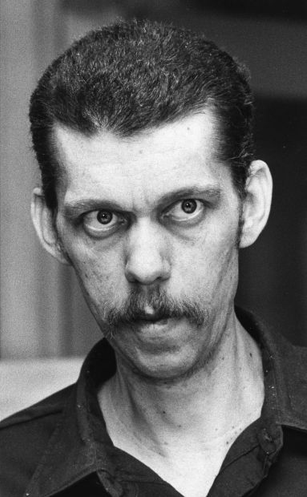
Nathan Trupp: The 1988 New Mexico and California Killing Spree
Background
Nathan Nicholas Trupp was an American killer whose violent rampage claimed five lives in New Mexico and California during a period of only four days in late 1988. Although he is often classified as a serial killer, the short duration and continuous nature of the crimes also fit the definition of a spree killing. His attacks were closely connected to severe psychiatric illness, paranoid delusions and his belief that ordinary people around him were poisoning or persecuting him.
Long before the murders, Trupp had experienced serious mental-health problems and had spent time in psychiatric institutions. He reportedly suffered from psychosis, hallucinations and elaborate beliefs involving Nazis, divine commands and public figures. At different times, he believed television actor Michael Landon was a Nazi and imagined that Landon was part of a threatening conspiracy. These delusions eventually became central to the violence that unfolded in Albuquerque and at Universal Studios.
Purchase of the Murder Weapon
On November 28, 1988, Trupp purchased a .38-caliber snub-nosed revolver from the Gun Room, a firearms store in Albuquerque, New Mexico. A cabdriver later told investigators that he drove Trupp to the store and then transported him to the Tijeras Canyon area, where Trupp practiced firing the weapon while the driver waited.
During the ride, Trupp discussed Bagel Lovers, a business located near his apartment in Albuquerque’s Northeast Heights. He reportedly claimed that the shop had served him poisoned bagels. There was no evidence that the food had been poisoned. The accusation was instead a product of his deteriorating mental condition and growing paranoia.
The Bagel Lovers Murders
On November 29, 1988, Trupp entered the Bagel Lovers shop at the Manzano Shopping Center in eastern Albuquerque. The family-operated business was owned by Richard and Jeanne Wilt. Jeanne’s father, Joseph Famiglietta Sr., had traveled from Commack, New York, to help the couple establish and operate the shop.
Once inside, Trupp drew his revolver and opened fire. He shot Jeanne Wilt and Joseph Famiglietta Sr. inside the business. Richard Wilt pursued the gunman as he fled through the front entrance, but Trupp turned and fatally shot him as well. Two customers who were inside reportedly escaped without being injured. Investigators believed Trupp had deliberately concentrated his attack on the people connected to the shop because he held them responsible for the imaginary poisoning.
All three members of the family were killed. After leaving the scene, Trupp returned to his nearby apartment rather than immediately fleeing Albuquerque. On November 30, he paid his rent and departed shortly before a police tactical team arrived to arrest him. He then boarded a bus traveling west toward Los Angeles.
The Flight to California
Trupp arrived in Southern California while police agencies were distributing information about the Albuquerque murders. He obtained a room at a motel on Ventura Boulevard near Universal Studios. His destination appears to have been influenced by his obsession with Michael Landon, the actor known for television programs including “Bonanza,” “Little House on the Prairie” and “Highway to Heaven.”
Trupp believed Landon was a Nazi and apparently wanted to confront or kill him. Landon was not at Universal Studios and was not working under contract there at the time. Nevertheless, Trupp entered the studio complex as a visitor on December 1, 1988, rode the public tour and repeatedly asked employees how he could reach the actor.
The Universal Studios Murders
At approximately 5:45 p.m. on December 1, Trupp approached the employee entrance at Universal Studios in Universal City, California. Two unarmed Burns International Security guards, 27-year-old Jeren Beeks and 18-year-old Armando Enrique Torres, were stationed in a guard booth near the gate.
Trupp asked the guards for permission to use their telephone so he could contact Michael Landon. They directed him to a nearby public telephone instead. Trupp walked away briefly, returned with his revolver and fired into the booth. Both guards were struck in the head.
Jeren Beeks died at the scene. Armando Torres was transported to St. Joseph Medical Center in Burbank, where doctors attempted to save him. Torres remained alive until the afternoon of December 2, when he died from his wounds.
After shooting the guards, Trupp attempted to leave the area. Another security employee alerted a Los Angeles County sheriff’s deputy, who confronted the armed suspect. A gunfight followed. Trupp was wounded in the chest and arm before being subdued and taken into custody. The deputy survived the confrontation.
While receiving medical treatment, Trupp reportedly made statements indicating that he believed a higher power had ordered him to commit the shootings. He claimed that the killings were not his fault and that he had been instructed to carry them out. Investigators recovered the revolver believed to have been used in both the Albuquerque and Universal Studios attacks.
Confirmed Victims
- Jeanne Wilt, 37 — Shot and killed on November 29, 1988, inside the Bagel Lovers shop at the Manzano Shopping Center in Albuquerque, New Mexico. She operated the business with her husband.
- Joseph Famiglietta Sr., 63 — Shot and killed on November 29, 1988, inside Bagel Lovers in Albuquerque. He was Jeanne Wilt’s father and had traveled from Commack, New York, to help his daughter and son-in-law with the shop.
- Richard Wilt, 39 — Shot and killed on November 29, 1988, after pursuing Trupp from the Bagel Lovers shop in Albuquerque. He was Jeanne Wilt’s husband and a co-owner of the business.
- Jeren Beeks, 27 — Shot and killed on December 1, 1988, while working as an unarmed security guard at an employee entrance to Universal Studios in Universal City, California. He died at the scene.
- Armando Enrique Torres, 18 — Shot at Universal Studios on December 1, 1988. He died from his injuries on December 2, 1988, at St. Joseph Medical Center in Burbank, California.
Criminal Charges and Psychiatric Evaluation
California prosecutors charged Trupp with two counts of murder for the deaths of Beeks and Torres and with the attempted murder of the sheriff’s deputy who confronted him. Multiple-murder special-circumstance allegations initially made him eligible for the death penalty. New Mexico authorities also sought to prosecute him for the murders of Richard Wilt, Jeanne Wilt and Joseph Famiglietta Sr.
Questions about Trupp’s mental competence quickly became a major part of the legal proceedings. Psychiatrists described him as profoundly psychotic and unable to cooperate rationally with his attorneys. He experienced hallucinations, emotional outbursts and persistent delusions involving Nazis, poisoned food, God and Michael Landon.
In February 1989, a judge found Trupp incompetent to stand trial and ordered him transferred to Patton State Hospital in San Bernardino County. The purpose of the commitment was to determine whether psychiatric treatment could restore him to a level at which he understood the charges and could assist in his defense.
Insanity Plea and Hospital Commitment
After further treatment and psychiatric examination, Trupp entered a plea of not guilty by reason of insanity in connection with the Universal Studios murders. On May 25, 1990, the court accepted an agreement under which he admitted committing the two California killings but was found legally insane at the time of the crimes.
Trupp was committed to a California state psychiatric hospital rather than sentenced to an ordinary prison. Prosecutors and mental-health experts believed his condition was severe enough that he would probably remain confined for the rest of his life. His release would require medical and judicial findings that he no longer presented a danger, an unlikely outcome given the number of victims and the intensity of his delusions.
The California resolution did not erase the three New Mexico murder allegations. However, his psychiatric commitment and the expectation of lifelong confinement meant that the California proceedings became the principal legal resolution of the case.
Warnings and Institutional Failures
The killings generated controversy over whether warning signs had been overlooked. Trupp had an extensive psychiatric history, and authorities learned that he had recently acquired a handgun despite his history of institutional treatment. An employee of the Albuquerque gun shop contacted New Mexico public-safety authorities after recognizing that Trupp resembled the description of the Bagel Lovers gunman. The employee supplied Trupp’s name and apartment address, but delays in passing the information to the appropriate officers allowed Trupp time to leave Albuquerque.
The fathers of the two Universal Studios guards later pursued legal action against law-enforcement agencies, arguing that failures in communication had allowed a known murder suspect to travel to California and kill again. The case also became part of the national debate over waiting periods, background checks and restrictions preventing people with serious psychiatric histories from immediately purchasing firearms.
Legacy of the Case
Nathan Trupp’s crimes were not motivated by financial gain, revenge based on actual events or a desire to conceal another offense. They arose from paranoid delusions that transformed innocent business owners, security guards and a television actor into imaginary enemies. The Wilt and Famiglietta family members were targeted because Trupp believed their bagels were poisoned. Beeks and Torres were killed simply because they stood between Trupp and the actor he wanted to confront.
The murders demonstrated how rapidly untreated psychosis, access to a firearm and failures in communication could combine into a multistate tragedy. Five people lost their lives over four days, and none had any genuine connection to the conspiracies Trupp imagined. His eventual commitment to a psychiatric institution recognized his severe illness, but it could not undo the deaths of the three family members in Albuquerque or the two young guards at Universal Studios.