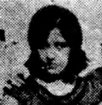
Cynthia Longo, 22, a White female from an Italian immigrant family, arrived in Hornell, New York, with the kind of quiet anonymity a rooming house can provide—until danger began circling her life in plain sight. In early September 1926, she told authorities she had been attacked in a car along the Howard–Kanona Highway near Hornell, escaping only by leaping out while a hat was pressed over her mouth to smother her cries. It wasn’t the first time she’d said she’d had to jump from a moving car to survive, and the episode left the impression that someone had been testing how far they could go.
Months later, on December 31, 1926, the story turned fatal inside her rented rooms at the Alpine Rooming House. A young man came to see the women there, and when he was denied entry, he left in a way that felt half spite, half calculation—tossing a package over the transom. Inside were cream puffs. Cynthia and the others ate them, and almost immediately all of them became violently sick. At first, suspicion drifted toward ordinary contamination—ptomaine poisoning, the sort of mundane explanation that could close a file before it ever truly opened—but the speed and severity of the illness made the incident feel like something else. The young man admitted he had provided the pastries, yet denied tampering with them, and public accounts did not name him. Cynthia did not recover.
The days that followed were full of courthouse whispers and sealed paperwork. Newspapers soon reported the grand jury had issued multiple indictments—most of them sealed—fueling speculation that something connected to Cynthia’s death was being pursued behind closed doors, or at least being handled in a way that kept the public at arm’s length. But the record, as it surfaced, offered no clean resolution: no clearly identified killer, no public charging decision tied directly to her poisoning, and a case that seemed to slip into the shadows even as people in town kept talking about it.
Years later, the name Frederick Wood began to drift into the orbit of Cynthia’s story. By late 1929, accounts described efforts to reopen the investigation to learn what he might know, after Cynthia’s brother reportedly pressed the matter and pointed investigators toward Wood. At the time, Wood was already entangled with other violence and crimes—held while police waited to see whether a shooting victim would survive—making him both reachable to investigators and, potentially, dangerous. Still, the reopening did not crystallize into a definitive public conclusion about Cynthia’s death.
Decades after Cynthia’s poisoning, Wood would become infamous for other killings, and his own words would retroactively reshape how some people interpreted her end. Later accounts report that Wood claimed he had poisoned Cynthia with arsenic-laced cream puffs out of jealousy, and that earlier officials had attributed her death to a medical cause rather than homicide. Wood was ultimately convicted and sentenced to death for a separate double murder in Astoria in 1960, with the court record detailing the killings for which he was condemned. In 1963, he was executed at Sing Sing, remembered in national press as a confessed killer who resisted efforts to spare his life.