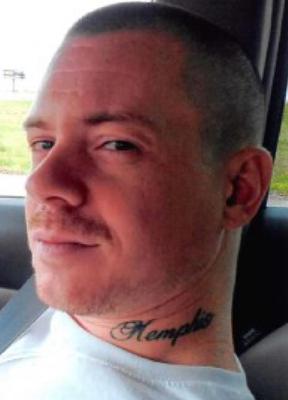
Joseph Ortega, a **male federal inmate** housed at the U.S. Penitentiary in Marion, Illinois, was found dead on **February 20, 1983**. Prison records and later court testimony show that he was singled out by members of a prison gang after “offending” other inmates, and the plot to kill him was carried out inside the maximum-security facility. Contemporary sources do not disclose his age or ethnic background, but his gender is consistently identified as male.
During the planning of the attack, fellow prisoner **James Allen Red Dog**—a 29-year-old Native-American inmate already serving time for earlier murders—proposed using a **lethal dose of heroin** rather than overt violence. According to Delaware Supreme Court findings, Red Dog obtained the narcotic from a visitor, passed it to gang accomplices, and the drug was administered to Joseph Ortega, whose death was recorded as an overdose inside the cellblock.
In the immediate aftermath, federal investigators were briefed on the conspiracy by Red Dog himself. He cooperated extensively—providing statements about prison-gang operations and the American Indian Movement—an arrangement that secured him placement in the federal witness-protection program. As a direct result of that cooperation, **Red Dog was never prosecuted for Joseph Ortega's killing**, and available public records list no other defendants who were formally charged. The homicide therefore produced **no arrests or convictions specific to Ortega's death**, even though it later re-surfaced as aggravating evidence when Red Dog faced capital-murder sentencing in Delaware a decade later.
Because the Bureau of Prisons closed its investigative file once the lead conspirator had testified, surviving documentation on Joseph Ortega's personal history is sparse. Every source that mentions him—prison-gang intelligence summaries, court exhibits, and modern retrospectives on Red Dog's crimes—confirms only that the **victim was male**; neither his precise age nor his ethnicity is preserved in accessible public records. Thus, while the case helped illustrate the reach of prison-based drug violence in the early 1980s, it remains an official homicide with **no individual ever held criminally liable** for the fatal dose that ended Joseph Ortega's life.